Upgrade to Pro

  • STONE FLY Fly Rod, Reel, Line & Case Combo

    $239.99

     Alte
    United States· Noua · In stock
    0 previzualizare

    The ideal rod, reel, and line combination put together to save both time and money. Starting with our aluminum Talon reel, we loaded high-floating fly line and backing and topped it off with a clear monofilament, tapered leader. Next, we designed the 4-piece Stone Fly series and built them to perform with lofty action to deliver the line from the reel in perfect harmony to the water. We then protected the entire outfit in a soft-lined, segmented Cordura travel case to make for one outstanding outfit.

    Features

    4-Piece, Carbon Graphite Rod
    Gray Rod with Black and Silver Accents
    Stainless Steel Snake Guides and Hook Keeper
    Silver Aluminum Reel Seat with Dual Up-locking Rings
    Aluminum Talon Die-Cast Reel Pre-Spooled with High-Floating Weight-Forward Ready To Go Fly Line Backing & Leader

    Comes in 4 size options
    Blue Cordura® Protective Travel Case Included
    Lifetime Rod & Reel Warranty & Maxxon's Unparalleled Customer Support
    If you need help selecting which item works best for you, please feel free to give us a call. One of our team members that uses the equipment will be happy to help you out!

    Shop now: https://maxxonfly.com/collections/combos/products/stone-fly
    The ideal rod, reel, and line combination put together to save both time and money. Starting with our aluminum Talon reel, we loaded high-floating fly line and backing and topped it off with a clear monofilament, tapered leader. Next, we designed the 4-piece Stone Fly series and built them to perform with lofty action to deliver the line from the reel in perfect harmony to the water. We then protected the entire outfit in a soft-lined, segmented Cordura travel case to make for one outstanding outfit. Features 4-Piece, Carbon Graphite Rod Gray Rod with Black and Silver Accents Stainless Steel Snake Guides and Hook Keeper Silver Aluminum Reel Seat with Dual Up-locking Rings Aluminum Talon Die-Cast Reel Pre-Spooled with High-Floating Weight-Forward Ready To Go Fly Line Backing & Leader Comes in 4 size options Blue Cordura® Protective Travel Case Included Lifetime Rod & Reel Warranty & Maxxon's Unparalleled Customer Support If you need help selecting which item works best for you, please feel free to give us a call. One of our team members that uses the equipment will be happy to help you out! Shop now: https://maxxonfly.com/collections/combos/products/stone-fly
    ·40 Views ·0 previzualizare
  • Europe Automotive Heat Exchanger Market Outlook: Regional Insights and Emerging Opportunities in Eastern Europe

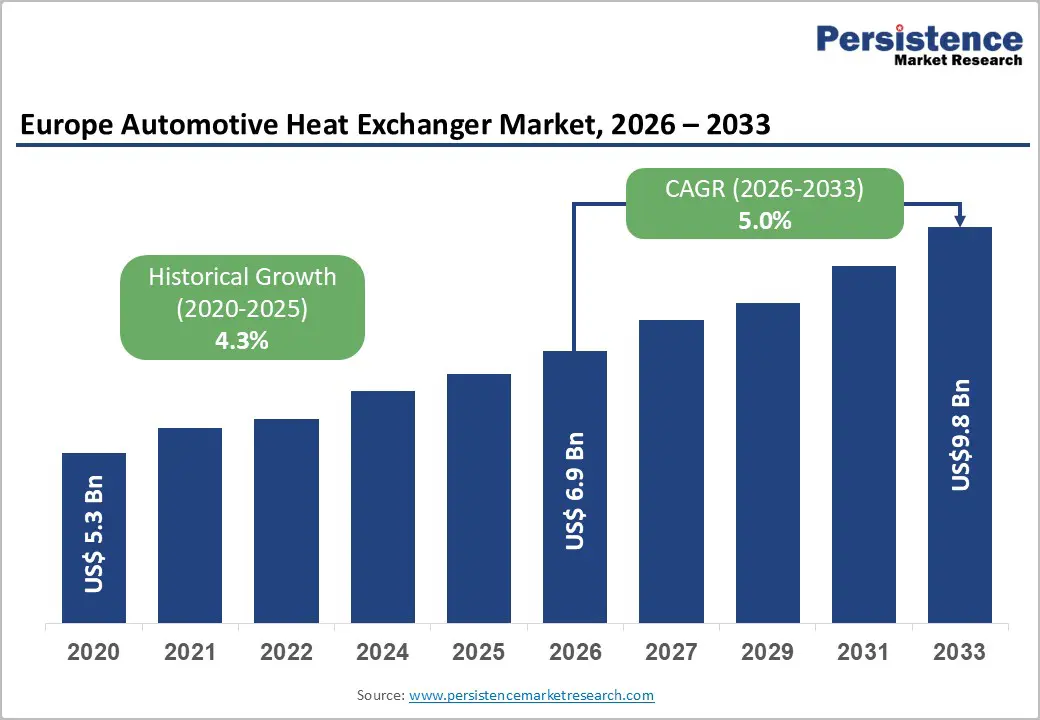
    The Europe Automotive Heat Exchanger Market is entering a phase of sustained expansion, driven by increasing vehicle electrification, stringent emission regulations, and continuous advancements in thermal management technologies. The market size is estimated to be valued at US$ 6.9 billion in 2026 and is projected to reach approximately US$ 9.8 billion by 2033, growing at a compound annual growth rate (CAGR) of 5.0% during the forecast period from 2026 to 2033.

    Heat exchangers play a critical role in maintaining optimal vehicle performance by regulating engine temperatures, battery systems, and HVAC units. The transition toward electric vehicles (EVs) and hybrid vehicles is significantly reshaping demand dynamics, as these vehicles require more advanced and efficient thermal management systems compared to traditional internal combustion engine (ICE) vehicles.

    The market is primarily driven by regulatory mandates across Europe aimed at reducing carbon emissions and improving fuel efficiency. Governments and regulatory bodies are pushing automakers to adopt technologies that enhance energy efficiency, leading to increased adoption of compact, lightweight, and high-performance heat exchangers. Additionally, the growing focus on passenger comfort, particularly in premium and electric vehicles, is further accelerating demand for advanced HVAC systems integrated with heat exchanger technologies.

    Get the full report here: https://www.persistencemarketresearch.com/market-research/europe-automotive-heat-exchanger-market.asp

    Key Highlights from the Report

    ➤ The Europe Automotive Heat Exchanger Market is projected to grow from US$ 6.9 billion in 2026 to US$ 9.8 billion by 2033, registering a CAGR of 5.0%.
    ➤ Increasing adoption of electric and hybrid vehicles is significantly boosting demand for advanced thermal management systems.
    ➤ Stringent emission regulations across Europe are accelerating the shift toward energy-efficient heat exchangers.
    ➤ Aluminum-based heat exchangers are gaining traction due to their lightweight and high thermal conductivity properties.
    ➤ Passenger vehicles continue to dominate the market, while electric vehicles represent the fastest-growing segment.
    ➤ Integration of smart technologies such as IoT-enabled sensors is enhancing system efficiency and predictive maintenance capabilities.

    Europe Automotive Heat Exchanger Market Outlook: Regional Insights and Emerging Opportunities in Eastern Europe The Europe Automotive Heat Exchanger Market is entering a phase of sustained expansion, driven by increasing vehicle electrification, stringent emission regulations, and continuous advancements in thermal management technologies. The market size is estimated to be valued at US$ 6.9 billion in 2026 and is projected to reach approximately US$ 9.8 billion by 2033, growing at a compound annual growth rate (CAGR) of 5.0% during the forecast period from 2026 to 2033. Heat exchangers play a critical role in maintaining optimal vehicle performance by regulating engine temperatures, battery systems, and HVAC units. The transition toward electric vehicles (EVs) and hybrid vehicles is significantly reshaping demand dynamics, as these vehicles require more advanced and efficient thermal management systems compared to traditional internal combustion engine (ICE) vehicles. The market is primarily driven by regulatory mandates across Europe aimed at reducing carbon emissions and improving fuel efficiency. Governments and regulatory bodies are pushing automakers to adopt technologies that enhance energy efficiency, leading to increased adoption of compact, lightweight, and high-performance heat exchangers. Additionally, the growing focus on passenger comfort, particularly in premium and electric vehicles, is further accelerating demand for advanced HVAC systems integrated with heat exchanger technologies. 📌 Get the full report here: https://www.persistencemarketresearch.com/market-research/europe-automotive-heat-exchanger-market.asp Key Highlights from the Report ➤ The Europe Automotive Heat Exchanger Market is projected to grow from US$ 6.9 billion in 2026 to US$ 9.8 billion by 2033, registering a CAGR of 5.0%. ➤ Increasing adoption of electric and hybrid vehicles is significantly boosting demand for advanced thermal management systems. ➤ Stringent emission regulations across Europe are accelerating the shift toward energy-efficient heat exchangers. ➤ Aluminum-based heat exchangers are gaining traction due to their lightweight and high thermal conductivity properties. ➤ Passenger vehicles continue to dominate the market, while electric vehicles represent the fastest-growing segment. ➤ Integration of smart technologies such as IoT-enabled sensors is enhancing system efficiency and predictive maintenance capabilities.
    WWW.PERSISTENCEMARKETRESEARCH.COM
    Europe Automotive Heat Exchanger Market Size & Forecast, 2033
    The Europe automotive heat exchanger market is projected to reach US$ 9.8 Billion by 2033, growing at a 5.0% CAGR during 2026–2033 forecast period
    ·49 Views ·0 previzualizare
  • High-Quality Aluminum Extrusion Solutions for Industrial Applications

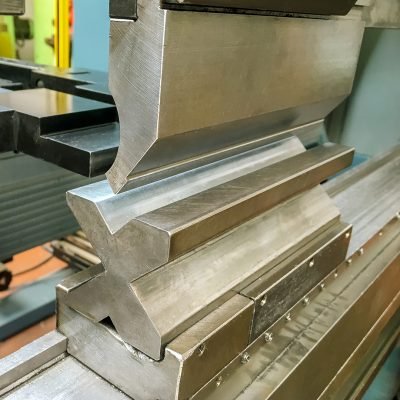
    Choose high-quality aluminum extrusion solutions for industrial and commercial applications requiring strength and lightweight performance. Extruded aluminum offers corrosion resistance, design flexibility, and excellent thermal properties. XCMGB provides end-to-end services including custom design, fabrication, and surface finishing to produce reliable aluminum profiles for various industries and engineering needs.

    https://xcmgb.com/custom-aluminum-extrusion-services/
    High-Quality Aluminum Extrusion Solutions for Industrial Applications Choose high-quality aluminum extrusion solutions for industrial and commercial applications requiring strength and lightweight performance. Extruded aluminum offers corrosion resistance, design flexibility, and excellent thermal properties. XCMGB provides end-to-end services including custom design, fabrication, and surface finishing to produce reliable aluminum profiles for various industries and engineering needs. https://xcmgb.com/custom-aluminum-extrusion-services/
    XCMGB.COM
    Custom Aluminum Extrusion Services
    Get custom aluminum extrusion services from XCMGB for high-quality, precision profiles. Ideal for industrial, automotive, and construction use.
    ·178 Views ·0 previzualizare
  • Automotive Glass Fiber Composites Market Segmentation Insights: Short vs Long Fiber Trends

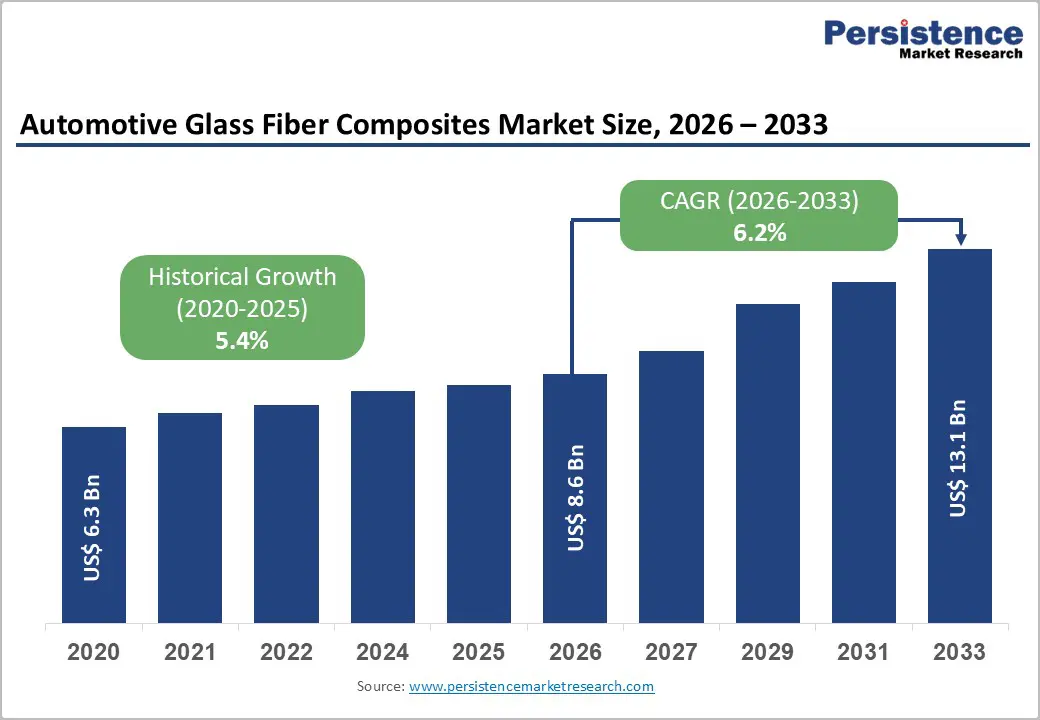
    The global automotive glass fiber composites market is poised for substantial growth, driven by the automotive industry’s increasing focus on lightweight materials, fuel efficiency, and the structural requirements of next-generation electric vehicles (EVs). The market is expected to be valued at US$ 8.6 billion in 2026 and is projected to reach US$ 13.1 billion by 2033, registering a compound annual growth rate (CAGR) of 6.2% during the forecast period from 2026 to 2033.

    Glass fiber composites are widely used in automotive manufacturing due to their superior strength-to-weight ratio, corrosion resistance, and cost-effectiveness compared to traditional materials such as steel and aluminum. As automakers strive to meet stringent emission regulations and improve fuel efficiency, the adoption of lightweight materials is becoming increasingly critical.

    The rapid growth of electric vehicles is another key driver of the market. EV manufacturers require lightweight yet strong materials to offset the weight of batteries and improve overall vehicle performance. Glass fiber composites offer an ideal solution, enabling structural integrity while reducing vehicle weight. Additionally, advancements in composite manufacturing technologies are enhancing production efficiency and expanding application areas.

    Get the full report here: https://www.persistencemarketresearch.com/market-research/automotive-glass-fiber-composites-market.asp

    Key Highlights from the Report

    ➤ Market Value: The automotive glass fiber composites market is projected to grow from US$ 8.6 billion in 2026 to US$ 13.1 billion by 2033, at a CAGR of 6.2%.
    ➤ Increasing demand for lightweight materials to improve fuel efficiency and reduce emissions.
    ➤ Rapid expansion of electric vehicle production driving composite adoption.
    ➤ Growing use of glass fiber composites in structural and semi-structural components.
    ➤ Technological advancements in composite manufacturing processes.
    ➤ Rising focus on sustainability and recyclable materials in automotive production.
    Automotive Glass Fiber Composites Market Segmentation Insights: Short vs Long Fiber Trends The global automotive glass fiber composites market is poised for substantial growth, driven by the automotive industry’s increasing focus on lightweight materials, fuel efficiency, and the structural requirements of next-generation electric vehicles (EVs). The market is expected to be valued at US$ 8.6 billion in 2026 and is projected to reach US$ 13.1 billion by 2033, registering a compound annual growth rate (CAGR) of 6.2% during the forecast period from 2026 to 2033. Glass fiber composites are widely used in automotive manufacturing due to their superior strength-to-weight ratio, corrosion resistance, and cost-effectiveness compared to traditional materials such as steel and aluminum. As automakers strive to meet stringent emission regulations and improve fuel efficiency, the adoption of lightweight materials is becoming increasingly critical. The rapid growth of electric vehicles is another key driver of the market. EV manufacturers require lightweight yet strong materials to offset the weight of batteries and improve overall vehicle performance. Glass fiber composites offer an ideal solution, enabling structural integrity while reducing vehicle weight. Additionally, advancements in composite manufacturing technologies are enhancing production efficiency and expanding application areas. 📌 Get the full report here: https://www.persistencemarketresearch.com/market-research/automotive-glass-fiber-composites-market.asp Key Highlights from the Report ➤ Market Value: The automotive glass fiber composites market is projected to grow from US$ 8.6 billion in 2026 to US$ 13.1 billion by 2033, at a CAGR of 6.2%. ➤ Increasing demand for lightweight materials to improve fuel efficiency and reduce emissions. ➤ Rapid expansion of electric vehicle production driving composite adoption. ➤ Growing use of glass fiber composites in structural and semi-structural components. ➤ Technological advancements in composite manufacturing processes. ➤ Rising focus on sustainability and recyclable materials in automotive production.
    WWW.PERSISTENCEMARKETRESEARCH.COM
    Automotive Glass Fiber Composites Market Share, 2033
    The gautomotive glass fiber composites market is projected to grow from US$ 8.6 Bn in 2026 to US$ 13.1 Bn by 2033, at a 6.2% CAGR, driven by EV growth & vehicle lightweightin
    ·192 Views ·0 previzualizare
  • Automotive Roof Rack Market Outlook: E-commerce and Aftermarket Sales Growth

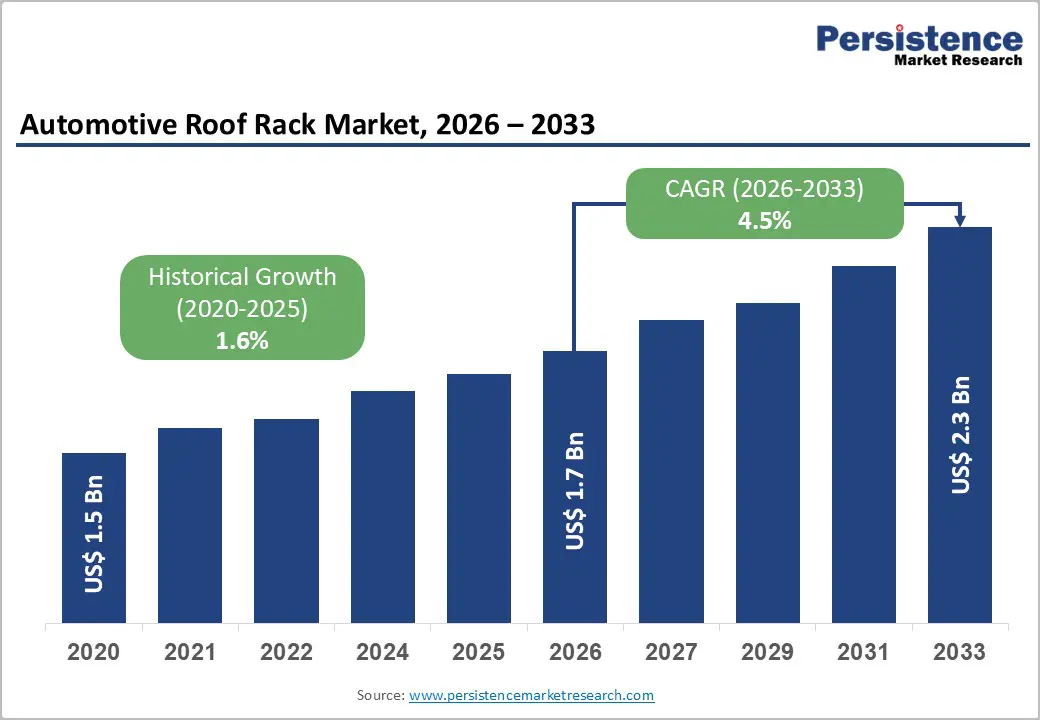
    The global automotive roof rack market is experiencing steady expansion, supported by evolving consumer lifestyles, increasing vehicle customization, and the growing popularity of sports utility vehicles (SUVs) and crossovers. The market is projected to be valued at US$ 1.7 billion in 2026 and is expected to reach US$ 2.3 billion by 2033, registering a compound annual growth rate (CAGR) of 4.5% during the forecast period from 2026 to 2033.

    Automotive roof racks are essential accessories designed to enhance a vehicle’s cargo-carrying capacity, making them highly valuable for travel, outdoor recreation, and commercial purposes. The rapid expansion of the SUV and crossover vehicle segment globally is a key driver of market growth, as these vehicles are often equipped with roof racks for utility and aesthetic appeal.

    In addition, the increasing consumer inclination toward outdoor recreational activities such as camping, cycling, skiing, and road trips is fueling demand for roof rack systems. Consumers are seeking convenient solutions for transporting equipment, luggage, and sports gear, further boosting market adoption. The growing use of lightweight materials, particularly aluminum alloys, is also enhancing product performance and durability, contributing to the market’s growth trajectory.

    Click here to view the full report: https://www.persistencemarketresearch.com/market-research/automotive-roof-rack-market.asp

    Key Highlights from the Report

    ➤ Market Value: The automotive roof rack market is projected to grow from US$ 1.7 billion in 2026 to US$ 2.3 billion by 2033, at a CAGR of 4.5%.
    ➤ Rapid expansion of the SUV and crossover vehicle segment globally.
    ➤ Increasing consumer interest in outdoor recreational activities.
    ➤ Rising demand for vehicle customization and utility accessories.
    ➤ Adoption of lightweight materials such as aluminum alloys.
    ➤ Growth in e-commerce and aftermarket sales channels.
    Automotive Roof Rack Market Outlook: E-commerce and Aftermarket Sales Growth The global automotive roof rack market is experiencing steady expansion, supported by evolving consumer lifestyles, increasing vehicle customization, and the growing popularity of sports utility vehicles (SUVs) and crossovers. The market is projected to be valued at US$ 1.7 billion in 2026 and is expected to reach US$ 2.3 billion by 2033, registering a compound annual growth rate (CAGR) of 4.5% during the forecast period from 2026 to 2033. Automotive roof racks are essential accessories designed to enhance a vehicle’s cargo-carrying capacity, making them highly valuable for travel, outdoor recreation, and commercial purposes. The rapid expansion of the SUV and crossover vehicle segment globally is a key driver of market growth, as these vehicles are often equipped with roof racks for utility and aesthetic appeal. In addition, the increasing consumer inclination toward outdoor recreational activities such as camping, cycling, skiing, and road trips is fueling demand for roof rack systems. Consumers are seeking convenient solutions for transporting equipment, luggage, and sports gear, further boosting market adoption. The growing use of lightweight materials, particularly aluminum alloys, is also enhancing product performance and durability, contributing to the market’s growth trajectory. 🔗 Click here to view the full report: https://www.persistencemarketresearch.com/market-research/automotive-roof-rack-market.asp Key Highlights from the Report ➤ Market Value: The automotive roof rack market is projected to grow from US$ 1.7 billion in 2026 to US$ 2.3 billion by 2033, at a CAGR of 4.5%. ➤ Rapid expansion of the SUV and crossover vehicle segment globally. ➤ Increasing consumer interest in outdoor recreational activities. ➤ Rising demand for vehicle customization and utility accessories. ➤ Adoption of lightweight materials such as aluminum alloys. ➤ Growth in e-commerce and aftermarket sales channels.
    WWW.PERSISTENCEMARKETRESEARCH.COM
    Automotive Roof Rack Market Size & Growth Forecast, 2033
    The global automotive roof rack market is projected to reach US$ 2.3 Bilion by 2033, growing at a 4.5% CAGR during 2026–2033 forecast period
    ·214 Views ·0 previzualizare
  • Key Growth Drivers Accelerating the EV Battery Cooling Plate Market Expansion Globally

    The global Electric Vehicle (EV) Battery Cooling Plate market is witnessing robust expansion, fueled by the accelerating adoption of electric vehicles and the increasing demand for efficient thermal management solutions. According to recent analysis from leading market research firms, the market is expected to be valued at US$ 4.6 billion in 2026 and is projected to reach US$ 17.5 billion by 2033, growing at a remarkable compound annual growth rate (CAGR) of 21.2% during the forecast period from 2026 to 2033.

    Battery cooling plates are critical components in electric vehicles, designed to regulate battery temperature and ensure optimal performance, safety, and longevity. As EV batteries operate within a narrow temperature range, efficient cooling solutions are essential to prevent overheating, enhance energy efficiency, and extend battery life. The increasing complexity of battery systems, coupled with higher energy densities, has significantly amplified the need for advanced cooling technologies.

    Market growth is primarily driven by the rapid electrification of the automotive sector, supported by government incentives, stringent emission regulations, and growing environmental awareness. Automakers are investing heavily in advanced battery technologies and thermal management systems to improve vehicle performance and safety. Additionally, the rise of fast-charging infrastructure is further intensifying the need for efficient cooling solutions, as high charging speeds generate significant heat within battery packs.

    Click here to view the full report: https://www.persistencemarketresearch.com/market-research/electric-vehicle-battery-cooling-plate-market.asp

    Key Highlights from the Report

    ➤ The global EV battery cooling plate market is projected to grow from US$ 4.6 billion in 2026 to US$ 17.5 billion by 2033, registering a CAGR of 21.2%.
    ➤ Rapid growth in electric vehicle adoption worldwide is a key driver for market expansion.
    ➤ Liquid cooling plates dominate the market due to superior thermal efficiency and performance.
    ➤ Passenger electric vehicles account for the largest share owing to increasing consumer demand.
    ➤ Advanced materials such as aluminum alloys are enhancing cooling efficiency and reducing weight.
    ➤ Asia-Pacific is expected to be the fastest-growing region driven by strong EV manufacturing ecosystems.
    Key Growth Drivers Accelerating the EV Battery Cooling Plate Market Expansion Globally The global Electric Vehicle (EV) Battery Cooling Plate market is witnessing robust expansion, fueled by the accelerating adoption of electric vehicles and the increasing demand for efficient thermal management solutions. According to recent analysis from leading market research firms, the market is expected to be valued at US$ 4.6 billion in 2026 and is projected to reach US$ 17.5 billion by 2033, growing at a remarkable compound annual growth rate (CAGR) of 21.2% during the forecast period from 2026 to 2033. Battery cooling plates are critical components in electric vehicles, designed to regulate battery temperature and ensure optimal performance, safety, and longevity. As EV batteries operate within a narrow temperature range, efficient cooling solutions are essential to prevent overheating, enhance energy efficiency, and extend battery life. The increasing complexity of battery systems, coupled with higher energy densities, has significantly amplified the need for advanced cooling technologies. Market growth is primarily driven by the rapid electrification of the automotive sector, supported by government incentives, stringent emission regulations, and growing environmental awareness. Automakers are investing heavily in advanced battery technologies and thermal management systems to improve vehicle performance and safety. Additionally, the rise of fast-charging infrastructure is further intensifying the need for efficient cooling solutions, as high charging speeds generate significant heat within battery packs. 🔗 Click here to view the full report: https://www.persistencemarketresearch.com/market-research/electric-vehicle-battery-cooling-plate-market.asp Key Highlights from the Report ➤ The global EV battery cooling plate market is projected to grow from US$ 4.6 billion in 2026 to US$ 17.5 billion by 2033, registering a CAGR of 21.2%. ➤ Rapid growth in electric vehicle adoption worldwide is a key driver for market expansion. ➤ Liquid cooling plates dominate the market due to superior thermal efficiency and performance. ➤ Passenger electric vehicles account for the largest share owing to increasing consumer demand. ➤ Advanced materials such as aluminum alloys are enhancing cooling efficiency and reducing weight. ➤ Asia-Pacific is expected to be the fastest-growing region driven by strong EV manufacturing ecosystems.
    WWW.PERSISTENCEMARKETRESEARCH.COM
    Electric Vehicle Battery Cooling Plate Market Size, 2033
    Global EV battery cooling plate market is set to surge from US$4.6 billion in 2026 to US$17.5 billion by 2033, driven by rapid electric vehicle adoption.
    ·215 Views ·0 previzualizare
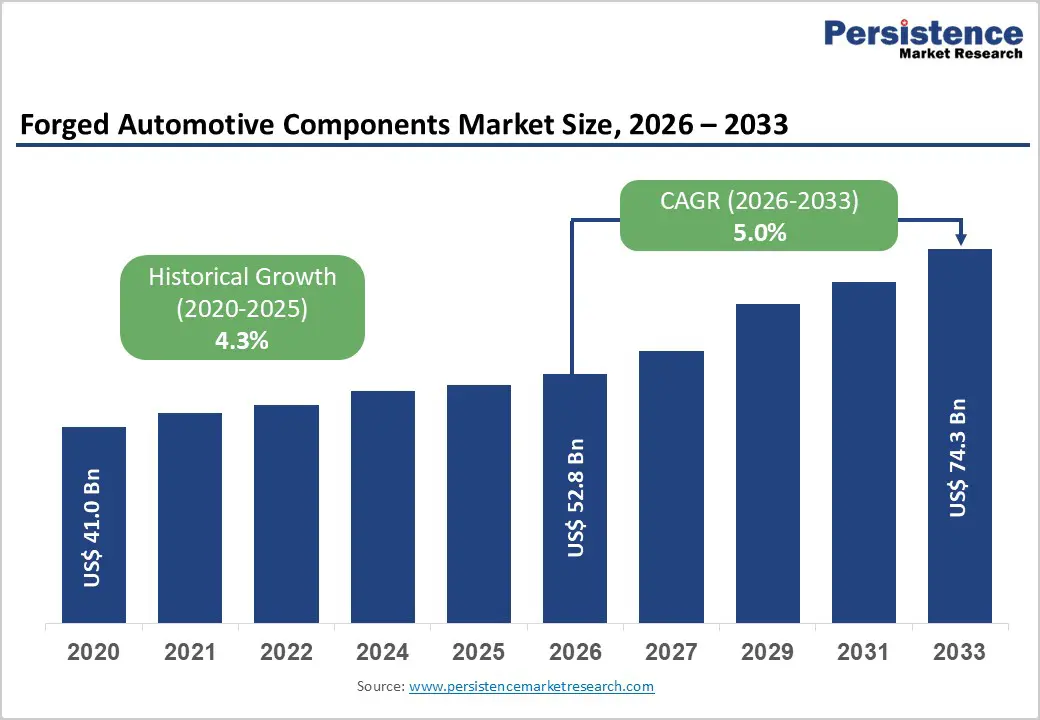
  • The global forged automotive components market is witnessing consistent expansion, driven by the increasing demand for high-strength, durable, and lightweight components across modern vehicles. According to recent analysis from leading market research firms, the market is expected to be valued at US$ 52.8 billion in 2026 and is projected to reach US$ 74.3 billion by 2033, registering a compound annual growth rate (CAGR) of 5.0% during the forecast period from 2026 to 2033.

    Forged components play a critical role in ensuring vehicle safety, performance, and structural integrity. These components, which include crankshafts, connecting rods, gears, and axles, are manufactured through high-pressure forging processes that enhance their mechanical properties. As the automotive industry evolves toward electrification and stricter emission standards, the demand for lightweight yet robust materials is increasing significantly.

    The rising global vehicle production, particularly in emerging economies, continues to be a major growth driver. Additionally, the rapid adoption of electric vehicles (EVs) is transforming the demand landscape, as EVs require specialized forged components for drivetrains, battery systems, and structural frameworks. Increasing investments in advanced manufacturing technologies and material innovations are further accelerating market growth.

    Get the full report here: https://www.persistencemarketresearch.com/market-research/forged-automotive-component-market.asp

    Key Highlights from the Report

    ➤ The forged automotive components market is projected to grow from US$ 52.8 billion in 2026 to US$ 74.3 billion by 2033, at a CAGR of 5.0%
    ➤ Rising global vehicle production is significantly boosting demand for forged components across passenger and commercial vehicles
    ➤ Aluminum forging is emerging as the fastest-growing segment due to increasing lightweighting initiatives
    ➤ Electric vehicles are creating new opportunities for specialized forged components in drivetrains and battery housings
    ➤ Asia-Pacific dominates the market due to strong manufacturing capabilities and high automotive demand
    ➤ Technological advancements in forging processes are improving efficiency, precision, and material utilization
    The global forged automotive components market is witnessing consistent expansion, driven by the increasing demand for high-strength, durable, and lightweight components across modern vehicles. According to recent analysis from leading market research firms, the market is expected to be valued at US$ 52.8 billion in 2026 and is projected to reach US$ 74.3 billion by 2033, registering a compound annual growth rate (CAGR) of 5.0% during the forecast period from 2026 to 2033. Forged components play a critical role in ensuring vehicle safety, performance, and structural integrity. These components, which include crankshafts, connecting rods, gears, and axles, are manufactured through high-pressure forging processes that enhance their mechanical properties. As the automotive industry evolves toward electrification and stricter emission standards, the demand for lightweight yet robust materials is increasing significantly. The rising global vehicle production, particularly in emerging economies, continues to be a major growth driver. Additionally, the rapid adoption of electric vehicles (EVs) is transforming the demand landscape, as EVs require specialized forged components for drivetrains, battery systems, and structural frameworks. Increasing investments in advanced manufacturing technologies and material innovations are further accelerating market growth. 📌 Get the full report here: https://www.persistencemarketresearch.com/market-research/forged-automotive-component-market.asp Key Highlights from the Report ➤ The forged automotive components market is projected to grow from US$ 52.8 billion in 2026 to US$ 74.3 billion by 2033, at a CAGR of 5.0% ➤ Rising global vehicle production is significantly boosting demand for forged components across passenger and commercial vehicles ➤ Aluminum forging is emerging as the fastest-growing segment due to increasing lightweighting initiatives ➤ Electric vehicles are creating new opportunities for specialized forged components in drivetrains and battery housings ➤ Asia-Pacific dominates the market due to strong manufacturing capabilities and high automotive demand ➤ Technological advancements in forging processes are improving efficiency, precision, and material utilization
    WWW.PERSISTENCEMARKETRESEARCH.COM
    Forged Automotive Components Market Forecast, 2033
    The global forged automotive components market is set to expand at a 5.0% CAGR from 2026 to 2033, driven by vehicle production and electrification.
    ·252 Views ·0 previzualizare
  • Attic Stairs Company for Safe Home Access Solutions

    An attic stairs company provides reliable and space-saving solutions for accessing your loft safely. From compact folding stairs to durable wooden and aluminum options, professional installation ensures long-term performance and convenience. Ideal for residential and commercial properties, modern attic stairs enhance usability while maintaining style. Expert services include measurement, fitting, and customization to suit different ceiling heights and layouts.
    https://irelandloftladders.ie
    Attic Stairs Company for Safe Home Access Solutions An attic stairs company provides reliable and space-saving solutions for accessing your loft safely. From compact folding stairs to durable wooden and aluminum options, professional installation ensures long-term performance and convenience. Ideal for residential and commercial properties, modern attic stairs enhance usability while maintaining style. Expert services include measurement, fitting, and customization to suit different ceiling heights and layouts. https://irelandloftladders.ie
    IRELANDLOFTLADDERS.IE
    ·262 Views ·0 previzualizare
  • Industrial fasteners are the unsung heroes of modern engineering. Often referred to as the "glue" that holds the global infrastructure together, these mechanical components ranging from simple screws and bolts to high-precision aerospace-grade rivets are indispensable across every major industry. Whether it is the vehicle you drive, the building where you work, or the aircraft that connects continents, industrial fasteners ensure structural integrity and safety.+

    The global Industrial Fasteners market was valued at USD 87.50 billion in 2025 and is projected to reach USD 145.90 billion by 2033, growing at a CAGR of 6.30% during the forecast period from 2026 to 2033.

    As we move through 2026, the **Industrial Fasteners Market** is undergoing a significant transformation driven by rapid industrialization, the rise of electric vehicles (EVs), and a global push toward sustainable infrastructure. According to the latest data from **Transpire Insight**, the global market is no longer just about "nuts and bolts"; it is an evolving ecosystem of advanced materials and smart technologies.

    ## 1. The State of the Industrial Fasteners Marketplace in 2026

    The current **Industrial Fasteners Marketplace** is characterized by a shift from standard, mass-produced components to specialized, high-performance solutions. In the past, the market was largely commoditized, with competition primarily based on price. However, today’s landscape demands "E-E-A-T" Experience, Expertise, Authoritativeness, and Trustworthiness not just in digital content, but in manufacturing standards.

    ### Why the Shift?

    Several factors are reshaping the marketplace:

    * **Material Innovation:** Traditional carbon steel is being supplemented or replaced by titanium, aluminum, and even high-strength plastics to meet lightweighting requirements in the automotive and aerospace sectors.

    * **Digital Integration:** The rise of Industry 4.0 has introduced "smart fasteners" equipped with sensors that can monitor tension and structural health in real-time.

    * **Supply Chain Resilience:** Following the disruptions of previous years, the **Industrial Fasteners Marketplace** has localized much of its production, with significant growth in regional hubs across North America and Asia-Pacific.

    ## 2. Industrial Fasteners Market Size: A Quantitative Look


    Industrial fasteners are the unsung heroes of modern engineering. Often referred to as the "glue" that holds the global infrastructure together, these mechanical components ranging from simple screws and bolts to high-precision aerospace-grade rivets are indispensable across every major industry. Whether it is the vehicle you drive, the building where you work, or the aircraft that connects continents, industrial fasteners ensure structural integrity and safety.+ The global Industrial Fasteners market was valued at USD 87.50 billion in 2025 and is projected to reach USD 145.90 billion by 2033, growing at a CAGR of 6.30% during the forecast period from 2026 to 2033. As we move through 2026, the **Industrial Fasteners Market** is undergoing a significant transformation driven by rapid industrialization, the rise of electric vehicles (EVs), and a global push toward sustainable infrastructure. According to the latest data from **Transpire Insight**, the global market is no longer just about "nuts and bolts"; it is an evolving ecosystem of advanced materials and smart technologies. ## 1. The State of the Industrial Fasteners Marketplace in 2026 The current **Industrial Fasteners Marketplace** is characterized by a shift from standard, mass-produced components to specialized, high-performance solutions. In the past, the market was largely commoditized, with competition primarily based on price. However, today’s landscape demands "E-E-A-T" Experience, Expertise, Authoritativeness, and Trustworthiness not just in digital content, but in manufacturing standards. ### Why the Shift? Several factors are reshaping the marketplace: * **Material Innovation:** Traditional carbon steel is being supplemented or replaced by titanium, aluminum, and even high-strength plastics to meet lightweighting requirements in the automotive and aerospace sectors. * **Digital Integration:** The rise of Industry 4.0 has introduced "smart fasteners" equipped with sensors that can monitor tension and structural health in real-time. * **Supply Chain Resilience:** Following the disruptions of previous years, the **Industrial Fasteners Marketplace** has localized much of its production, with significant growth in regional hubs across North America and Asia-Pacific. ## 2. Industrial Fasteners Market Size: A Quantitative Look
    ·488 Views ·0 previzualizare

  • In the world of high-stakes manufacturing, precision isn't just a goal, it's the baseline. Whether you're carving out a turbine blade for a jet engine or machining a microscopic component for a smartphone, the tools you use dictate your success. This reality has placed the Metal Cutting Tools Market at the center of the global industrial renaissance.
    The global Metal Cutting Tools market was valued at USD 76 billion in 2025 and is projected to reach USD 135.4 billion by 2033, growing at a CAGR of 7.20% during the forecast period from 2026 to 2033.
    As we charge toward a more automated, electric, and aerospace-driven future, the demand for high-performance cutting equipment is hitting record highs. In this guide, we will break down the current Metal Cutting Tools Market size, the technological shifts defining the industry, and what the landscape looks like as we approach 2026.

    The Core of Modern Industry: What is the Metal Cutting Tools Market?
    The Metal Cutting Tools Market encompasses the vast array of hardened instruments used to remove material from a metal workpiece through shear deformation. These aren't your hardware-store drill bits; we’re talking about sophisticated carbide inserts, polycrystalline diamond (PCD) tipped cutters, and high-speed steel (HSS) tools designed to withstand extreme heat and pressure.
    From milling and turning to drilling and grinding, these tools are the "teeth" of the manufacturing world. Without them, the automotive, aerospace, and energy sectors would quite literally grind to a halt.
    Market Dynamics: Size, Statistics, and Growth Triggers
    To understand where the industry is going, we have to look at the numbers. According to the latest Metal Cutting Tools Market statistics, the industry is experiencing a significant valuation surge.
    Data from Transpire Insight indicates that the global Metal Cutting Tools Market size was valued at approximately USD 76 billion in 2025. This figure is not just a static number; it represents a massive pivot toward high-precision, high-efficiency production.
    By the Numbers:
    Forecasted Value: The market is projected to reach USD 135.4 billion by 2033.
    Growth Rate: This represents a steady CAGR of 7.20% from 2026 to 2033.
    Leading Segment: Milling tools currently hold the largest share (~33-38%), thanks to their versatility in complex part geometries.
    The surge in Metal Cutting Tools Market size is largely attributed to the "Twin Transitions": Digitalization and Green Energy. As the automotive industry shifts to Electric Vehicles (EVs), the need for specialized machining for lightweight aluminum and high-strength alloys has created a gold rush for tool manufacturers.

    The Road to 2026: Trends Shaping the Future
    When we look specifically at the Metal Cutting Tools Market 2026 projections, several "disruptors" stand out. We are moving past the era of "dumb" tools and into an age of intelligent, data-backed machining.
    1. The Rise of Industry 4.0 and Smart Tools
    By 2026, "smart" cutting tools equipped with embedded sensors will be commonplace. These tools can monitor heat, vibration, and wear in real-time. This allows for predictive maintenance changing a tool just before it breaks, saving thousands in potential scrap costs.
    2. High-Performance Coatings
    Tool longevity is the name of the game. Advanced coatings like Titanium Aluminum Nitride (TiAlN) and Diamond-Like Carbon (DLC) are becoming standard. These coatings allow tools to run at higher speeds and feeds, effectively doing more work in less time.
    3. Sustainability and Dry Machining
    Environmental regulations are pushing shops away from traditional flood coolants. This has spurred demand for tools capable of "dry machining" or Minimum Quantity Lubrication (MQL). This trend is a major factor in the Metal Cutting Tools Market statistics showing increased R&D spending among top-tier players.


    In the world of high-stakes manufacturing, precision isn't just a goal, it's the baseline. Whether you're carving out a turbine blade for a jet engine or machining a microscopic component for a smartphone, the tools you use dictate your success. This reality has placed the Metal Cutting Tools Market at the center of the global industrial renaissance. The global Metal Cutting Tools market was valued at USD 76 billion in 2025 and is projected to reach USD 135.4 billion by 2033, growing at a CAGR of 7.20% during the forecast period from 2026 to 2033. As we charge toward a more automated, electric, and aerospace-driven future, the demand for high-performance cutting equipment is hitting record highs. In this guide, we will break down the current Metal Cutting Tools Market size, the technological shifts defining the industry, and what the landscape looks like as we approach 2026. The Core of Modern Industry: What is the Metal Cutting Tools Market? The Metal Cutting Tools Market encompasses the vast array of hardened instruments used to remove material from a metal workpiece through shear deformation. These aren't your hardware-store drill bits; we’re talking about sophisticated carbide inserts, polycrystalline diamond (PCD) tipped cutters, and high-speed steel (HSS) tools designed to withstand extreme heat and pressure. From milling and turning to drilling and grinding, these tools are the "teeth" of the manufacturing world. Without them, the automotive, aerospace, and energy sectors would quite literally grind to a halt. Market Dynamics: Size, Statistics, and Growth Triggers To understand where the industry is going, we have to look at the numbers. According to the latest Metal Cutting Tools Market statistics, the industry is experiencing a significant valuation surge. Data from Transpire Insight indicates that the global Metal Cutting Tools Market size was valued at approximately USD 76 billion in 2025. This figure is not just a static number; it represents a massive pivot toward high-precision, high-efficiency production. By the Numbers: Forecasted Value: The market is projected to reach USD 135.4 billion by 2033. Growth Rate: This represents a steady CAGR of 7.20% from 2026 to 2033. Leading Segment: Milling tools currently hold the largest share (~33-38%), thanks to their versatility in complex part geometries. The surge in Metal Cutting Tools Market size is largely attributed to the "Twin Transitions": Digitalization and Green Energy. As the automotive industry shifts to Electric Vehicles (EVs), the need for specialized machining for lightweight aluminum and high-strength alloys has created a gold rush for tool manufacturers. The Road to 2026: Trends Shaping the Future When we look specifically at the Metal Cutting Tools Market 2026 projections, several "disruptors" stand out. We are moving past the era of "dumb" tools and into an age of intelligent, data-backed machining. 1. The Rise of Industry 4.0 and Smart Tools By 2026, "smart" cutting tools equipped with embedded sensors will be commonplace. These tools can monitor heat, vibration, and wear in real-time. This allows for predictive maintenance changing a tool just before it breaks, saving thousands in potential scrap costs. 2. High-Performance Coatings Tool longevity is the name of the game. Advanced coatings like Titanium Aluminum Nitride (TiAlN) and Diamond-Like Carbon (DLC) are becoming standard. These coatings allow tools to run at higher speeds and feeds, effectively doing more work in less time. 3. Sustainability and Dry Machining Environmental regulations are pushing shops away from traditional flood coolants. This has spurred demand for tools capable of "dry machining" or Minimum Quantity Lubrication (MQL). This trend is a major factor in the Metal Cutting Tools Market statistics showing increased R&D spending among top-tier players.
    ·529 Views ·0 previzualizare
  • Impact of Electric Vehicles on Gear Box Housing Market Growth

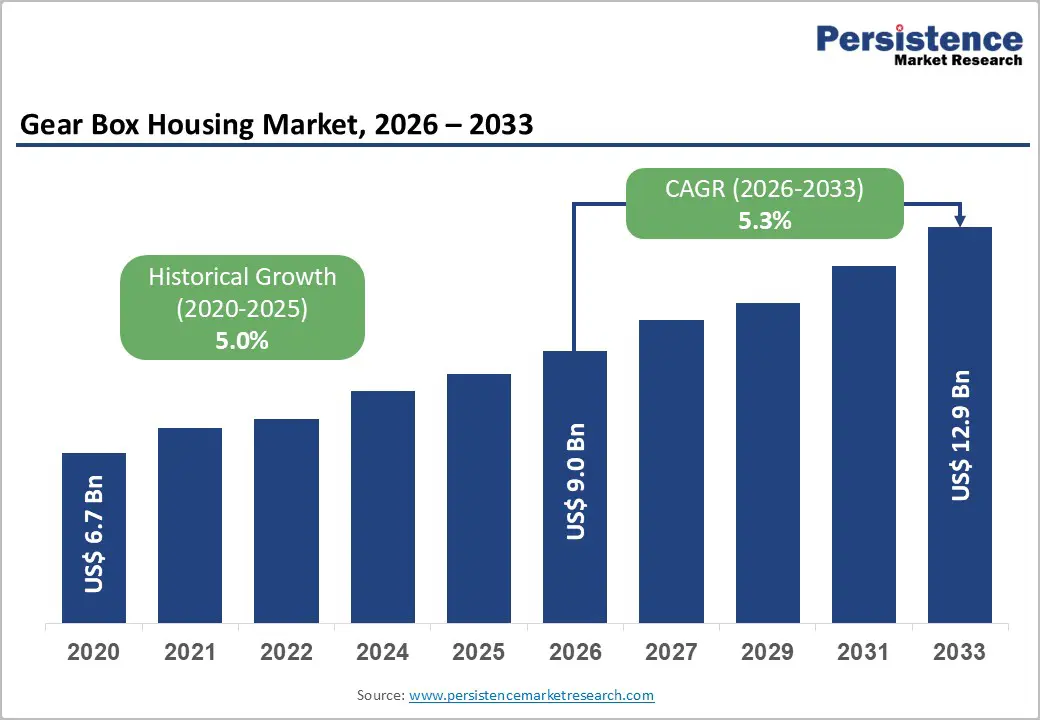
    The global gear box housing market is set to witness steady growth over the coming years, fueled by rising demand for advanced transmission systems and expanding applications across multiple industries. According to recent insights from leading market research firms, the gear box housing market is projected to be valued at US$9.0 billion in 2026 and is expected to reach approximately US$12.9 billion by 2033, growing at a compound annual growth rate (CAGR) of 5.3% during the forecast period from 2026 to 2033.

    Gear box housings are critical structural components that encase and protect transmission systems, ensuring proper alignment, lubrication, and heat dissipation. These components are widely used in automotive, industrial machinery, aerospace, marine, and railway applications, making them an essential part of modern mechanical systems.

    The market’s growth is primarily driven by increasing global vehicle production, particularly in emerging economies, where demand for both passenger and commercial vehicles continues to rise. Additionally, the growing adoption of advanced transmission systems such as automatic, continuously variable transmission (CVT), and dual-clutch transmission (DCT) is significantly boosting demand for high-performance gear box housings.

    Get the full report here: https://www.persistencemarketresearch.com/market-research/gear-box-housing-market.asp

    Key Highlights from the Report

    ➤ The global gear box housing market is projected to grow from US$9.0 billion in 2026 to US$12.9 billion by 2033, registering a CAGR of 5.3% during the forecast period.
    ➤ Rising global vehicle production and demand for advanced transmission systems are key growth drivers.
    ➤ Aluminum gear box housings are gaining popularity due to their lightweight and thermal efficiency properties.
    ➤ Passenger vehicles dominate the market, while industrial applications are witnessing strong growth.
    ➤ Asia-Pacific leads the market, supported by robust manufacturing and automotive production.
    ➤ Technological advancements in materials and smart manufacturing are enhancing product performance.
    Impact of Electric Vehicles on Gear Box Housing Market Growth The global gear box housing market is set to witness steady growth over the coming years, fueled by rising demand for advanced transmission systems and expanding applications across multiple industries. According to recent insights from leading market research firms, the gear box housing market is projected to be valued at US$9.0 billion in 2026 and is expected to reach approximately US$12.9 billion by 2033, growing at a compound annual growth rate (CAGR) of 5.3% during the forecast period from 2026 to 2033. Gear box housings are critical structural components that encase and protect transmission systems, ensuring proper alignment, lubrication, and heat dissipation. These components are widely used in automotive, industrial machinery, aerospace, marine, and railway applications, making them an essential part of modern mechanical systems. The market’s growth is primarily driven by increasing global vehicle production, particularly in emerging economies, where demand for both passenger and commercial vehicles continues to rise. Additionally, the growing adoption of advanced transmission systems such as automatic, continuously variable transmission (CVT), and dual-clutch transmission (DCT) is significantly boosting demand for high-performance gear box housings. 📌 Get the full report here: https://www.persistencemarketresearch.com/market-research/gear-box-housing-market.asp Key Highlights from the Report ➤ The global gear box housing market is projected to grow from US$9.0 billion in 2026 to US$12.9 billion by 2033, registering a CAGR of 5.3% during the forecast period. ➤ Rising global vehicle production and demand for advanced transmission systems are key growth drivers. ➤ Aluminum gear box housings are gaining popularity due to their lightweight and thermal efficiency properties. ➤ Passenger vehicles dominate the market, while industrial applications are witnessing strong growth. ➤ Asia-Pacific leads the market, supported by robust manufacturing and automotive production. ➤ Technological advancements in materials and smart manufacturing are enhancing product performance.
    WWW.PERSISTENCEMARKETRESEARCH.COM
    Gear Box Housing Market Size, Share, & Growth Report, 2033
    The global gearbox housing market is projected to reach US$ 12.9 Bn by 2033, growing at a 5.3% CAGR, driven by rising automotive production
    ·253 Views ·0 previzualizare
  • How Lightweight Materials Are Transforming the Bumper Beam Market

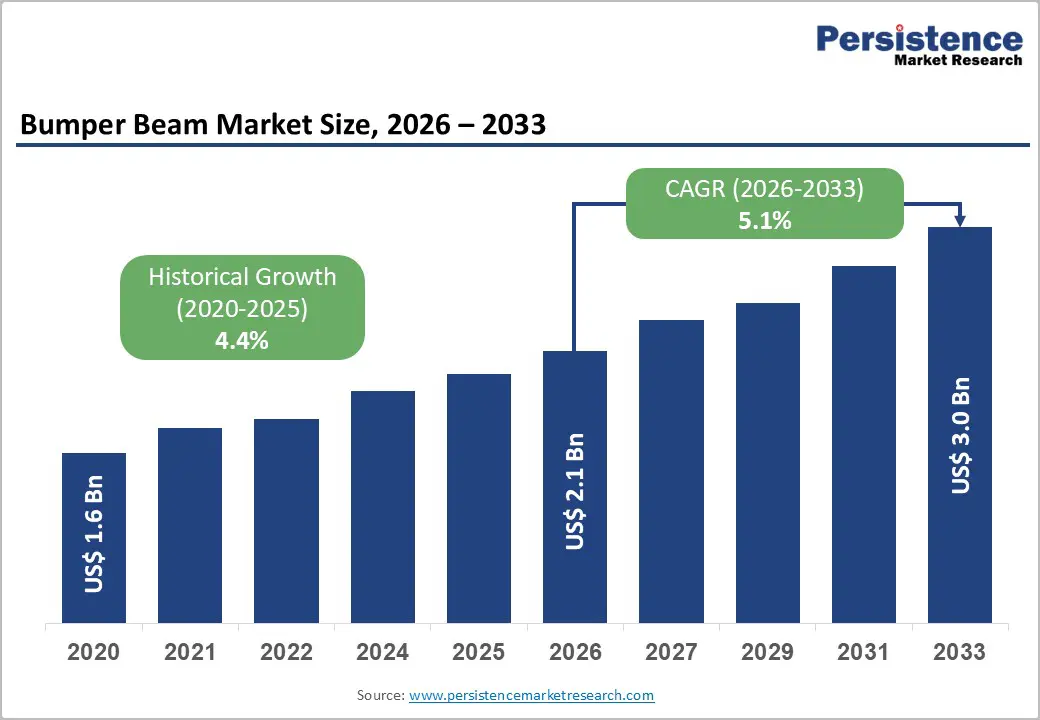
    The global bumper beam market is poised for steady growth over the forecast period, supported by increasing automotive production, stringent safety regulations, and the accelerating shift toward lightweight vehicle architectures. According to insights from leading market research firms, the bumper beam market is projected to be valued at US$2.1 billion in 2026 and is expected to reach approximately US$3.0 billion by 2033, expanding at a compound annual growth rate (CAGR) of 5.1% between 2026 and 2033.

    Bumper beams are critical structural components in vehicles, designed to absorb impact energy during collisions and enhance passenger safety. Positioned behind the bumper fascia, these components play a crucial role in minimizing vehicle damage and protecting occupants. As global safety standards become increasingly stringent, automakers are under pressure to incorporate high-performance bumper beam systems that meet regulatory requirements while maintaining cost efficiency.

    The market is being significantly driven by rising global vehicle production, particularly in emerging economies, where urbanization and rising disposable incomes are boosting automotive demand. Additionally, stricter crashworthiness regulations and passive safety norms across regions such as North America, Europe, and Asia-Pacific are compelling manufacturers to adopt advanced bumper beam designs.

    View the detailed report: https://www.persistencemarketresearch.com/market-research/bumper-beam-market.asp

    Key Highlights from the Report

    ➤ The global bumper beam market is expected to grow from US$2.1 billion in 2026 to US$3.0 billion by 2033, registering a CAGR of 5.1% during the forecast period.
    ➤ Increasing global vehicle production and rising automotive demand are key drivers of market growth.
    ➤ Aluminum bumper beams are gaining traction due to their lightweight properties and superior energy absorption capabilities.
    ➤ Passenger vehicles dominate the market, supported by growing consumer demand for safety and comfort features.
    ➤ Asia-Pacific leads the market, driven by strong automotive manufacturing and increasing regulatory enforcement.
    How Lightweight Materials Are Transforming the Bumper Beam Market The global bumper beam market is poised for steady growth over the forecast period, supported by increasing automotive production, stringent safety regulations, and the accelerating shift toward lightweight vehicle architectures. According to insights from leading market research firms, the bumper beam market is projected to be valued at US$2.1 billion in 2026 and is expected to reach approximately US$3.0 billion by 2033, expanding at a compound annual growth rate (CAGR) of 5.1% between 2026 and 2033. Bumper beams are critical structural components in vehicles, designed to absorb impact energy during collisions and enhance passenger safety. Positioned behind the bumper fascia, these components play a crucial role in minimizing vehicle damage and protecting occupants. As global safety standards become increasingly stringent, automakers are under pressure to incorporate high-performance bumper beam systems that meet regulatory requirements while maintaining cost efficiency. The market is being significantly driven by rising global vehicle production, particularly in emerging economies, where urbanization and rising disposable incomes are boosting automotive demand. Additionally, stricter crashworthiness regulations and passive safety norms across regions such as North America, Europe, and Asia-Pacific are compelling manufacturers to adopt advanced bumper beam designs. 📎 View the detailed report: https://www.persistencemarketresearch.com/market-research/bumper-beam-market.asp Key Highlights from the Report ➤ The global bumper beam market is expected to grow from US$2.1 billion in 2026 to US$3.0 billion by 2033, registering a CAGR of 5.1% during the forecast period. ➤ Increasing global vehicle production and rising automotive demand are key drivers of market growth. ➤ Aluminum bumper beams are gaining traction due to their lightweight properties and superior energy absorption capabilities. ➤ Passenger vehicles dominate the market, supported by growing consumer demand for safety and comfort features. ➤ Asia-Pacific leads the market, driven by strong automotive manufacturing and increasing regulatory enforcement.
    WWW.PERSISTENCEMARKETRESEARCH.COM
    Bumper Beam Market Size & Top Players Analysis, 2033
    The global bumper beam market, valued at US$2.1 Bn in 2026, is set to reach US$3 Bn by 2033, growing 5.1% CAGR, driven by safety regs and lightweighting
    ·370 Views ·0 previzualizare
Sponsorizeaza Paginile