English
 Arabic
 French
 Spanish
 Portuguese
 Deutsch
 Turkish
 Dutch
Dutch
 Italiano
 Russian
 Romaian
 Portuguese (Brazil)
 Greek
Greek


Antirust Primer Spray Market Trends 2026–2034: Growth to USD 6.8 Billion Backed by Automotive & Industrial Expansion
Networking |
2026-04-10 12:15:28
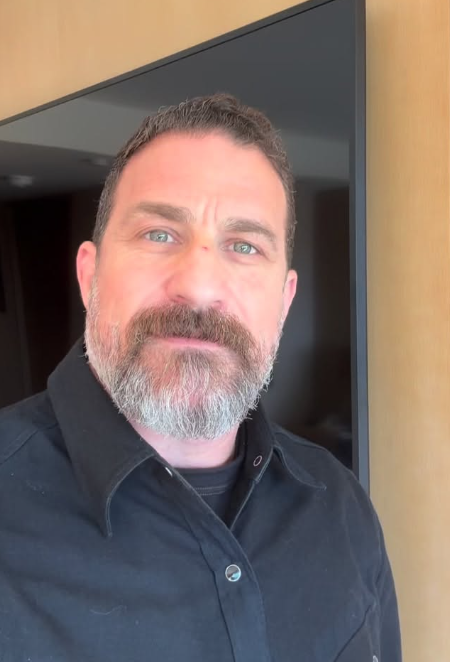
Let’s be honest for a moment. Most mental health advice you find online sounds pleasant but vague—take a deep breath, think positive thoughts, try to relax. None of that is wrong, but it rarely works when you’re genuinely struggling to get out of bed or stop your mind from spiraling at three in the morning. Andrew Huberman approaches mental health differently. Instead of offering platitudes, he breaks down the actual neural circuits involved in mood, motivation, and emotional regulation. Then he gives you specific, measurable actions that influence those circuits. The beauty of his approach is that you don’t need to believe it works for it to work. Your brain responds to light, movement, and breathing regardless of your optimism about them. Here are some of the most practical, neuroscience-backed practices Huberman recommends for building better mental health from the bottom up.
Huberman is relentless about this one because the data is overwhelming. Viewing bright, low-solar-angle sunlight within the first thirty to sixty minutes after waking directly triggers a cascade of neurochemicals that shape your mood for the entire day. When sunlight hits your eyes, a specific population of retinal cells sends a signal to your brain’s suprachiasmatic nucleus, which then instructs your pineal gland to stop producing melatonin and your adrenal glands to release a healthy pulse of cortisol. That morning cortisol spike, contrary to what wellness influencers might claim, is essential for mental health. It primes your brain for alertness, sharpens your focus, and sets your emotional tone toward engagement rather than withdrawal. Huberman recommends ten to fifteen minutes of outdoor light on a clear morning, or twenty to thirty minutes on an overcast day. No sunglasses, and no looking directly at the sun. This single practice, he argues, does more for depression prevention than many interventions that cost hundreds of dollars.
Here is something Andrew Huberman has observed in both animal studies and human clinical work. Your brain’s amygdala, which generates feelings of anxiety and fear, is directly calmed by the sensory experience of forward motion. When you walk, run, or even cycle, your visual system registers the pattern of optic flow—the way objects move past you from center to periphery. That specific visual signal sends inhibitory messages to your amygdala, essentially telling your threat-detection system that you are moving through an environment safely, which lowers baseline anxiety. Huberman recommends a daily practice he calls “optic flow walking,” where you move at a steady pace through a visually rich environment for ten to twenty minutes. You don’t need to walk quickly or break a sweat. You simply need to experience the continuous pattern of objects moving past you. For people who experience rumination or looping anxious thoughts, this practice can break the cycle more effectively than trying to think your way out of it.
When you feel overwhelmed, someone inevitably tells you to “take a deep breath.” Huberman points out that this is actually the opposite of what you should do. A single, very deep inhale followed by another short inhale before exhaling triggers a neural mechanism that opens up collapsed alveoli in your lungs and rapidly lowers your heart rate. He calls this the physiological sigh. Here is how it works: you take a deep breath in through your nose, then before exhaling, you take a second, smaller sip of air on top of the first. Then you exhale slowly and completely through your mouth. That double inhale stretches your diaphragm in a specific way that activates your vagus nerve and signals your brain to switch from sympathetic fight-or-flight mode to parasympathetic calm. Huberman recommends doing two or three physiological sighs in a row whenever you feel panic rising, before a stressful conversation, or even when you cannot fall asleep due to anxious thoughts. Unlike meditation or other longer practices, this works in under thirty seconds.
Your brain’s mood centers are exquisitely sensitive to temperature changes, and Huberman has turned this into a practical protocol. Deliberate cold exposure, specifically to the upper chest, neck, and face, triggers a sustained release of dopamine and norepinephrine that lasts for hours afterward. The mechanism is straightforward: cold water activates your sympathetic nervous system, and in response, your brain releases these neuromodulators to help you cope. The dopamine boost from a cold shower or cold plunge is comparable to what some people experience from nicotine or caffeine, but without the crash or addiction risk. Huberman recommends starting with fifteen seconds of cold water at the end of your warm shower, focusing on getting your face and neck wet. Over two weeks, gradually increase to two or three minutes. He notes that the antidepressant effect of regular cold exposure is strong enough that some clinical trials are exploring it as a standalone treatment for mild to moderate depression. The key is consistency—doing it most days rather than occasionally.
Most people assume that managing mental health means managing conscious thoughts. Huberman disagrees. He argues that a huge portion of emotional regulation happens below the level of awareness, during states of deep rest that are not quite sleep. He has popularized a technique called Non-Sleep Deep Rest, or NSDR, which involves lying down and systematically bringing attention to different parts of your body for ten to twenty minutes. During NSDR, your brain waves slow down toward theta range, your default mode network calms down, and your brain clears out metabolic debris through the glymphatic system. Unlike traditional meditation, which can frustrate beginners, NSDR is purely mechanical. You do not need to empty your mind or feel peaceful. You simply follow a script that guides your attention. Huberman recommends doing NSDR in the afternoon, especially on days when you feel emotionally drained or irritable. He has seen it reduce symptoms of burnout, anxiety, and even mild trauma responses in his laboratory studies.
Here is a counterintuitive finding from Huberman’s review of the neuroscience literature. Loneliness is not primarily an emotional problem. It is a dopamine regulation problem. Your brain expects periodic social contact as a source of reward, and when that contact does not arrive, your dopamine baseline drops. Low dopamine feels like lack of motivation, flat mood, and difficulty experiencing pleasure. Huberman recommends treating social connection as a biological necessity rather than a luxury. He suggests scheduling at least one genuine face-to-face conversation per day, even if brief. The key word is genuine. Scrolling social media does not count because your brain does not receive the same oxytocin and dopamine signals from digital interaction. Eye contact, vocal tone, and physical presence all trigger specific neural responses that digital communication cannot replicate. For people who feel too exhausted to socialize, Huberman suggests starting extremely small: making eye contact and saying hello to a cashier, or calling someone for just three minutes. The dose matters less than the consistency.
The final piece of Huberman’s mental health framework might be the most overlooked. Your brain’s emotional regulation centers depend on predictable sleep-wake timing more than they depend on total sleep duration. Going to bed and waking up at roughly the same time every day, even on weekends, stabilizes your circadian rhythms. When those rhythms drift, your amygdala becomes more reactive, your prefrontal cortex loses some inhibitory control over emotional impulses, and your overall stress response becomes exaggerated. Huberman acknowledges that perfect sleep consistency is difficult for shift workers or new parents. But he notes that even reducing variability helps. If you usually wake at seven but slept until ten on Saturday, you have created a three-hour circadian shift that your brain interprets as mild jet lag. He recommends keeping your wake-up time within sixty minutes every day, using morning light exposure to anchor that time, and avoiding screens for the first hour after waking to protect your dopamine system from the overstimulation that dysregulates mood across the rest of the day.