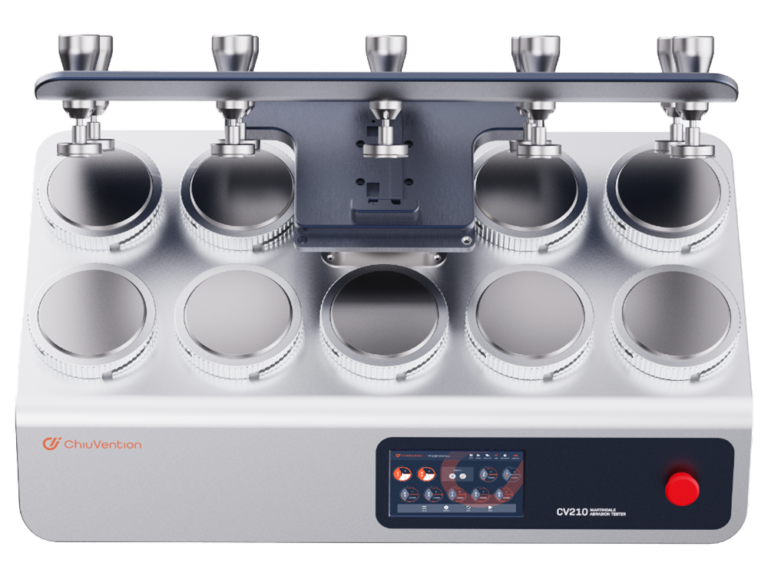
Walk into any serious textile testing lab, and chances are you will spot a Martindale machine humming away in the corner. This is not just another piece of equipment; it is the workhorse for determining how well a fabric resists the slow, grinding punishment of everyday use. What sets a high-performance Martindale tester apart from basic models is its ability to run longer, more consistently, and with less operator intervention. These advanced units come with features like touchscreen controls, multiple test stations that operate independently, and real-time cycle tracking. For labs that certify upholstery, activewear, or automotive textiles, upgrading to a high-performance version means fewer retests, lower maintenance costs, and the confidence that every result is repeatable, whether the test runs overnight or across a long weekend.
The Precision Engineering Behind Consistent Abrasion Results
A Martindale tester lives or dies by its mechanical precision. High-performance models use servo-driven motors instead of older friction-based systems, which means the oscillating motion remains perfectly uniform even after thousands of hours of use. The machine moves fabric holders in that signature Lissajous figure—a graceful, multi-directional pattern that distributes wear evenly across the sample. But here is where quality matters: cheaper testers can develop slop in their drive linkages, causing the pattern to drift and producing unreliable data. Premium machines use hardened steel guides, sealed bearings, and automatic tension maintenance to keep every stroke identical. Some even include vibration-damping feet and acoustic enclosures, which matter when you run six or nine stations simultaneously in a shared lab space. That mechanical integrity directly translates to trust in your test reports.
How Multi-Station Design Saves Time Without Sacrificing Accuracy
Time is money in a testing laboratory, and high-performance martindale abrasion tester are built to multiply your output. A typical unit offers four, six, or nine independent test stations, each capable of running different fabrics or different test methods at the same time. You could test upholstery fabric against wool felt on station one, evaluate a knit sweater for pilling on station three, and run a heavy-duty canvas against emery paper on station seven—all while the machine tracks separate cycle counts for each. Independent suspension means that if one sample fails early, you can stop that station without interrupting the others. For high-volume labs, this parallel processing cuts total test time from days to hours. Just be sure your model includes individual electromagnetic counters and auto-lift mechanisms that raise the weight holders when a test ends, preventing unnecessary wear on your reference felts.
Selecting the Right Abradant and Pressure for Different Fabrics
One size does not fit all when it comes to abrasion testing. The high-performance Martindale tester accommodates a range of abradants and loading weights, and knowing which combination to pick is an art form. For most woven apparel and household linens, standard wool felt with a 9 kPa weight works beautifully. But for heavy contract upholstery destined for hospitals or airports, step up to a 12 kPa weight and use wire mesh or silicon carbide paper as the abradant. Knit fabrics, which tend to pill rather than wear through, require a lower pressure—around 6 kPa—and often use the same fabric as both specimen and abradant. Denim and canvas benefit from emery cloth, which accelerates the test without distorting the failure mode. Your machine’s manual will list standard combinations, but developing internal guidelines for your specific product categories will give you the most actionable results.
Maintaining Your Tester to Avoid Costly Calibration Drift
A high-performance Martindale tester is an investment, and like any precision instrument, it demands regular care. The most overlooked maintenance task is replacing the backing felts under the abradant. After every test, those felts become compressed and contaminated with loose fibers, which changes the friction coefficient. Seasoned labs change felts after each run and record felt age in their logbooks. Another critical point is cleaning the drive pins and guide plates. Dust and fiber debris build up surprisingly fast, causing the sample holders to wobble instead of tracking cleanly. Once a month, remove the top plate and vacuum the mechanism thoroughly. Also, check the weight of your presser feet—calibration weights should be verified against a certified scale every six months. Drift of just five grams can change abrasion results by hundreds of cycles, potentially causing a good fabric to fail or a bad one to pass.

Interpreting Failure Modes Beyond the Cycle Count
Smart lab technicians know that the number of cycles is only half the story. When a fabric fails on the Martindale tester, the way it fails tells you exactly what went wrong in the manufacturing process. A clean break with individual yarns snapping suggests low tensile strength or poor yarn quality. Surface fuzzing that quickly turns into dense pills points to short fibers working their way out of the twist. If the coating or finish flakes off while the base fabric remains intact, you have an adhesion problem rather than a fiber problem. Delamination of multilayer fabrics shows as bubbles or separation along the edges of the worn area. Document these observations alongside your cycle counts. Over time, this qualitative data becomes a powerful troubleshooting library, helping your production team pinpoint whether the issue is raw material, weaving tension, or finishing chemistry.
Common Testing Standards That Rely on Martindale Equipment
If you are setting up a textile lab or seeking accreditation, you need to know which standards demand Martindale testing. The international community relies heavily on ISO 12947 for abrasion resistance, with parts 1 through 4 covering everything from specimen preparation to evaluation of deterioration. For pilling, ISO 12945-2 is the go-to standard, using the Martindale platform with modified parameters. In North America, ASTM D4966 is the equivalent abrasion standard, while ASTM D4970 covers pilling. Many automotive specifications, such as those from Ford and Toyota, also reference Martindale methods for seat fabrics. The key difference between standards is often the endpoint criteria—some call for two broken yarns, others require a visible hole, and a few use a percentage change in mass. Always confirm the exact version and annex of the standard before you start, as even small details like the type of mounting foam can affect your results.
Why Investing in a High-Performance Model Pays Off Over Time
Budget-conscious labs sometimes hesitate at the price premium for a high-performance Martindale tester. But the long-term math favors quality. Basic machines often lack overload protection, meaning a seized bearing can snap a drive belt and ruin an entire test after 40,000 cycles. They also tend to have shorter lifespans for their moving parts, requiring replacement of drive plates every couple of years. Premium models offer features like automatic lubrication, self-diagnostic error reporting, and user-replaceable wearing parts that cost a fraction of a service call. Then there is the human factor: quieter operation, easier sample mounting, and software that exports results directly to your LIMS system all reduce technician fatigue and data entry errors. For any lab that runs more than fifty abrasion tests per month, the upgrade pays for itself within eighteen months through reduced downtime and fewer customer complaints about field failures.
 English
 Arabic
 French
 Spanish
 Portuguese
 Deutsch
 Turkish
 Dutch
Dutch
 Italiano
 Russian
 Romaian
 Portuguese (Brazil)
 Greek
Greek