English
 Arabic
 French
 Spanish
 Portuguese
 Deutsch
 Turkish
 Dutch
Dutch
 Italiano
 Russian
 Romaian
 Portuguese (Brazil)
 Greek
Greek

Dune: Awakening Sandworm Update – Vehicle Recovery Guide
Games |
2025-10-09 02:53:36
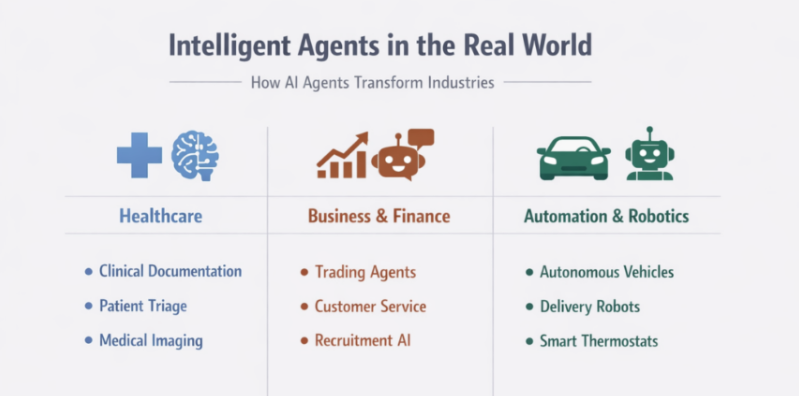
Modern systems built on Artificial Intelligence are moving beyond simple predictive models toward performance measure environment actuators sensors—software systems that can perceive, decide, and act in real or digital environments with minimal human intervention. Unlike experimental prototypes, production-ready agents are designed for reliability, scalability, monitoring, safety, and integration into real-world workflows such as customer support, coding assistants, automation pipelines, and business decision systems.
At their core, these agents represent a shift from passive prediction (as in traditional Machine Learning systems) to active decision-making systems.
A production-ready AI agent is not just a model—it is a complete system that includes:
In practice, these agents are expected to perform tasks like:
AI agent development frameworks provide the scaffolding needed to build and deploy intelligent systems efficiently. Some widely used frameworks include:
These frameworks abstract away much of the complexity of building autonomous systems, such as prompt orchestration, tool routing, and inter-agent communication.
Autonomous AI agents are systems that can operate without continuous human input. They:
The level of autonomy can vary:
True autonomy is challenging because it requires balancing reasoning ability, safety constraints, and adaptability in dynamic environments.
An intelligent agent is a system that perceives its environment and acts upon it to achieve goals. In Artificial Intelligence, this is a foundational concept.
A typical agent loop looks like:
This loop allows agents to continuously adapt to changing conditions.
The PEAS framework defines how an agent is specified:
For example, in a self-driving system:
PEAS is essential for designing intelligent systems that behave correctly in real-world conditions.
The environment is everything external to the agent that it interacts with. Environments can be:
A chess-playing agent operates in a deterministic, fully observable environment, while a trading agent works in a stochastic, partially observable one.
Understanding the environment is critical because it determines how complex the agent’s reasoning must be.
These four components define the operational structure of any intelligent agent:
Together, they form the bridge between intelligence and action.
Decision-making is the heart of intelligent behavior. Agents typically use:
In advanced systems, decision-making is often a combination of learned behavior and real-time reasoning, allowing flexibility in unpredictable environments.
The distinction between agents and machine learning systems is subtle but important:
In short:
An agent may contain multiple machine learning models, but ML alone does not constitute agency.
The difference between Artificial Intelligence and intelligent agents is largely about scope:
So:
Not all AI systems are agents (e.g., simple classifiers), but modern AI agents almost always rely on AI techniques.
The evolution from traditional machine learning models to production-ready AI agents represents a major shift in how software systems are built and deployed. With frameworks like LangChain, Microsoft AutoGen, and CrewAI, developers can now construct autonomous systems capable of reasoning, acting, and adapting in complex environments.