In modern power transmission and distribution systems, selecting the right conductor is critical for efficiency, reliability, and long-term operational performance. Among the most widely used conductors in overhead electrical networks is the AAC cable. Known for its excellent conductivity and lightweight structure, AAC cable is commonly used in urban distribution lines, low and medium voltage transmission systems, and coastal environments.
For utility companies, EPC contractors, engineers, and procurement teams, understanding the advantages and limitations of AAC cable can help improve project performance while reducing maintenance costs. This guide explains what AAC cable is, how it works, where it is used, and what factors should be considered before selecting it for a project.
What Is AAC Cable?
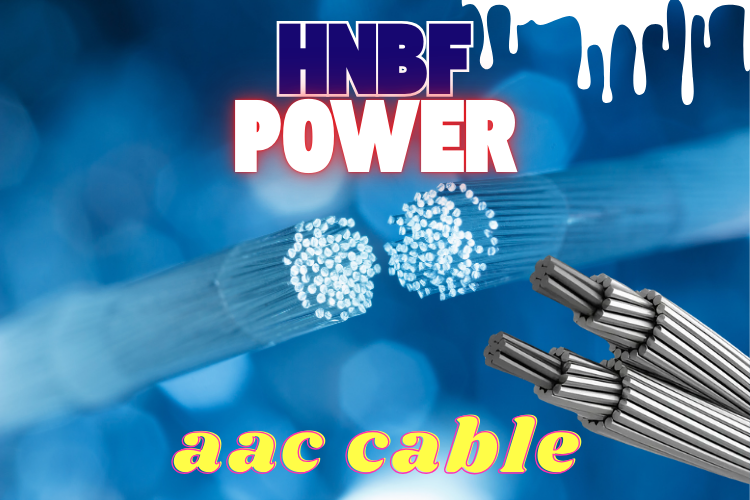
AAC stands for All Aluminum Conductor. It is an overhead electrical conductor made entirely from high-purity aluminum strands. The conductor is designed to carry electrical power efficiently in overhead transmission and distribution networks.
AAC cable is manufactured by concentrically stranding multiple aluminum wires together to create a flexible and conductive cable structure. Since aluminum offers excellent electrical conductivity while remaining lightweight, AAC conductors are widely used for short-span overhead lines and substations.
Compared with other conductors such as ACSR and AAAC, AAC cable provides the highest conductivity because it consists entirely of aluminum without steel reinforcement.
Main Features of AAC Cable
Excellent Electrical Conductivity
AAC cable offers superior conductivity compared to many other overhead conductors. This makes it suitable for applications where efficient current flow is essential.
Lightweight Structure
The lightweight design reduces mechanical load on poles and towers. It also simplifies installation and transportation during utility projects.
Corrosion Resistance
AAC conductors perform well in coastal and humid environments because aluminum naturally resists corrosion. This characteristic helps extend service life in challenging weather conditions.
Easy Installation
Due to its flexibility and low weight, AAC cable is easier to install compared to heavier reinforced conductors.
Cost-Effective Solution
For short-distance transmission and urban distribution systems, AAC cable provides an economical solution with reliable electrical performance.
AAC Cable Construction
AAC cable is made using high-purity aluminum wires stranded in concentric layers. The number of strands depends on the conductor size and current-carrying requirements.
Typical construction includes:
- Aluminum strands with high conductivity
- Concentric stranded design for flexibility
- Smooth outer surface for improved performance
- Lightweight conductor structure
Because AAC cable does not contain a steel core, it delivers excellent conductivity but has lower tensile strength compared to ACSR conductors.
Common Applications of AAC Cable
AAC cable is widely used across various electrical infrastructure projects. Its performance characteristics make it suitable for specific applications where conductivity is prioritized over mechanical strength.
Urban Power Distribution
AAC cable is commonly installed in densely populated cities where shorter spans are used between poles.
Coastal Areas
The corrosion-resistant properties of aluminum make AAC conductors ideal for coastal power networks exposed to salt air and humidity.
Low and Medium Voltage Transmission
Utilities use AAC cable for low and medium voltage overhead distribution systems where moderate mechanical strength is acceptable.
Substation Connections
AAC conductors are often used for busbars and substation interconnections because of their high conductivity.
Industrial Facilities
Factories and industrial plants use AAC cable for internal overhead electrical systems and power distribution networks.
AAC Cable vs ACSR Cable
Many engineers and procurement buyers compare AAC cable with ACSR conductors when selecting overhead transmission solutions.
AAC Cable
- Higher conductivity
- Lightweight
- Better corrosion resistance
- Lower tensile strength
- Best for short-span applications
ACSR Cable
- Steel-reinforced core
- Higher mechanical strength
- Suitable for long-span transmission lines
- Heavier structure
- Ideal for heavy-load environments
If the project requires high mechanical strength and long-distance transmission, ACSR may be preferred. However, for urban distribution and corrosion-prone environments, AAC cable is often the more efficient option.
Advantages of Using AAC Cable
Improved Power Efficiency
AAC conductors reduce energy losses because of their high electrical conductivity.
Reduced Installation Costs
The lightweight nature of AAC cable lowers transportation and installation expenses.
Reliable Performance in Coastal Regions
Unlike some conductors that may experience accelerated corrosion, AAC performs reliably in marine environments.
Simplified Maintenance
AAC cable requires relatively low maintenance when installed correctly in suitable environments.
Sustainable Material Choice
Aluminum is recyclable, making AAC cable an environmentally responsible option for modern power infrastructure projects.
Factors to Consider Before Choosing AAC Cable
Selecting the correct overhead conductor depends on several engineering and environmental factors.
Span Length
AAC cable is best suited for shorter spans because it has lower tensile strength than reinforced conductors.
Environmental Conditions
For coastal and humid areas, AAC cable offers excellent corrosion resistance.
Current-Carrying Capacity
Engineers should calculate load requirements to determine the appropriate conductor size.
Mechanical Load Requirements
Projects exposed to heavy wind, ice loading, or long transmission spans may require stronger conductors like ACSR.
Budget and Project Scope
AAC cable provides a cost-effective solution for many distribution projects without compromising electrical efficiency.
Why Quality Matters in AAC Cable Manufacturing
Not all overhead conductors offer the same performance and durability. Poor-quality aluminum, inconsistent stranding, or non-compliant manufacturing processes can lead to premature failures, higher energy losses, and maintenance problems.
Working with an experienced manufacturer helps utilities and EPC contractors ensure:
- Consistent conductor quality
- Compliance with international standards
- Reliable conductivity performance
- Long-term durability
- Timely supply for infrastructure projects
HNBF Power manufactures high-quality AAC conductors designed for modern transmission and distribution systems. With advanced production capabilities and strict quality control, HNBF Power supports utility projects worldwide with reliable overhead conductor solutions.
How HNBF Power Supports Power Infrastructure Projects
HNBF Power provides a wide range of overhead conductors and power cables for utilities, contractors, and industrial projects. The company manufactures:
- AAC conductors
- AAAC conductors
- ACSR conductors
- ABC cables
- LV power cables
- Concentric cables
By focusing on technical performance, manufacturing quality, and project-specific customization, HNBF Power helps customers select suitable cable solutions for demanding power distribution environments.
FAQs About AAC Cable
What does AAC cable stand for?
AAC stands for All Aluminum Conductor, a type of overhead conductor made entirely from aluminum strands.
Where is AAC cable commonly used?
AAC cable is commonly used in urban power distribution systems, substations, industrial facilities, and coastal environments.
What is the advantage of AAC cable over ACSR?
AAC cable offers higher conductivity and better corrosion resistance, while ACSR provides higher mechanical strength.
Is AAC cable suitable for long-distance transmission?
AAC cable is generally better for short and medium spans. Long-distance transmission lines often require reinforced conductors such as ACSR.
Why is aluminum used in AAC conductors?
Aluminum provides excellent electrical conductivity while remaining lightweight and corrosion-resistant.
Summary
AAC cable remains one of the most practical and efficient solutions for overhead power distribution systems. Its high conductivity, lightweight structure, corrosion resistance, and cost-effectiveness make it an ideal choice for utilities, substations, and urban electrical infrastructure.
For engineers and procurement teams seeking dependable overhead conductor solutions, choosing a trusted manufacturer is essential for long-term project success.
HNBF Power delivers high-quality AAC cable solutions designed to meet modern transmission and distribution requirements. Contact HNBF Power today to discuss customized conductor solutions for your utility or infrastructure project.
 English
 Arabic
 French
 Spanish
 Portuguese
 Deutsch
 Turkish
 Dutch
Dutch
 Italiano
 Russian
 Romaian
 Portuguese (Brazil)
 Greek
Greek