English
 Arabic
 French
 Spanish
 Portuguese
 Deutsch
 Turkish
 Dutch
Dutch
 Italiano
 Russian
 Romaian
 Portuguese (Brazil)
 Greek
Greek

Global Light Tactical Vehicle (JLTV, L-ATV) Market to Reach USD 19.4 Billion by 2034 at 3.9% CAGR
Networking |
2026-05-12 11:11:54
When your child needs a treatment that can cost over a million dollars, the word “affordable” feels almost like a cruel joke. Yet across the United States and China, families are finding real pathways to pediatric CAR-T therapy that do not require selling their home or declaring bankruptcy. The secret is understanding that the published price is rarely the actual price, and that different health systems approach affordability from completely different angles. In the US, the strategy involves insurance navigation, manufacturer assistance, and hospital charity care. In China, the strategy is more straightforward: lower base costs and clinical trial access. Neither option is easy, but both have helped hundreds of families access this lifesaving therapy without financial devastation. The key is matching your family’s unique financial and logistical situation to the right path.
Let me be honest about the American system first—it is complicated, frustrating, and requires relentless persistence. But it works for many families. Most commercially insured patients will hit their out-of-pocket maximum during CAR-T therapy, which typically ranges from three thousand to fifteen thousand dollars per year. That is still a huge sum for many families, but it is a world away from seven hundred thousand dollars. The real challenge is for families with high-deductible health plans or those who must travel out of network for treatment. In those cases, patient assistance programs from CAR-T manufacturers like Novartis often step in to cover deductibles and copays. Some families have also qualified for Medicaid as a secondary insurance, which picks up what primary insurance leaves behind. The most successful families hire a patient financial advocate—sometimes through the hospital, sometimes independently—who knows exactly which forms to file and which programs to apply for. That advocate often pays for themselves many times over.
Here is a path that many families overlook entirely: pediatric CAR-T clinical trials. Major children’s hospitals across the United States run trials testing next-generation CAR-T constructs, and in nearly all cases, the trial sponsor pays for the experimental therapy itself. More importantly, many trials also cover the hospital stay, the leukapheresis procedure, and all associated monitoring. The family may still owe for routine care not directly related to the trial, but the six-figure drug cost disappears entirely. Lists dozens of pediatric CAR-T trials actively recruiting. The trade-off is uncertainty—the experimental CAR-T might be less effective or have different side effects than the FDA-approved version. But for families with no insurance or with denied coverage, a clinical trial can transform an impossible situation into a manageable one. Some families have even had their travel and lodging covered by trial sponsors, though that is less common. It never hurts to ask the research coordinator directly.
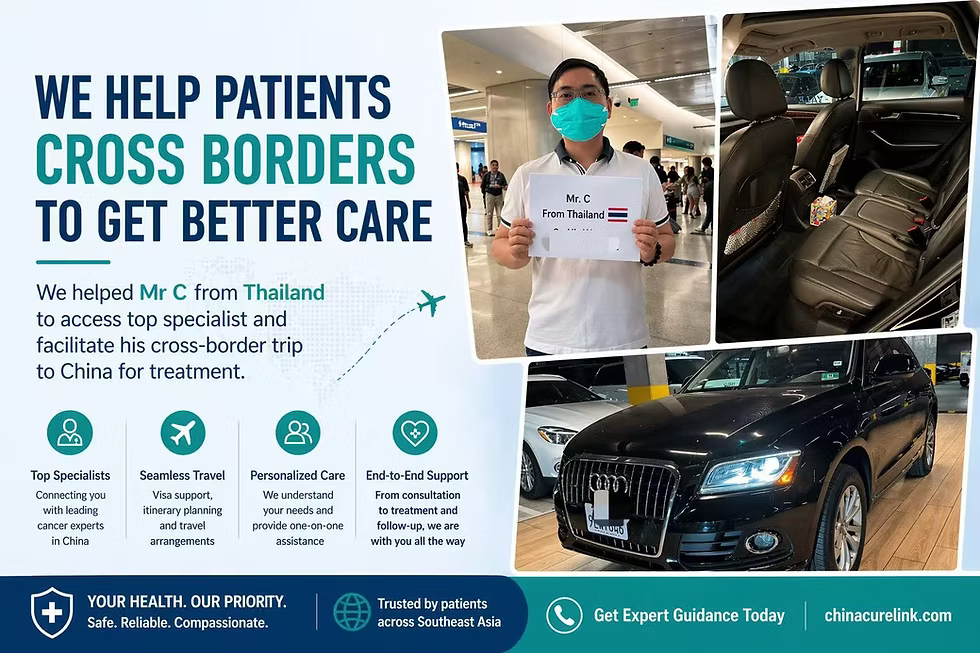
Shifting our view to the other side of the Pacific, the Chinese approach to CAR-T affordability looks almost simple by comparison. The same therapy that costs seven hundred thousand dollars in an American hospital might cost sixty thousand to one hundred twenty thousand dollars in a top Chinese pediatric center. How is this possible? Labor costs for nurses and technicians are significantly lower. Hospital overhead and administrative expenses are a fraction of US levels. Chinese biotech firms produce CAR-T cells locally without the massive research and development markups that Western pharmaceutical companies must recoup. Additionally, the Chinese government has prioritized cellular therapy as a national health goal, which means some hospitals receive subsidies that lower patient costs. For an uninsured American family or a family from a country without advanced CAR-T options, paying sixty thousand dollars in China may be far more achievable than paying seven hundred thousand dollars at home. That difference is not small—it is life-changing.

Chinese hospitals approach payment differently than their American counterparts, and savvy families can use these differences to their advantage. Most major pediatric centers in Beijing and Shanghai offer significant upfront discounts for international patients paying in cash or wire transfer, often reducing the quoted price by ten to thirty percent just for asking. Some hospitals also offer tiered pricing based on the complexity of the CAR-T construct, with simpler CD19-targeting therapies costing less than dual-targeting or armored versions. Payment plans are available but typically require a substantial down payment of fifty percent or more, with the remainder due before discharge. A newer development is the emergence of Chinese medical insurance products designed specifically for international patients, though these remain rare. The most practical advice is to negotiate before you travel—get a detailed written estimate, ask for a cash discount, and clarify exactly what is included. Chinese hospitals are generally transparent about pricing, but “included” versus “extra” can vary, so read carefully.
Affordability is not just about the medical bill. A family spending four to six weeks in China for CAR-T therapy will find daily living costs dramatically lower than in major US cities. A comfortable apartment near a Shanghai hospital might cost thirty to fifty dollars per night through short-term rental platforms, compared to two hundred to three hundred dollars for a hotel near a US children’s hospital. Meals from local restaurants run two to five dollars per person. Public transportation is efficient and cheap. Even international airfare, while not trivial, can be managed with advance purchase and flexible dates. Some families have reported total non-medical expenses of five to eight thousand dollars for a six-week stay in China, versus fifteen to thirty thousand dollars for a similar stay in the US. These savings do not justify choosing China solely for financial reasons, but for families already leaning that direction, they make the overall burden significantly lighter.
A creative hybrid approach has emerged for families with certain types of US insurance policies. Some PPO plans with out-of-network benefits will cover a portion of care received at foreign hospitals, though the reimbursement process requires extensive documentation and translation of medical records. Other families have purchased specialized medical travel insurance policies that cover experimental treatments abroad, paying premiums of one to three thousand dollars for coverage that caps out-of-pocket costs at twenty-five thousand dollars. There are also US-based nonprofits that provide grants specifically for families seeking treatment outside the country when domestic options are financially impossible. The key is to involve your home insurance company before you travel, not after. Some insurers will issue a letter of pre-approval for out-of-country care if your child’s oncologist documents that no affordable in-network option exists. This takes weeks of phone calls and paperwork, but families who persist have succeeded.
So which path is truly more affordable? The answer depends entirely on your family’s insurance status, financial reserves, and tolerance for complexity. For families with solid commercial insurance and the ability to travel to a US Center of Excellence, the American pathway with manufacturer assistance and charity care often results in manageable out-of-pocket costs. For uninsured families or those whose insurance flatly denies coverage, a paid clinical trial slot in the US or a self-pay arrangement in China may be the only realistic options. For families with some savings but not enough for US costs, China’s sixty to one hundred twenty thousand dollar range sits in an unfortunate middle ground—too high for many but lower than the alternative. The single best piece of advice is to pursue multiple options simultaneously. Apply for clinical trials while also requesting cost estimates from Chinese hospitals. Start manufacturer assistance applications while also researching medical travel insurance. Do not wait for one door to close before knocking on another. Pediatric CAR-T is too important to let financial barriers be the final word, and with persistent effort, more families are finding pathways that work than ever before.