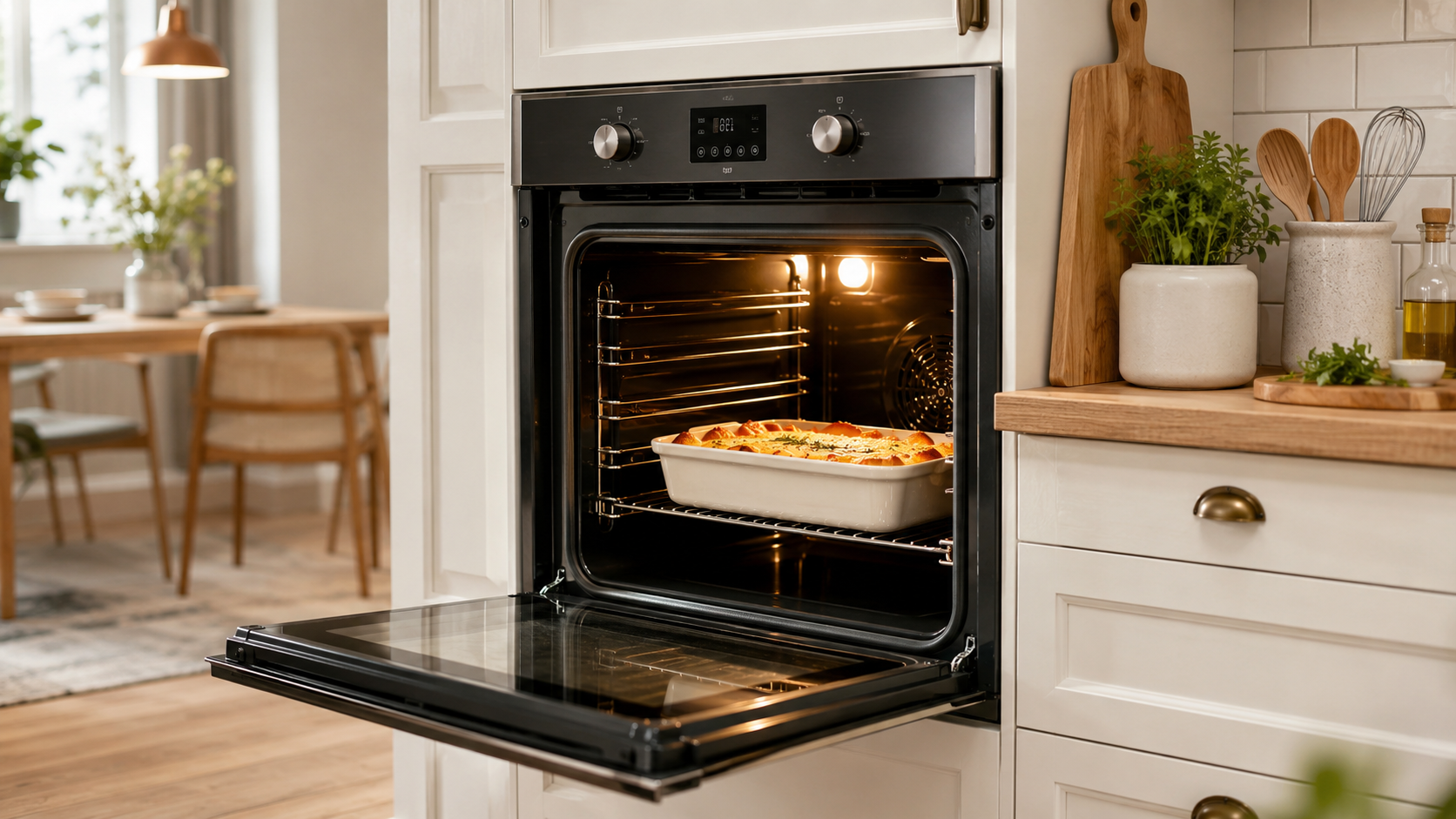
Every kitchen, whether at home or in a commercial setting, relies on reliable cooking equipment. Among these, the conventional oven remains a fundamental tool for baking, roasting, and cooking a wide variety of dishes. Known for its simplicity and consistent performance, a conventional oven continues to be a staple in kitchens around the world.
What is a Conventional Oven?
A conventional oven is a cooking appliance that uses radiant heat from heating elements — typically at the top and bottom of the oven chamber — to cook food. Unlike convection ovens, which use fans to circulate hot air, conventional ovens rely on natural heat transfer to cook food evenly. This type of oven is ideal for dishes that benefit from slow, steady cooking.
Key Features of Conventional Ovens
- Radiant Heating Elements
Provides heat from the top and bottom of the oven for even cooking.
- Temperature Control
Adjustable thermostats allow precise control over cooking temperatures.
- Spacious Interior
Available in a variety of sizes to accommodate small household needs or commercial baking trays.
- Durable Construction
Made with heat-resistant materials to ensure long-lasting performance.
- Manual or Digital Controls
Depending on the model, ovens may feature analog dials or digital interfaces for easy operation.
Benefits of Using a Conventional Oven
- Even Cooking: Ideal for dishes that require gentle, consistent heat.
- Simplicity: Easy to operate, making it beginner-friendly.
- Versatility: Suitable for baking, roasting, broiling, and slow-cooking.
- Durability: Fewer moving parts than convection ovens, reducing potential maintenance issues.
- Energy Efficiency: Often uses less energy for simple baking compared to complex convection systems.
Applications in the Kitchen
- Baking: Cakes, bread, cookies, and pastries rise evenly in a conventional oven.
- Roasting: Meats and vegetables develop rich flavor and texture.
- Casseroles: Slow, even cooking helps meld ingredients together.
- Pizza and Flatbreads: Heat from the bottom ensures a crisp crust.
- Reheating: Maintains food quality without drying it out.
Tips for Using a Conventional Oven
- Preheat the Oven: Ensure the oven reaches the desired temperature before cooking.
- Use the Correct Rack Position: Positioning affects browning and even cooking.
- Avoid Overcrowding: Proper air circulation ensures consistent results.
- Rotate Trays: For baking multiple trays at once, rotate halfway to prevent uneven cooking.
- Check Temperature Accuracy: Use an oven thermometer to ensure precise heat.
Conventional Oven vs. Convection Oven
While conventional ovens rely on radiant heat, convection ovens use fans to circulate hot air. This allows convection ovens to cook faster and brown foods more evenly. However, conventional ovens remain excellent for recipes where slow, gentle heat is preferred, such as custards, delicate pastries, and casseroles.
Final Thoughts
The conventional oven is a timeless kitchen appliance that delivers reliable and versatile cooking performance. Its simplicity, durability, and consistent heat make it ideal for both home cooks and professional chefs. Whether you’re baking bread, roasting vegetables, or preparing a hearty casserole, a conventional oven provides the foundation for delicious results every time.
 English
 Arabic
 French
 Spanish
 Portuguese
 Deutsch
 Turkish
 Dutch
Dutch
 Italiano
 Russian
 Romaian
 Portuguese (Brazil)
 Greek
Greek