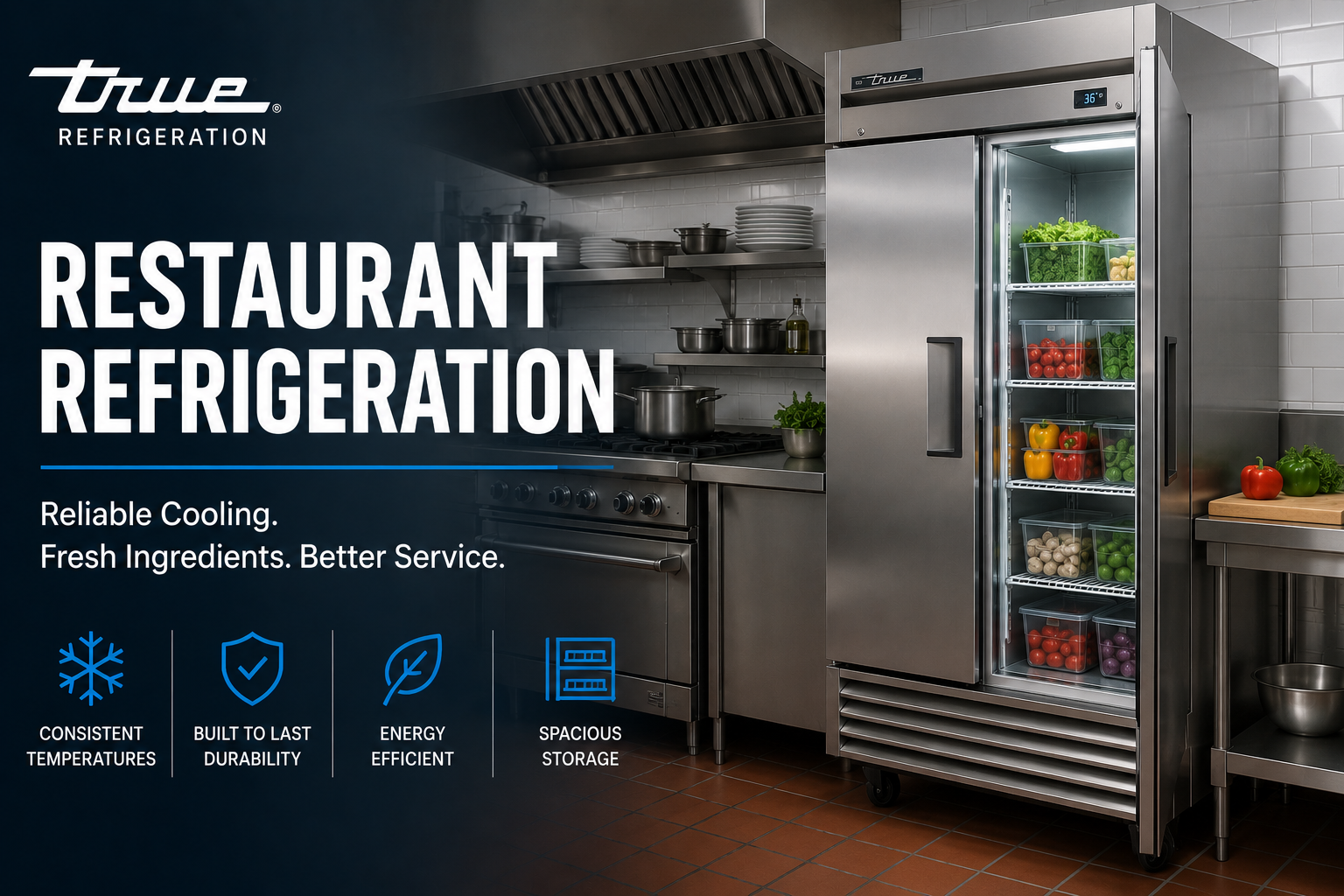
A restaurant kitchen is a high-demand environment where food safety, efficiency, and quality are crucial. One of the most important pieces of equipment is the restaurant refrigerator. These commercial-grade refrigerators are designed to handle large volumes of perishable ingredients, maintain consistent temperatures, and help kitchens operate efficiently.
What is a Restaurant Refrigerator?
A restaurant refrigerator is a commercial refrigeration unit built to store ingredients safely at precise temperatures. Unlike home refrigerators, commercial models are designed for heavy use, frequent door openings, and high-capacity storage. They are essential for restaurants, cafés, hotels, and catering operations that need reliable cold storage for meats, dairy, vegetables, and prepared dishes.
Types of Restaurant Refrigerators
- Reach-In Refrigerators
Upright units with doors that allow easy access to shelves. Ideal for busy kitchens where staff frequently need ingredients.
- Undercounter Refrigerators
Compact units that fit under countertops, providing quick access to ingredients during food prep.
- Prep Table Refrigerators
Refrigerated workstations with storage underneath, perfect for sandwiches, salads, and pizza preparation.
- Walk-In Refrigerators
Large rooms where staff can walk in to store bulk ingredients. Common in high-volume restaurants, hotels, and catering operations.
- Display Refrigerators
Glass-front units designed to showcase beverages, desserts, or pre-packaged items in cafés and retail spaces.
Key Features
- Consistent Temperature Control: Maintains safe storage conditions to prevent spoilage.
- Energy Efficiency: Modern units use insulated panels and advanced compressors to reduce energy costs.
- Durable Construction: Heavy-duty stainless steel interiors and exteriors withstand frequent use and cleaning.
- Adjustable Shelving: Allows efficient organization of different products and containers.
- User-Friendly Controls: Easy-to-read thermostats or digital panels for precise temperature management.
Benefits of Using a Restaurant Refrigerator
- Food Safety: Keeps perishable items at safe temperatures, reducing the risk of spoilage and foodborne illness.
- Operational Efficiency: Easy access to ingredients improves workflow and reduces prep time.
- Cost Savings: Storing ingredients in bulk reduces waste and lowers purchasing costs.
- Versatility: Suitable for a wide range of foodservice operations.
- Compliance: Helps meet local and federal health regulations regarding cold storage.
Maintenance Tips
- Regular Cleaning: Wipe down shelves, walls, and door gaskets to maintain hygiene.
- Check Temperatures Daily: Ensure the unit maintains proper refrigeration conditions.
- Inspect Door Seals and Hinges: Prevent cold air leaks and maintain efficiency.
- Service Compressors Periodically: Schedule professional maintenance for long-lasting performance.
- Avoid Overloading: Proper air circulation is necessary for even cooling.
Applications
- Restaurants: Store ingredients and prepped menu items for efficient service.
- Cafés & Bakeries: Maintain beverages, pastries, and desserts.
- Hotels: Provide bulk storage for room service, banquets, and kitchens.
- Catering Services: Keep perishable foods safe for events.
- Supermarkets: Store dairy, beverages, and packaged foods for retail display.
Final Thoughts
A restaurant refrigerator is more than just a storage unit — it is an essential component of any commercial kitchen. Reliable refrigeration ensures food safety, operational efficiency, and consistent quality, making it a smart investment for restaurants, cafés, hotels, and catering services alike. Choosing the right unit tailored to your kitchen’s needs will help keep ingredients fresh, reduce waste, and ensure smooth operations every day.
 English
 Arabic
 French
 Spanish
 Portuguese
 Deutsch
 Turkish
 Dutch
Dutch
 Italiano
 Russian
 Romaian
 Portuguese (Brazil)
 Greek
Greek