English
 Arabic
 French
 Spanish
 Portuguese
 Deutsch
 Turkish
 Dutch
Dutch
 Italiano
 Russian
 Romaian
 Portuguese (Brazil)
 Greek
Greek

Computer Scam Alerts: How to Spot and Avoid Risks
Games |
2026-03-20 00:50:33
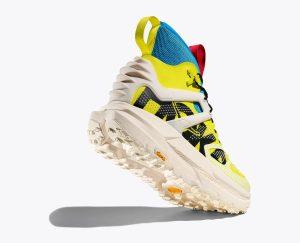
The evolution of running footwear has reached a fever pitch, with carbon fiber technology sitting at the very center of the conversation. Originally designed to shatter world records on the elite marathon circuit, these stiff, spring-like plates are now standard features in many premium trainers. However, as this technology migrates from the feet of professional athletes to the average weekend warrior, a critical question has emerged: does the mechanical advantage of a carbon fiber plate come at too high a physical cost?
To understand whether these shoes are worth the potential risk, it is necessary to look beyond the marketing claims of "energy return" and "propulsion" and examine the bio-mechanical shifts that occur when a rigid plate is inserted into a foam midsole.
Traditional hoka trainers rely on the natural flexibility of the foot and the compression of foam to manage impact and provide forward motion. Carbon fiber plates change this dynamic entirely. These plates act as a lever, increasing the effective length of the foot and altering the way force is distributed through the lower extremities.
When paired with high-rebound, "super-foam" midsoles, the plate serves several functions:
Stability: It provides a structured platform for incredibly soft, high-stack foams that would otherwise be too unstable to run in.
Ankle Mechanics: By keeping the big toe joint (the metatarsophalangeal joint) straight, the plate reduces the workload on the foot's internal muscles, shifting that work further up the leg.
The Rocker Effect: Most plated shoes feature a dramatic "meta-rocker" geometry. The plate ensures this curved shape stays rigid, allowing the runner to "roll" through the gait cycle more efficiently.
While these factors contribute to faster times and less muscular fatigue in the calves, they also create a "new" way of moving that the human body did not evolve to handle without preparation.
The primary concern regarding injury stems from the "rigidity" of the carbon plate. In a standard trainer, your foot flexes at the ball. In a carbon-plated shoe, that flexion is largely eliminated. This mechanical shift doesn't make the stress of running disappear; it simply moves it somewhere else.
Because the plate is inflexible, the foot is forced into a specific movement pattern. For runners with certain foot shapes or strike patterns, this can lead to unusual pressure on the metatarsals. There have been increasing reports of "navicular" stress fractures—a bone in the midfoot—linked to the repetitive, stiff loading patterns of carbon-fiber shoes.
The plate acts as an external longitudinal arch. While this can feel supportive, it can also lead to a "lazy" foot. If the intrinsic muscles of the foot aren't firing because the shoe is doing the work, the plantar fascia can become over-stressed or, conversely, weakened over time, leading to chronic heel pain once the runner switches back to regular shoes.
Research indicates that by reducing the work done by the calves and ankles, carbon plates increase the load on the knees and hips. For a runner with a history of knee issues or hip impingement, the "propulsive" nature of these shoes might exacerbate existing vulnerabilities. The body is an interconnected chain; if you lock one link (the foot), the other links must compensate.
The "risk" of a carbon fiber plate is not universal; it is highly dependent on the individual runner's mechanics, strength, and mileage.
The Beginner Runner: Beginners often lack the "pre-conditioned" lower limb strength required to handle the aggressive geometry of plated shoes. Jumping into a high-stack, rigid shoe without years of foundational mileage is a recipe for calf strains or stability-related ankle rolls.
The Heel Striker: Most carbon-plated designs are optimized for midfoot or forefoot strikers. A heavy heel striker might find that the plate creates a jarring transition, as the "rocker" doesn't engage properly until later in the stride, leading to increased impact forces at the point of contact.
The Injury-Prone Athlete: If you have a history of stress reactions or severe tendonitis, the "super shoe" category should be approached with extreme care. The very thing that makes them fast—the mechanical stiffness—is the same thing that prevents the foot from naturally dissipating force.
Is the performance boost worth it? For many, the answer is yes, but only with a disciplined approach to shoe rotation. Problems typically arise when runners use carbon-plated shoes for every single run.
These shoes are designed for specific purposes: racing and high-speed workouts. Using them for "easy miles" or daily recovery runs is where the injury risk spikes. During slow runs, your mechanics change; you tend to sit back further on your heels and have a lower cadence. visit hokatrainersuk.com to check more collection of hoka. In this state, the carbon plate doesn't provide a benefit; it simply becomes a stiff, unforgiving plank under your foot.
A safer strategy involves:
Strength Training: Focus on calf raises, toe scrunches, and single-leg stability work to ensure your body can handle the altered load.
Gradual Integration: Start by wearing plated shoes for one short interval session a week before moving up to longer tempo runs.
Listen to the "Niggles": Unlike the "good" soreness of tired muscles, sharp pains in the top of the foot or the midfoot bone should be taken as an immediate sign to return to traditional trainers.
The industry is beginning to recognize that "stiffer is not always better" for the general population. We are starting to see the emergence of "nylon plates" or "split plates" that offer some energy return while allowing for more natural lateral movement of the foot. These may eventually become the safer middle ground for runners who want the feeling of speed without the extreme rigidity of pure carbon fiber.
For now, the carbon plate remains a specialized tool. It is like a high-performance sports car: it can go incredibly fast, but it requires a skilled driver and the right conditions to stay on the road safely.
The risk of injury associated with carbon fiber plates is not a myth, but it is also not a guarantee. The danger lies in the "misuse" of the technology. If you treat these shoes as a shortcut to speed without respecting the bio-mechanical changes they force upon your body, the risk of a bone or tendon injury is real.
However, if used as a specific tool within a balanced training program—supported by strength work and a variety of footwear—the carbon plate can be a revolutionary asset. It allows for faster recovery after hard efforts by reducing muscular damage, provided the skeletal system is strong enough to handle the redirected force.
Ultimately, the most important piece of equipment isn't the shoe; it's the runner's ability to listen to their body. Speed should never come at the expense of being able to run tomorrow.
Can I wear carbon-plated shoes for my daily walk? It is generally not recommended. These shoes are engineered for the specific mechanics of running. Walking in them can feel unstable and may put unnecessary pressure on the arches and midfoot because the "rocker" is not designed for a walking gait.
Do carbon fiber shoes wear out faster than regular trainers? Yes. The high-performance foams used alongside carbon plates tend to lose their "bounce" and structural integrity faster than the denser foams found in daily trainers. Most racers are optimized for 200 to 300 miles, whereas a standard trainer might last 500 miles.
Will carbon plates help me if I am a slow runner? The benefits are most pronounced at higher speeds where the runner can compress the foam and engage the plate's lever effect. While slower runners may still feel a "rolling" sensation, the percentage of energy savings is typically lower than it is for elite-level speeds.