English
 Arabic
 French
 Spanish
 Portuguese
 Deutsch
 Turkish
 Dutch
Dutch
 Italiano
 Russian
 Romaian
 Portuguese (Brazil)
 Greek
Greek

2018 Smart TV Guide: Top Picks & Buying Tips
Games |
2026-02-24 03:11:00
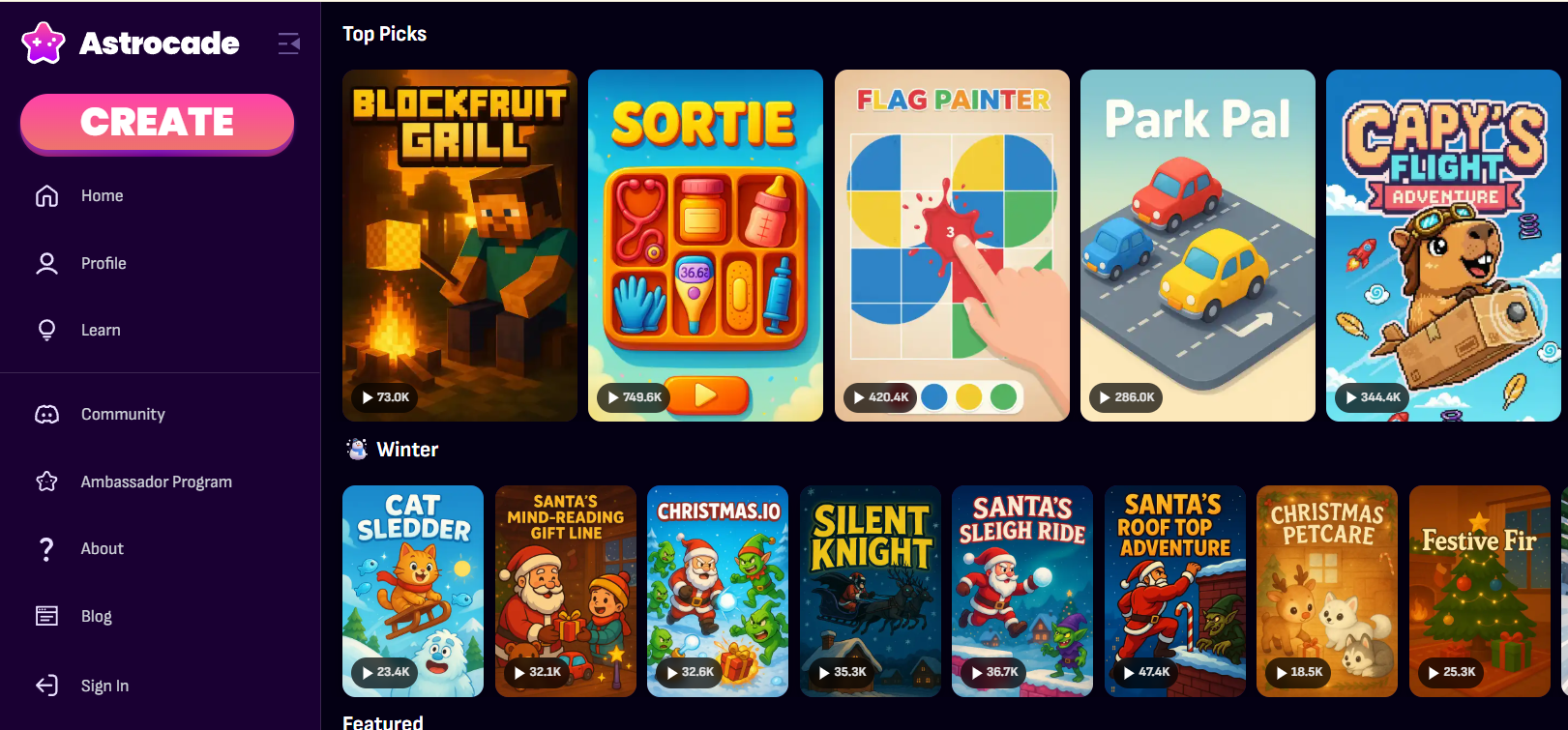
The professional development community often views visual scripting and prompt based design through a lens of skepticism. For many veteran engineers the idea of building a world without manually writing every line of code feels like a shortcut that sacrifices depth and optimization. However as we move deeper into 2026 a massive shift is occurring that many high level developers are completely ignoring. The true power of a no-code game maker is not just the speed of production but the psychological liberation of the creator. By removing the technical cognitive load that comes with managing complex syntax and memory allocation these tools allow a designer to inhabit the perspective of the player far more effectively than traditional methods.
In traditional development a massive portion of a creator's brain is constantly dedicated to the how of a feature. If a developer wants to implement a specific lighting effect they must think about shader languages, render passes and hardware compatibility. This constant technical multitasking creates a cognitive load paradox where the very skills required to build the world prevent the creator from truly feeling the world. When you use a visual interface to build a game that technical barrier vanishes. The brain is finally free to focus entirely on the why of the design. This results in experiences that are far more emotionally resonant and psychologically polished because the creator was never pulled out of the flow state by a broken script.
One of the most significant hidden advantages of modern builders is the ability to perform what experts call iterative empathy. This is the process of building a mechanic testing it immediately and adjusting it based on how it feels rather than how it works. In a traditional engine a single change might require a five minute recompilation. In a high speed visual environment that change is instant.
Tactile Tuning: Creators can adjust the friction of a character's movement or the bloom of a light source in real time while the game is running.
Emotional Pacing: You can test the exact timing of a story beat or a musical transition dozens of times in a single hour to ensure it hits the perfect emotional note.
Player Pathing Analysis: By watching a friend test a level and making adjustments as they play you can eliminate points of frustration that a static development cycle would miss.
Mechanical Discovery: Sometimes the most innovative mechanics are found by mistake while playing with visual logic blocks in a way that code would never allow.
A perfect illustration of a title that relies on this high level emotional tuning is the ethereal experience known as Cosmic Bloom. This title is a calm exploration based journey set in the vast reaches of space featuring visually stunning environments that prioritize the player's sensory experience over intense competition. In Cosmic Bloom players do not fight for survival; instead they interact with celestial elements to slowly progress through a beautifully rendered galaxy. It is a game built entirely on vibes and atmosphere which are the hardest elements to get right in a traditional development environment. Because the creator could focus on the beauty of the visuals and the smoothness of the interactions without worrying about the underlying engine code the final result is a deeply relaxed casual gameplay experience that feels truly cohesive.
Atmospheric games like Cosmic Bloom require a level of artistic focus that often clashes with the rigid nature of traditional programming. By using a game maker online an artist who has never touched a line of code can suddenly become a master of interactive storytelling. This democratization is the primary driver behind the massive diversity of content we see in 2026.
Visual First Design: Artists can build worlds using the same logic they use for painting or sculpting focusing on color theory composition and mood.
Sound Integration: Modern builders allow for deep audio integration where the soundscape responds dynamically to the player's movements creating a truly immersive 360 degree experience.
Non Linear Progression: AI assisted tools help creators build complex branching paths that react to player curiosity rather than following a strict A to B logic.
The speed at which these tools operate is the secret engine behind today's most successful Viral games. When the time from idea to publication is measured in hours instead of months a creator can respond to cultural trends in real time. This agility is something that massive corporate studios simply cannot replicate. On any modern social gaming platform a single clever idea can be published, shared and played by millions before a traditional studio could even finish their first design document. This rapid lifecycle ensures that the most interesting and innovative ideas are constantly surfacing at the top of the global charts.
The true future of development is collaborative and the no-code revolution is making that possible for everyone. When you can play with friends online inside the very tool you are using to build the world the act of creation becomes a social event.
Live Collaborative Building: Multiple creators can jump into the same celestial arena to place stars, adjust planet rotations and fine tune the exploration mechanics together.
Community Playtesting: Creators can open their projects to the public as Online Free Games to gather thousands of data points on how real people navigate their worlds.
Modular Sharing: The ability to share specific logic blocks or visual assets between creators fosters a healthy ecosystem of mutual support and shared innovation.
A common argument against no-code tools is that they produce unoptimized software. However in 2026 this is a myth that has been thoroughly debunked. Modern cloud based builders use highly optimized pre compiled kernels that are often more efficient than hand written code produced by a beginner or intermediate developer. These tools are specifically designed to run flawlessly in a browser which requires a level of memory management and efficiency that traditional engines often struggle to achieve. This ensures that a visually dense experience like Cosmic Bloom can run smoothly on a wide variety of hardware from mobile phones to high end desktops.
As these tools become the industry standard the definition of a professional developer is changing. The most valuable skill in 2026 is no longer the ability to memorize a language but the ability to architect an experience. High level developers are beginning to realize that using a visual builder is not an admission of weakness but a strategic choice to prioritize the player. By letting the tool handle the infrastructure the human can focus on the art. This shift is leading to a new era of digital masterpieces that are more beautiful, more engaging and more human than anything we have seen before.
The hidden advantage of the no-code movement is that it makes the technology invisible. When the tools are so intuitive that you forget you are building software you are finally free to create art. Whether you are building a quiet space odyssey like Cosmic Bloom or a complex multiplayer arena the goal is the same: to create a world that people want to inhabit. The barriers that once separated the players from the creators have been permanently removed. The tools are ready the audience is waiting and the only limit is the clarity of your own vision. It is time to stop thinking about the code and start thinking about the bloom.