English
 Arabic
 French
 Spanish
 Portuguese
 Deutsch
 Turkish
 Dutch
Dutch
 Italiano
 Russian
 Romaian
 Portuguese (Brazil)
 Greek
Greek

Classical Dance Classes in Mahaveer Nagar – Buskers Dance Institute
Dance |
2025-12-30 07:19:17
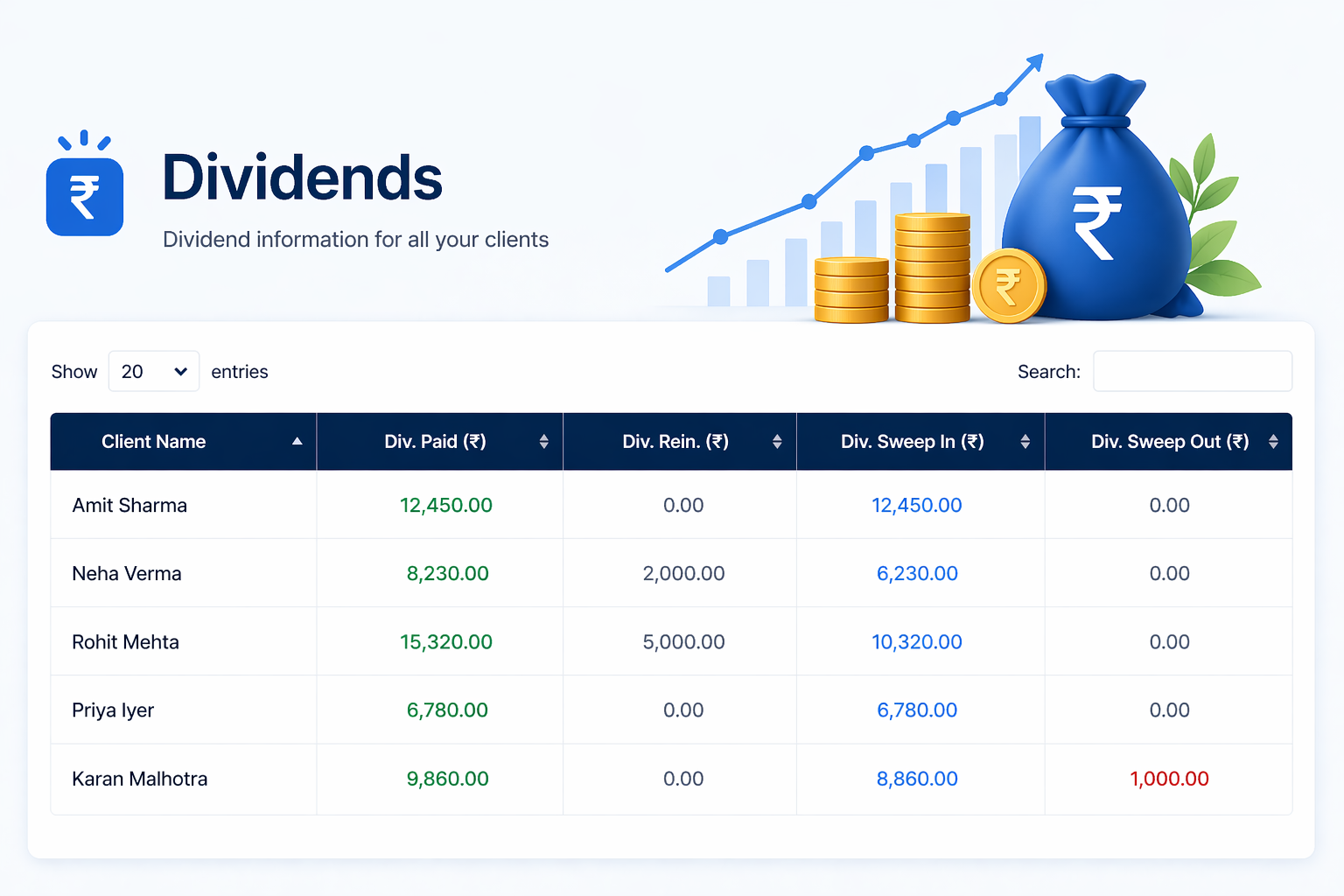
For many Mutual Fund Distributors (MFDs), tracking investor returns is not limited to just portfolio value or capital gains.
Dividends also play an important role in understanding how investments are performing and how income is being generated or reinvested.
However, dividend tracking is often overlooked because it is not always easy to view in a structured way—especially when dealing with multiple clients and multiple schemes.
This is where mutual fund software in India, like REDVision Technologies, becomes useful.
Modern platforms allow MFDs to view detailed dividend information across clients and time periods, making it easier to track and explain investment outcomes.
What Are Dividends and Why Do Investors Receive Them?
It’s not something MFDs don’t already know, but dividends are essentially the portion of profits that a mutual fund distributes to investors. When a scheme generates returns—through interest, underlying stock dividends, or capital gains—it may choose to pass on a part of that to investors instead of retaining everything within the fund.
Investors receive these dividends based on the units they hold, and the payout depends on the fund’s performance and distribution decision. While many investors understand this at a basic level, what often matters in practice is how these payouts reflect in their overall portfolio and cash flow.
Some investors prefer dividends for periodic income, while others opt for reinvestment to continue compounding. From an MFD’s perspective, tracking how these dividends are paid, reinvested, or moved becomes more important than just understanding the concept itself—especially during portfolio reviews and client discussions.
Why Dividend Tracking Matters for MFDs
Dividends are an important part of certain mutual fund investments.
They help MFDs and investors understand:
● how much income has been generated
● whether payouts are being received or reinvested
● how cash flows are impacting the portfolio
● the overall return structure of investments
Without proper tracking, dividend data can get scattered and difficult to analyze, that's why more professionals are choosing mutual fund software for distributors today.
The Challenge Without Structured Reporting
Manually tracking dividends can be complicated because:
● Dividend payouts happen at different times
● Multiple schemes may have different payout options
● Reinvested dividends are not always easy to track
● Data may be spread across statements
For MFDs managing multiple clients, this becomes time-consuming and inefficient.
This is why a structured report is important.
How Wealth Management Software Helps MFDs
Portfolio management software simplifies dividend tracking by providing a dedicated dividend report.
This allows MFDs to view dividend-related data in an organized format instead of searching through multiple records.
You can analyze dividend information using:
● From Date to Date filtering
● View by Client
● View by Family
This flexibility makes it easier to track dividend activity based on different needs.
What Information Can You See?
The dividend report typically includes the following details:
● Dividend Paid – The amount directly received by the investor in their bank account. This reflects actual cash flow generated from the investment.
● Dividend Reinvested – Dividends that are automatically reinvested back into the same scheme. This increases the number of units held and supports long-term compounding.
● Dividend Sweep In – Dividend amount that is redirected into another investment or scheme. This is typically used to systematically move gains into different allocations.
● Dividend Sweep Out – Dividend amount moved out from the scheme to another destination. This may be used for withdrawals, reallocation, or planned cash flow needs.
This gives a complete picture of how dividends are being handled across the portfolio.
Why This View Is Useful
Having all dividend details in one place helps MFDs:
● understand income generated from investments
● explain dividend flows clearly to clients
● track reinvestment patterns
● review cash flow behavior
● prepare for client discussions
Instead of checking each scheme separately, everything is available in a single report.
Better Client Communication
Investors often ask questions like:
● “How much dividend have I received?”
● “Is my dividend being reinvested?”
● “Where did this payout go?”
With structured dividend reports, MFDs can answer these questions quickly and accurately.
This improves transparency and builds trust.
Useful for Portfolio Reviews
During portfolio reviews, dividend data adds another layer of understanding.
It helps MFDs:
● explain total returns more clearly
● highlight income generated
● discuss reinvestment strategies
● review whether the current approach is suitable
This makes portfolio discussions more meaningful.
Helps in Better Record Management
When dividend data is stored and organized properly:
● tracking becomes easier
● historical records are available
● analysis becomes faster
● reporting becomes more efficient
For MFDs managing a growing client base, this becomes essential.
Conclusion
MF software does offer information on investor dividends in a structured and practical way.
With features that allow date-wise tracking, client-wise or family-wise views, and detailed dividend breakdowns, MFDs can easily monitor dividend activity across portfolios.
This not only improves reporting but also helps in better client communication and overall portfolio understanding.
FAQs
1. Can mutual fund software show dividend details for investors?
Yes. Most modern mutual fund software platforms provide detailed dividend reports showing payouts, reinvestments, and sweep transactions.
2. Can I filter dividend data for a specific period?
Yes. You can view dividend data using a from date to date filter, making it easy to analyze activity within a selected time frame.
3. Can dividend reports be viewed client-wise?
Yes. Dividend data can be viewed client-wise or family-wise, depending on how you want to analyze the portfolio.
4. Why is dividend tracking important for MFDs?
Dividend tracking helps MFDs understand income flows, explain returns better, and improve client communication during portfolio reviews.