English
 Arabic
 French
 Spanish
 Portuguese
 Deutsch
 Turkish
 Dutch
Dutch
 Italiano
 Russian
 Romaian
 Portuguese (Brazil)
 Greek
Greek

Innovation and Growth in Veterinary Pharmaceuticals: Market Analysis
Other |
2025-10-15 12:13:26
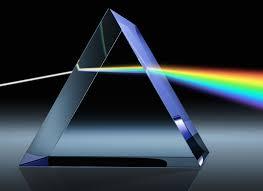
For B2B procurement managers and optical engineers, a prism is more than a light-bending tool; it is the heart of an optical engine's alignment. In high-precision applications like AR/VR waveguides or surgical microscopy, the primary bottleneck is not the refractive index of the glass, but the accumulated error during the integration phase.
The most expensive problem in B2B prism sourcing is the discrepancy between a theoretical 90-degree angle and the manufactured reality.
The Issue: Even a few arcseconds of angular deviation can cause "double imaging" or ghosting in high-resolution displays. As light travels through multiple internal reflections, a tiny error at the first interface is magnified exponentially by the time it reaches the sensor or the eye.
The Conflict: Standard manufacturing tolerances often fall short for 4K-capable micro-displays.
The Solution: Engineering teams must specify Angle Accuracy in arcseconds rather than degrees and move toward Active Alignment during assembly, where the prism is positioned based on real-time sensor feedback rather than mechanical housing stops.
In laser-based systems and high-end imaging, the way a prism handles polarized light is a common failure point that is often overlooked during the prototyping stage.
The Problem: Total Internal Reflection (TIR) inside a prism naturally introduces a phase shift between the s-polarized and p-polarized components of light.
The Consequence: In medical diagnostics or fiber-optic switching, this "retardation" degrades signal integrity and color accuracy.
The Technical Fix: To solve this, B2B stakeholders must utilize phase-compensated coatings. By applying specialized thin-film layers to the reflecting surfaces, the phase shift can be neutralized, preserving the polarization state of the light throughout the optical path.
In ruggedized B2B environments—such as tactical imaging or industrial sensors—the prism is often bonded to other components using UV-cured adhesives.
The Pain Point: "Outgassing." Under thermal stress, the chemicals in the adhesive can vaporize and re-deposit onto the prism’s clear apertures as a microscopic film.
The Reality: This creates a "haze" that scatters light and reduces contrast ratios by up to 30%. Many teams mistakenly blame the glass quality, when the failure is actually in the chemical compatibility of the assembly.
Mitigation: Solving this requires the use of Low-Outgassing (NASA-grade) epoxies and a rigorous "bake-out" process during the manufacturing cycle to ensure no volatile organic compounds remain in the sealed optical housing.
A common procurement error is over-specifying surface quality (Scratch/Dig) where it isn't needed, and under-specifying it where it is critical. While a 60/40 S/D might work for a simple light pipe, a prism used in the focal plane of an AR display requires a 10/5 or better. Failing to match the surface specification to the depth of field of the system leads to "fixed pattern noise" that users perceive as dust or defects in the display.
The path to a reliable optical system is paved with the technical resolution of prism-related trade-offs. In the B2B world, the "best" prism is the one that accounts for angular precision, maintains polarization integrity, and survives the chemical realities of the assembly process. By shifting focus from commodity glass specs to system-level integration challenges, OEMs can eliminate the costly redesign cycles that plague high-precision hardware development. Success isn't just about bending light; it's about controlling it at the micron level.