 English
 Arabic
 French
 Spanish
 Portuguese
 Deutsch
 Turkish
 Dutch
Dutch
 Italiano
 Russian
 Romaian
 Portuguese (Brazil)
 Greek
Greek

Heat Pumps Market Trends, Insights and Future Outlook 2025 –2032
Games |
2026-03-31 06:37:25
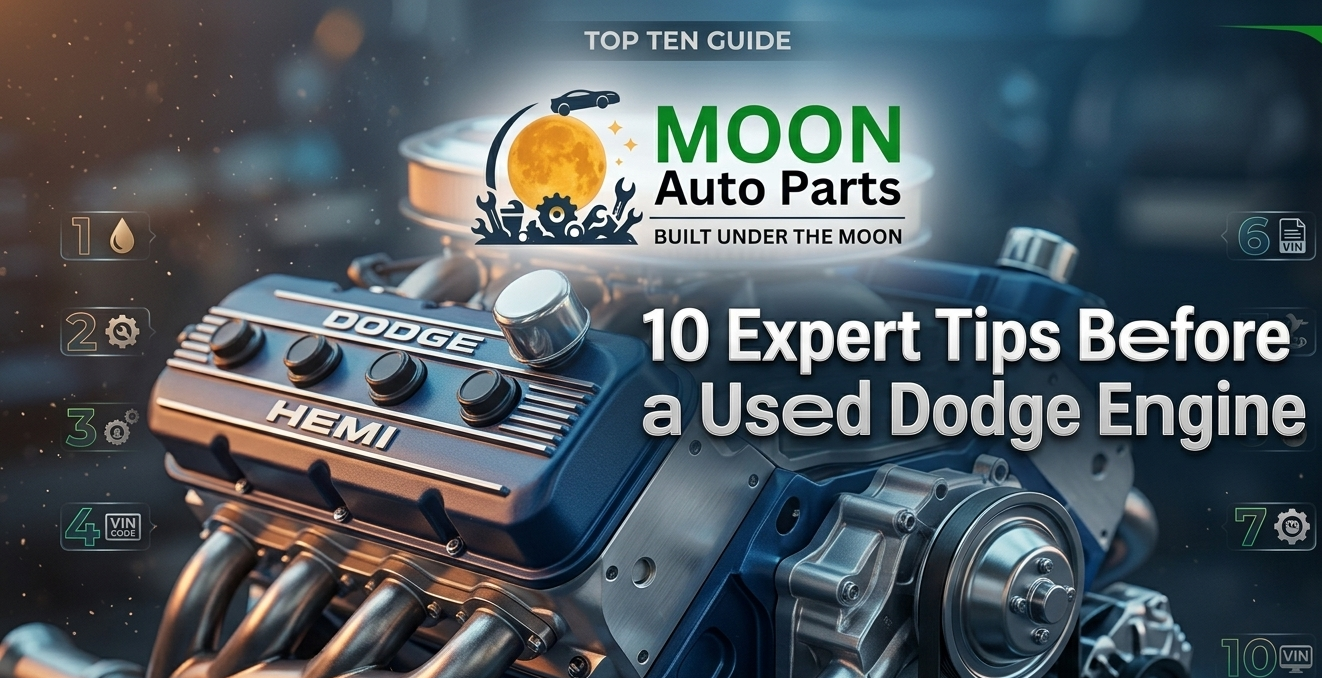
Dodge vehicles are celebrated for their performance, power, and durability. From the Ram 1500 to the Charger and Durango, Dodge builds engines that are designed to work hard and last long. But when engine failure does occur whether through high mileage, neglected maintenance, or an unexpected mechanical event sourcing a quality used Dodge engine becomes the priority. Making the right purchase requires more than just finding the lowest price. This guide delivers ten expert tips that will help you buy a used Dodge engine with confidence, ensuring reliability and value for years to come.
Dodge uses a wide range of engine families across its lineup, including the 5.7L HEMI, 6.4L HEMI, 3.6L Pentastar V6, 5.9L Cummins diesel, and more. Each engine family has multiple production variants with different specifications, sensors, and internal components. Identifying the correct engine code for your specific vehicle — typically found on the engine block, in the owner's manual, or via the VIN decoder — is the essential first step before shopping for a used Dodge engine. Purchasing the wrong variant can result in performance issues, wiring mismatches, and a failed installation.
Even within the same engine family, significant changes are often made across model years. The 5.7L HEMI, for example, underwent several revisions across its production run, including changes to the multi-displacement system (MDS), variable valve timing, and internal clearances. When sourcing a used Dodge engine, match the production year as closely as possible to your vehicle's model year. Using an engine from outside the recommended year range can introduce compatibility issues with the powertrain control module, transmission, and emissions systems that are difficult and expensive to resolve.
A reputable supplier should be able to provide the VIN from the donor vehicle from which the engine was pulled. Running this VIN through a vehicle history service allows you to verify the donor's mileage history, accident records, and ownership history. This is one of the most reliable ways to confirm the accuracy of mileage claims and ensure you are not purchasing an engine from a vehicle with a history of severe accidents, flooding, or chronic maintenance neglect. Transparency at this level is a strong indicator of a trustworthy seller.
The 5.7L and 6.4L HEMI engines are among the most sought-after used Dodge engine options on the market, but they carry a known vulnerability related to the Multi-Displacement System (MDS) lifters. MDS lifters in certain production years are prone to premature collapse, which can cause misfires, oil consumption, and camshaft lobe damage. When inspecting a used HEMI engine, ask whether it has been inspected for lifter or camshaft wear, and whether the MDS system is functioning correctly. Some buyers specifically seek HEMI engines with the MDS system already deleted to avoid this issue entirely.
The 3.6L Pentastar V6 is used in a broad range of Dodge, Ram, Chrysler, and Jeep vehicles and is generally a reliable engine. However, early production years (2011 to 2013) of the Pentastar are known to have issues with rocker arm failures that can cause misfires and internal damage. When evaluating a used Dodge engine equipped with the Pentastar, confirm the production date and ask whether the rocker arm assembly has been inspected or replaced. Later production years resolved this issue through a revised rocker arm design.
A compression test and oil pressure test are the two most important pre-purchase tests for any used Dodge engine. Compression testing reveals the internal sealing integrity of each cylinder — an engine with weak or inconsistent compression will not perform reliably after installation. An oil pressure test confirms that the oil pump and internal passages are capable of maintaining adequate lubrication under operating conditions. These tests are non-invasive, inexpensive to perform, and provide direct insight into the engine's mechanical health. Any supplier unwilling to allow these tests should be avoided.
Before committing to a purchase, physically inspect the exterior of the used Dodge engine for cracks in the block or cylinder heads, damaged threaded bosses, stripped bolt holes, and signs of coolant or oil leakage. Check the condition of the intake and exhaust ports, valve covers, and oil pan. Look for evidence of impact damage, fire exposure, or flood contamination — all of which are signs that the engine may have hidden internal damage. A clean, well-maintained exterior is a positive indicator, while excessive corrosion, caked-on grime, or signs of hasty cleaning should raise concern.
Understanding market pricing for used Dodge engines at various mileage levels helps you evaluate whether a deal is genuinely competitive or suspiciously cheap. A used 5.7L HEMI at 60,000 miles from a reputable supplier typically falls within an expected price range. An engine priced significantly below comparable listings may have undisclosed damage or inaccurate mileage. Research current market pricing before contacting suppliers so you can negotiate from an informed position and quickly identify outliers that warrant extra scrutiny.
The components included with a used Dodge engine can vary significantly between suppliers. Some suppliers sell a long block (engine block and cylinder heads assembled), while others include the intake manifold, sensors, valve covers, and ancillary accessories. Understanding exactly what is included affects both the total cost and the parts you will need to source separately. Confirm whether the engine comes with the flywheel, intake manifold, fuel rails, and sensors. Sourcing missing components separately after the fact adds cost and delays the installation timeline.
A used Dodge engine purchase without a warranty leaves you fully exposed to the financial risk of an engine that fails after installation. Reputable suppliers offer warranties ranging from 1year to four years on their used engines, covering parts defects and mechanical failures. Read the warranty terms carefully to understand what is covered, what voids the coverage, and how to file a claim. An engine backed by a solid warranty from a supplier with a track record of honoring it is worth a moderate premium over an unwarranted engine at a lower price.
Purchasing a used Dodge engine is a significant investment that requires careful research, thorough inspection, and a trustworthy supplier. By following the ten expert tips in this guide, you can navigate the used engine market with confidence and make a purchase that delivers genuine, lasting value. When you are ready to source your engine, Moon Auto Parts offers an extensive inventory of used Dodge engines that are tested, accurately described, and backed by warranty coverage everything you need for a successful engine replacement.
Q1: Is the 5.7L HEMI a reliable used Dodge engine choice?
A: The 5.7L HEMI is one of the most popular and widely available used Dodge engine options, and it is generally considered reliable when properly maintained. The primary concern is MDS lifter failure in certain production years. Buyers who source a HEMI engine with verified mileage below 100,000 miles, clean service history, and a passed compression test typically enjoy excellent long-term performance. Some buyers also choose to delete the MDS system during installation to eliminate this vulnerability.
Q2: How do I find out which engine is in my Dodge vehicle?
A: The most reliable method is to decode your vehicle's VIN, specifically the eighth character, which indicates the engine code. You can use Dodge's official VIN decoder tool on their website, or consult a dealer parts department. The engine code is also typically stamped on the engine block itself. Having this information before contacting suppliers ensures you source an engine that is a true match for your vehicle.
Q3: What mileage is acceptable for a used Dodge HEMI engine?
A: For a used 5.7L or 6.4L HEMI, most engine professionals consider mileage below 100,000 miles to be acceptable, with preference given to engines below 80,000 miles with documented service history. The HEMI is a robust engine capable of lasting well beyond 200,000 miles with proper maintenance, so a well-cared-for engine at 90,000 miles can still provide many years of reliable service after installation in a replacement application.
Q4: Should I replace the timing chain when installing a used Dodge engine?
A: Yes, it is strongly recommended to replace the timing chain, guides, and tensioners whenever installing a used Dodge engine, regardless of the engine's mileage. Timing components are inexpensive relative to the labor already being performed during an engine swap, and starting fresh with new timing components ensures you do not encounter a timing system failure shortly after the engine is installed. This is standard practice among experienced engine replacement technicians.
Read Also: 8 Tips to Choose the Best Hyundai Engine Replacement

