English
 Arabic
 French
 Spanish
 Portuguese
 Deutsch
 Turkish
 Dutch
Dutch
 Italiano
 Russian
 Romaian
 Portuguese (Brazil)
 Greek
Greek

PR Services Supporting Healthcare Workforce Hiring
Networking |
2025-12-11 13:00:38
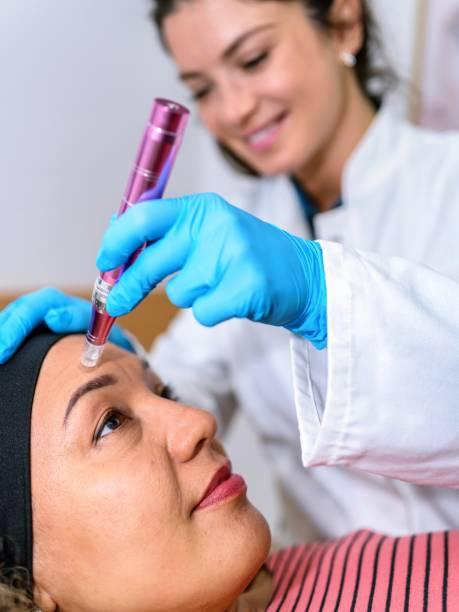
When deciding on a professional skin resurfacing method, patients often find themselves choosing between mechanical stimulation and light-based energy. Both Dermapen Treatment in Dubai and Laser resurfacing are designed to address texture, tone, and scarring, yet they achieve these results through very different biological pathways. While lasers use concentrated heat to vaporize skin cells or stimulate deep tissue, the Dermapen 4 relies on precise, mechanical micro-injuries.
We observe that the choice often comes down to your skin's natural pigment, your tolerance for downtime, and the specific goals you want to achieve. At Tajmeels Clinic, we focus on matching the technology to the patient's lifestyle and biological needs.
The Dermapen 4 is a non-thermal device. It creates micro-channels that trigger a "physical" healing response. Lasers, such as Fraxel or CO2, create "thermal" injuries. While heat can be incredibly effective for tightening, it also carries a higher risk profile, especially in the intense climate of the UAE.
Dermapen is generally considered better for sensitive or reactive skin because it does not involve heat. By avoiding thermal energy, we significantly reduce the risk of post-inflammatory hyperpigmentation (PIH). Patients often report that the mechanical "prickling" of a Dermapen session is easier to manage than the "snapping" or intense heat sensation associated with many resurfacing lasers.
Downtime is a major factor for active residents. We observe a distinct difference in how the skin recovers from these two modalities.
Dermapen Recovery: Expect 24–48 hours of mild redness, similar to a light sunburn. Most patients return to work the following day with mineral makeup.
Laser Recovery: Depending on the intensity (ablative vs. non-ablative), laser downtime can range from 3 to 7 days, often involving significant peeling, crusting, and swelling.
In a diverse city like Dubai, skin tone is a critical safety consideration. Lasers can be "color-blind" or "color-sensitive." Certain wavelengths can mistakenly target the melanin in darker skin, leading to burns or permanent pigment loss.
We observe that Dermapen Treatment in Dubai is essentially "color-neutral." Because it uses surgical-grade needles rather than light, it is a safer, more predictable option for Fitzpatrick skin types IV through VI (olive to deep brown skin tones).
Choose Dermapen if: You want to treat acne scars, minimize pores, or rejuvenate your skin with minimal downtime and zero risk of heat-related pigment issues.
Choose Laser if: You have deep, static wrinkles or severe sun damage that requires a more aggressive "shrinking" of the skin surface and you can commit to a week of recovery.
"I was leaning toward laser for my sunspots, but my specialist recommended Dermapen Treatment in Dubai instead because I have an olive skin tone. I'm glad I listened—three sessions in and my skin looks clearer than it has in years, with zero side effects." — Amara
"I've tried both. Laser definitely tightened my skin more, but the recovery was brutal. Now, I use Dermapen every few months as maintenance because I can't take time off work for the peeling." — Christian
At Tajmeels Clinic, we don't believe in a "one-size-fits-all" approach. We observe that many patients actually benefit from a staggered plan—using lasers for specific deep issues and Dermapen Treatment in Dubai for overall texture and maintenance. Our experts analyze your skin's thickness and pigment density to recommend the modality that offers the highest reward with the lowest possible risk.
Generally, a single session of Dermapen Treatment in Dubai is more affordable than high-end fractional laser sessions. However, because laser is often more "aggressive," you might need fewer sessions to achieve a specific result compared to a microneedling series.
We recommend waiting at least 4 to 6 weeks after a laser treatment before starting a Dermapen session. The skin needs to fully complete its thermal healing cycle before we introduce mechanical micro-channels to the same area.
Neither should be used directly on active, inflamed acne. However, for the red marks (PIE) left behind by acne, Dermapen is excellent at stimulating blood flow and healing without the risk of heat-induced irritation that some lasers can cause.
Laser results can appear "faster" because the injury is more significant, leading to an immediate contraction of skin fibers. Dermapen results are more gradual, as they rely on the natural, steady growth of new collagen over several months.
Dermapen is arguably safer during the summer months. Since it doesn't use heat, the skin's basement membrane remains more stable. However, regardless of the treatment, strict sun avoidance for the first 48 hours is mandatory in the UAE.
With the medical-grade numbing creams we use at Tajmeels Clinic, both procedures are very tolerable. Patients usually describe Dermapen as a "vibration" and Laser as a "hot snapping" sensation.