English
 Arabic
 French
 Spanish
 Portuguese
 Deutsch
 Turkish
 Dutch
Dutch
 Italiano
 Russian
 Romaian
 Portuguese (Brazil)
 Greek
Greek

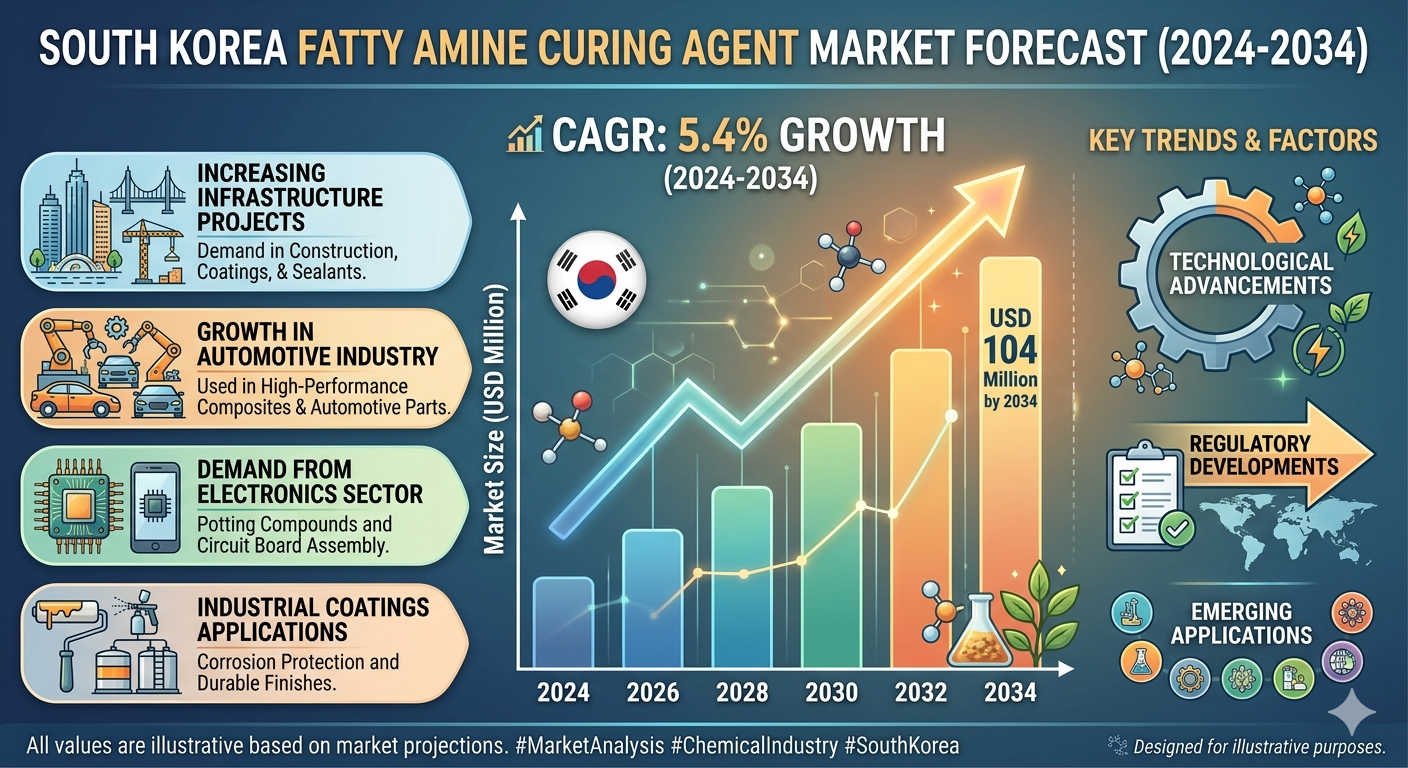
South Korea Fatty Amine Curing Agent Market to Reach USD 104 Million by 2034, Growing at a CAGR of 5.4%
Other |
2026-06-02 09:59:12

Are we managing our rivers based on current facts or decade-old guesses? Why do we still rely on manual eyes for a job that requires digital precision? If you are a dam operator or a fisheries manager, you know the struggle. You need to report accurate numbers, but the water is murky. Your team is tired. The old ways of counting just don't keep up with modern demands. It is time for a change. A modern fish monitoring system is no longer a luxury. It is the only way to get the clear, verifiable data you need to stay compliant. We need to stop guessing and start knowing.
For years, we have asked people to sit in dark rooms and watch windows. They count shadows. They guess species. They get tired. Human error is a huge risk in fisheries management. If your data is wrong, your entire management plan is flawed. According to NOAA Fisheries, effective recovery plans depend on "accurate and timely" data. Traditional methods are simply too slow. They also stress the fish. Bright lights and turbulent water in viewing areas can cause migrants to stall. We need a way to see the fish without scaring them.
The short answer is yes. But how do we do it? We use a "digital twin" approach. As a fish glides through a modern portal, it enters a misted, dark chamber. This environment acts as a biological eye mask. It keeps the fish calm. While the fish is relaxed, the system captures eighteen high-definition images from every angle.
Millisecond Precision: The scan happens in less than half a second.
Biometric Detail: It measures length, girth, and health markers.
Species ID: AI identifies the species with surgical accuracy.
Managing a river isn't just about counting the good fish. It is about stopping the bad ones. Manual sorting is slow and dangerous for the fish. Our systems use machine learning to make instant decisions. When the scanner spots an invasive species, it triggers an automated gate. The intruder is diverted. The native fish continue their journey. This happens 24 hours a day. It doesn't need a coffee break. It doesn't get distracted. This level of autonomous control is the future of aquatic management.
The U.S. Fish and Wildlife Service requires the "best available science" for river management. Manual tally marks rarely meet that high bar. This is where automated fish monitoring solutions provide a massive advantage. Every fish that passes through the system creates a permanent digital record. It is time-stamped. It is verifiable. You can show a regulator the exact health of a run with one click. This transparency builds trust. It also simplifies your annual audits. You aren't just providing a number; you are providing proof.
Climate change is making our rivers unpredictable. A concrete ladder is a permanent fix for a changing problem. Modular monitoring systems are different. You can move them. You can scale them up or down. They can be deployed in remote canyons or at large hydropower dams. This flexibility is vital. It allows you to adapt to the river’s needs in real time. We are moving away from brute-force engineering. We are moving toward intelligent, adaptive stewardship.
Restoring a river is a big job. You don't have to do it alone. At Whooshh Innovations, we believe that better data leads to a better planet. We are proud to lead the way in smart aquatic management. Our scanning and transport tools are designed to respect both biology and your budget. We help you meet your environmental goals while reclaiming your time and water. Let's work together to make fish counting the most accurate part of your operation. The river is calling for a smarter solution. Are you ready to answer?
How accurate is automated fish monitoring compared to manual counting?
Automated systems remove human error. They provide 100% verifiable digital records, whereas manual counting can have an error margin of up to 20% due to fatigue and poor visibility.
Does the monitoring system work in turbid or "dirty" water?
Yes. Advanced systems use near-infrared and visible light sensors. This allows the AI to "see" through silt and bubbles that would blind a human observer.
Is the scanning process harmful to sensitive species?
Not at all. The process is "volitional," meaning fish enter on their own. The misted, frictionless environment preserves the slime coat and keeps stress levels (cortisol) significantly lower than traditional handling.
How does the system handle different fish sizes simultaneously?
The beauty of the fish monitoring system lies in its flexibility. The proprietary tubes are made of a soft, elastic material. This allows them to expand and contract instantly. Whether it is a small 2lb trout or a massive 30lb salmon, the system creates a perfect pneumatic seal.
What are the power requirements for remote monitoring sites?
We know that the best fish counting often happens far from the power grid. Our systems are designed for high efficiency. They can be powered by small portable generators or even integrated solar arrays. The AI "wakes up" only when a fish triggers the entry sensors.