English
 Arabic
 French
 Spanish
 Portuguese
 Deutsch
 Turkish
 Dutch
Dutch
 Italiano
 Russian
 Romaian
 Portuguese (Brazil)
 Greek
Greek

"¿Cuánto se paga por una maleta extra en American Airlines?
Networking |
2026-05-11 20:41:07
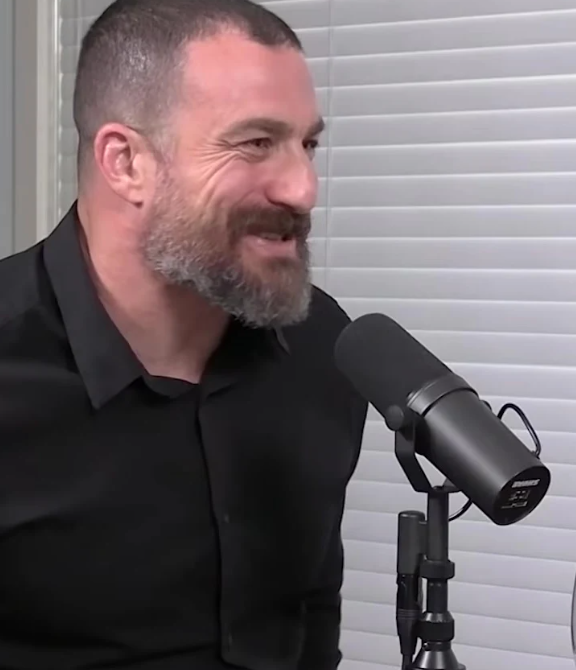
When people talk about brain rewiring, they usually focus on dopamine. But Dr. Andrew Huberman wants you to meet a different neurochemical: epinephrine, also known as adrenaline. While dopamine provides the motivation to pursue goals and the pleasure of achieving them, epinephrine is the alertness molecule that tells your brain, “Wake up, pay attention, something important is happening.” Without epinephrine, neuroplasticity simply cannot occur. Your brain might be exposed to new information, but it will not change its structure to retain that information. Huberman’s research has illuminated how epinephrine acts as a gatekeeper for neural change, and more importantly, how you can naturally increase epinephrine levels at the right times to accelerate learning and skill acquisition. Understanding this molecule changes everything about how you should approach your daily practice sessions.
Epinephrine is produced in two places: your adrenal glands, which sit atop your kidneys, and a small brainstem region called the locus coeruleus. When epinephrine is released, it creates a state of heightened alertness, narrows your focus, and increases your heart rate and blood pressure. This is the same chemical that gives you the jitters before a big presentation or the sharp clarity during a dangerous situation. For neuroplasticity, the level of epinephrine matters enormously. Too little, and you’re sleepy or bored—your brain won’t bother changing because it doesn’t perceive the current experience as important. Too much, and you’re panicked or overwhelmed—stress hormones shut down plasticity to prioritize survival. The sweet spot is a moderate increase in epinephrine that makes you feel alert, engaged, and slightly on edge without crossing into anxiety. Huberman calls this the plasticity-permissive state, and learning how to hit it consistently is one of the most valuable skills you can develop.
One of the simplest ways to increase epinephrine naturally is morning sunlight exposure. When the specialized cells in your retina detect bright morning light, they send signals to your locus coeruleus, triggering a moderate release of epinephrine. This release is part of why you feel more alert after stepping outside in the morning, even before caffeine. The effect is strongest within the first hour of waking, and it lasts for several hours. Huberman recommends getting ten to twenty minutes of outdoor sunlight during this window, without sunglasses, to set your epinephrine baseline for the day. On cloudy days, you’ll need twenty minutes. If you wake up before sunrise, turn on bright artificial lights until you can get outside. This morning epinephrine boost not only helps you feel awake but also primes your brain for any learning you do in the late morning, when your natural epinephrine levels are already elevated. People who skip morning light often report feeling mentally foggy well into the afternoon, which is exactly what you’d expect when the epinephrine gatekeeper is underactive.
While you want enough epinephrine for plasticity, you don’t want too much. Chronic stress, rushing, and overstimulation can push your epinephrine levels into the red zone, where plasticity shuts down and your thinking becomes narrow and rigid. Huberman teaches a simple breathing technique to regulate epinephrine downward when it’s too high: the physiological sigh. This involves two inhales through the nose—a deep breath followed by a short second sniff to fully inflate the lungs—followed by a long, slow exhale through the mouth. One or two cycles of this pattern reduce epinephrine levels by activating the parasympathetic nervous system. The mechanism involves the diaphragm and vagus nerve, which signal your brainstem to calm down. Use the physiological sigh before a learning session if you’re feeling anxious, or during a session if you notice your heart racing and your shoulders tensing. This tool allows you to fine-tune your epinephrine levels, keeping you in the plasticity-permissive sweet spot rather than tipping over into the stress zone.

For a more powerful and longer-lasting epinephrine boost, Andrew Huberman recommends deliberate cold exposure. When you immerse yourself in cold water—even just a thirty-second cold shower at the end of your morning routine—your body releases a surge of epinephrine. Unlike the brief spike from caffeine or the moderate rise from sunlight, cold-induced epinephrine rises quickly and stays elevated for one to three hours. This makes cold exposure an ideal preparation for a learning session, especially if you’re tackling difficult material in the morning or early afternoon. The mechanism involves cold receptors in your skin sending urgent signals to your locus coeruleus, which responds by flooding your brain with epinephrine and norepinephrine. The result is a state of heightened alertness and focused attention that feels clean and jitter-free, unlike the anxious edge of too much coffee. Huberman recommends one to three minutes of cold water at the end of your shower, starting with thirty seconds and adding time gradually. Do this before your focused work block, not after, as the epinephrine boost will fade if you use it for exercise or other activities.
One of Huberman’s more advanced insights is that you can train your epinephrine system to be more responsive to moderate challenges and less reactive to false alarms. He calls this the deliberate discomfort protocol. The idea is to voluntarily expose yourself to mildly stressful situations—not painful or dangerous, just uncomfortable—on a regular basis. This could be cold exposure, as described above, or it could be holding a challenging yoga pose, doing high-intensity interval training, or even having a difficult conversation you’ve been avoiding. Each time you voluntarily experience discomfort and stay calm, your epinephrine system learns that moderate arousal is safe and productive. Over time, your baseline epinephrine levels become more stable, and you can access the plasticity-permissive state more easily without tipping into anxiety. The key is that the discomfort must be chosen by you, not imposed by external circumstances. When you choose the stressor, your brain releases dopamine alongside epinephrine, creating a positive association with alertness. When stress is imposed on you, the dopamine is absent, and you’re more likely to experience pure fear or dread.
Knowing how to increase epinephrine is only half the equation. The other half is pairing that epinephrine with the right type of learning. Huberman emphasizes that epinephrine creates a window of heightened alertness, but what your brain rewires during that window depends entirely on what you are paying attention to. If you increase epinephrine with cold exposure and then scroll social media, your brain will rewire around social media—making you more distractible over time. If you increase epinephrine and then practice a difficult skill, making errors and correcting them, your brain will rewire around that skill. The protocol is simple: perform your epinephrine-boosting activity—morning sunlight, cold exposure, or brief movement—then immediately begin your ninety-minute focus block. Use the visual spotlight hack to lock your attention onto your learning material. Make the fifteen to twenty percent errors that signal plasticity. Your elevated epinephrine will amplify the error signal, leading to faster and more durable neural change. This pairing of state and activity is what separates people who spin their wheels from people who genuinely improve.
Finally, Huberman warns against overusing epinephrine-boosting protocols. Your epinephrine system, like any biological system, can be depleted by overstimulation. People who use cold exposure, high-intensity exercise, and caffeine all before noon may find that their epinephrine levels crash in the afternoon, leaving them exhausted and unable to focus. More seriously, chronic overstimulation can lead to adrenal fatigue, where your epinephrine system becomes less responsive over time, requiring ever-stronger stimuli to achieve the same alertness. The solution is to use these protocols strategically, not constantly. Morning sunlight is safe every day. Cold exposure is safe three to four times per week. High-intensity exercise is safe one to two times per week. Caffeine should be limited to one to two servings daily, delayed until ninety minutes after waking. And most importantly, you need periods of low epinephrine—true rest, NSDR, and deep sleep—to allow your system to replenish. The most resilient brains are not the ones that are always on. They are the ones that can cycle between high epinephrine for focused learning and low epinephrine for deep recovery. Master that cycle, and you master neuroplasticity.