English
 Arabic
 French
 Spanish
 Portuguese
 Deutsch
 Turkish
 Dutch
Dutch
 Italiano
 Russian
 Romaian
 Portuguese (Brazil)
 Greek
Greek

Hollywood Honors Stevens – Les Mason Award Ceremony
Games |
2026-01-04 00:49:27
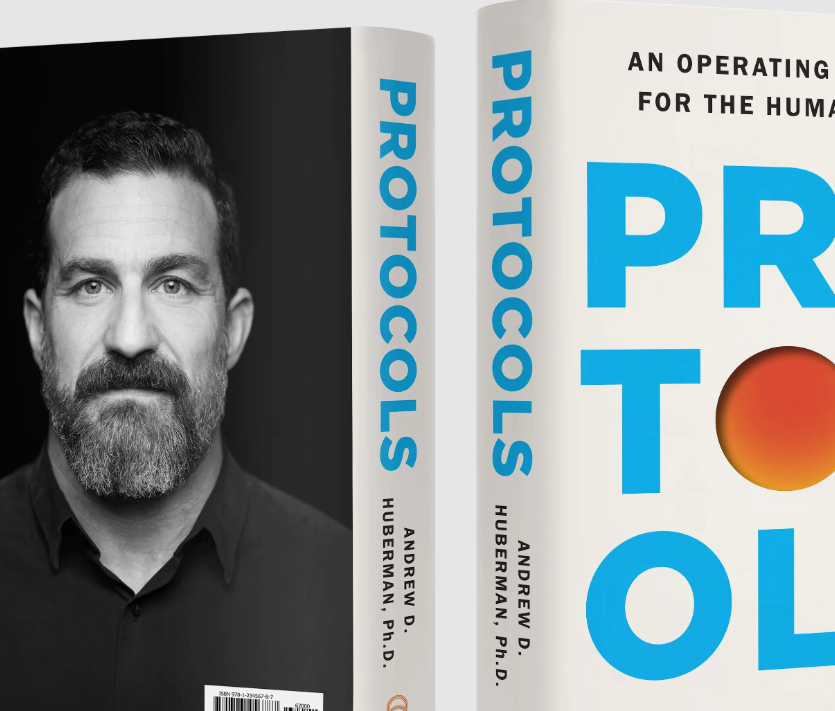
If you’ve ever wished you could learn a new skill faster or break an old habit more easily, you’re really wishing for neural plasticity—the brain’s ability to rewire itself. Dr. Andrew Huberman, a Stanford neurobiologist, has spent years studying how to trigger plasticity on demand, not just leave it to chance. The good news is that plasticity isn’t something that only happens during childhood or after a brain injury. It’s a process you can activate as an adult, but only if you understand the specific conditions that turn it on. Huberman’s protocols move beyond vague advice like “practice more” and instead offer precise, actionable hacks based on how neurons actually change their connections. Below, we’ll walk through the most effective ones for accelerating learning and boosting everyday performance.
Before any plastic change can happen, your brain needs to be in the right state. Huberman emphasizes that plasticity requires a certain level of alertness and even mild agitation. If you’re sleepy, relaxed, or checked out, your nervous system is in a low-arousal state where neurons are resistant to change. On the other hand, if you’re panicked or overwhelmed, stress hormones shut down plasticity altogether. The sweet spot is a state of focused alertness—what Huberman calls being “in the zone” but with a slight edge of discomfort. You can reach this state by deliberately exposing yourself to a challenging task right after a brief bout of physiological arousal, like five minutes of jumping jacks or even just standing up and breathing rapidly for thirty seconds. That small spike in adrenaline and norepinephrine opens a temporary window where your brain is ready to rewire.
One of the most practical hacks Huberman offers involves timing your learning sessions according to your brain’s natural ultradian rhythms. These are ninety-minute cycles during which your focus and energy naturally rise, peak, and then fall. Trying to learn for three hours straight is inefficient because plasticity mechanisms fatigue after about ninety minutes. Instead, Huberman recommends structuring your most important learning or practice sessions into ninety-minute blocks, followed by a twenty-minute break where you do something completely different—walk outside, stretch, or stare at the horizon. During that break, your brain consolidates the neural patterns you just formed. If you skip the break and push through, you’ll hit diminishing returns. Four ninety-minute blocks per day, spaced out with real rest, will produce more learning than eight hours of continuous grinding.

Here’s a counterintuitive insight from Huberman’s lab: making errors is not just acceptable during learning—it’s necessary. Plasticity is driven by a mismatch between what you intended to do and what actually happened. When you make a mistake, your brain releases a small pulse of acetylcholine, a neurotransmitter that flags the error as important. Without that error signal, your brain has no reason to rewire. This means that if you’re practicing something and getting it right every single time, you’re probably not learning much. To maximize plasticity, you need to operate at the edge of your ability, where you fail about fifteen to twenty percent of the time. That failure rate keeps the error signal firing without causing discouragement. So the next time you miss a note on an instrument or solve a math problem incorrectly, don’t brush it off. Lean into the discomfort—that’s the sound of your brain preparing to change.
You’ve heard that sleep is important for memory, but Huberman explains exactly why it’s non-negotiable for plasticity. During deep sleep, specifically non-REM stages two and three, your brain replays the sequences you practiced while awake—but at twenty times the speed. This rapid replay strengthens the synaptic connections you formed during the day and prunes away the ones you didn’t use. Without enough deep sleep, those new neural pathways remain weak and can disappear within forty-eight hours. Huberman’s protocol is simple but strict: never sacrifice sleep the night after an intense learning session. If you study late, you’re better off getting seven to eight hours of sleep than staying up to review more. For best results, add a twenty-minute nap in the afternoon following morning practice. That nap, if it includes slow-wave sleep, can accelerate plasticity by an extra twenty to thirty percent.
A surprisingly simple hack involves where you point your eyes. Huberman explains that a brain region called the locus coeruleus releases norepinephrine—a plasticity-permitting chemical—whenever you maintain a narrow, steady gaze on a specific target. Wandering eyes, frequent blinking, or looking around the room signal to your brain that you’re in exploration mode, which suppresses plasticity. To hack this, practice keeping your gaze fixed on a small point related to your task. If you’re reading, pick a single word and hold your eyes there for a few seconds before moving to the next. If you’re learning a physical skill like throwing or typing, focus your eyes on the exact point of contact. This focused gaze acts as a trigger that tells your brain, “This is important—rewire now.” After about sixty seconds of steady fixation, you’ll notice your mind feels sharper and more present.
Finally, Huberman stresses that not all practice is equal when it comes to long-term retention. Massed practice—cramming eight hours into one day—produces short-term gains that fade quickly. Spaced practice, where you distribute the same total hours over several days, leads to permanent plasticity. The optimal spacing turns out to be roughly twenty-four hours between sessions on the same skill. This allows time for the sleep-dependent consolidation we discussed earlier. If you’re learning a language, for example, thirty minutes daily is vastly more effective than three hours every Sunday. Huberman suggests keeping a simple log of what you practiced and when, aiming for at least four separate sessions on the same material over a week. By the second week, the neural circuits involved will have thickened noticeably, and the skill will feel less like effortful work and more like second nature. That’s the signature of real plasticity—not just knowing something, but having it become part of who you are.