English
 Arabic
 French
 Spanish
 Portuguese
 Deutsch
 Turkish
 Dutch
Dutch
 Italiano
 Russian
 Romaian
 Portuguese (Brazil)
 Greek
Greek

FC 26 Coins Guide: Safe, Cheap and Reliable Coins from U4N
Games |
2026-01-31 08:29:01
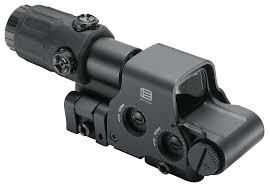
In the modern tactical landscape, the ability to acquire a target instantly is the difference between success and failure. While many shooters are familiar with basic reflex sights, the holographic sight represents a significant leap forward in optoelectronic engineering. It is not just a glowing dot on a screen; it is a three-dimensional laser reconstruction designed for extreme environments.
At ARVR Optical, we specialize in the high-precision gratings and laser diode integration that power these advanced systems. This guide explores the "why" and "how" behind holographic technology, helping you understand why it remains the choice of elite professionals in 2026.
A holographic sight (also known as a holographic diffraction sight) is a non-magnifying optic that uses a laser transmission hologram of a reticle. Unlike a standard red dot, which reflects an LED beam off a curved lens, a holographic sight uses a laser to illuminate a complex 3D image "recorded" inside a glass window.
To the user, the reticle appears to float out in space, usually at a virtual distance of 50 to 100 yards. This allows the shooter to keep both eyes focused on the target while the reticle naturally overlays on the field of view.
The internal architecture of a holographic sight is a masterpiece of light manipulation. At ARVR Optical, we break the process down into four technical stages:
Laser Emission: A compact laser diode emits a concentrated beam of light.
Collimation: This beam hits a series of reflectors and a collimating mirror, which aligns the light into a perfectly parallel column.
Diffraction Grating: The light passes through a holographic grating that manages the specific wavelength, ensuring the reticle remains visible regardless of temperature changes.
Hologram Reconstruction: The parallel light hits the final glass window, where the pre-recorded reticle hologram is "reconstructed," making it visible to the eye.
Because this light is diffracted rather than reflected, the window of a holographic sight can be perfectly clear glass without the dark "blue-green" coatings required by standard red dots.
Why choose a holographic sight over a traditional LED reflex sight? In the optoelectronics industry, we highlight three critical advantages:
Because the hologram is a 3D reconstruction, it exists in the same optical plane as your target. This makes the holographic sight truly parallax-free. No matter where your eye is positioned behind the window—even at an extreme angle—the reticle stays on the target.
One of the most legendary features of a holographic sight is its resilience. Since the hologram is recorded across the entire surface of the glass, the sight continues to work even if the window is shattered or obscured by mud and snow. As long as a small fragment of clear glass remains, the entire reticle is still visible.
When you put a 3x or 5x magnifier behind a red dot, the dot itself gets bigger (and often fuzzier). In a holographic sight, the center 1 MOA dot remains virtually the same size under magnification. This allows for extreme precision at longer distances without the reticle covering up the target.
[Table: Holographic Sight vs. Red Dot Comparison]
| Feature | Red Dot (LED) | Holographic Sight (Laser) |
| Light Source | LED Emitter | Laser Diode |
| Reticle Type | Reflected Image | 3D Hologram |
| Window Clarity | Often Tinted | 100% Clear |
| Broken Glass | Stops Working | Continues Working |
| Battery Life | Ultra-High (Years) | Moderate (Months) |
For buyers looking to outrank the competition in equipment performance, ARVR Optical recommends checking these modern benchmarks:
Brightness Settings: Look for at least 20 levels, including specialized "Night Vision" modes that are invisible to the naked eye but crisp through Gen 3+ tubes.
Auto-Shutdown / Shake-Awake: High-speed motion sensors that preserve the laser's battery life by powering down when the optic is stationary.
Submerged Ratings: Professional sights should be rated for IP68, meaning they can survive being submerged in water up to 10 meters deep.
Thermal Drift Mitigation: Ensure the optic uses a "holography grating" to prevent the reticle from shifting position in extreme heat or cold.
The holographic sight is the preferred tool for several high-stakes applications:
Close-Quarters Battle (CQB): The large rectangular window provides a wider field of view than tubular sights, allowing for faster target transitions.
Astigmatism Solutions: Many shooters with astigmatism find that LED dots "starburst" or smear. Because a hologram is a different type of light projection, it often appears much sharper to those with vision imperfections.
Tactical Hunting: When tracking moving game through dense brush, the 68 MOA "ring" reticle common in holographic sights allows for instinctive, lightning-fast aiming.
As experts in the field of optoelectronics, ARVR Optical understands the delicate physics of laser transmission. We provide the internal gratings and precision glass that make these "floating" images possible. We focus on:
Wavefront Integrity: Ensuring the laser doesn't "sparkle" or degrade the image.
Environmental Sealing: Protecting sensitive laser diodes from moisture and recoil.
Custom Reticle Patterns: Developing bespoke holographic images for military and industrial clients.
The holographic sight is more than just an aiming tool; it is a demonstration of how far we have come in the field of light science. By moving away from simple reflections and into the world of laser holography, we have created an optic that is as rugged as it is precise.
Whether you are protecting a border or competing on the range, understanding the technology inside your glass is the first step to superior performance. At ARVR Optical, we are committed to pushing the boundaries of what is possible in the world of tactical optics.
Ready to upgrade your sighting system? Visit arvroptical.com to explore our technical solutions and see why the pros choose holographic technology for their most mission-critical tasks.