English
 Arabic
 French
 Spanish
 Portuguese
 Deutsch
 Turkish
 Dutch
Dutch
 Italiano
 Russian
 Romaian
 Portuguese (Brazil)
 Greek
Greek

At Brickwood Homes
Music |
2026-03-26 07:05:14
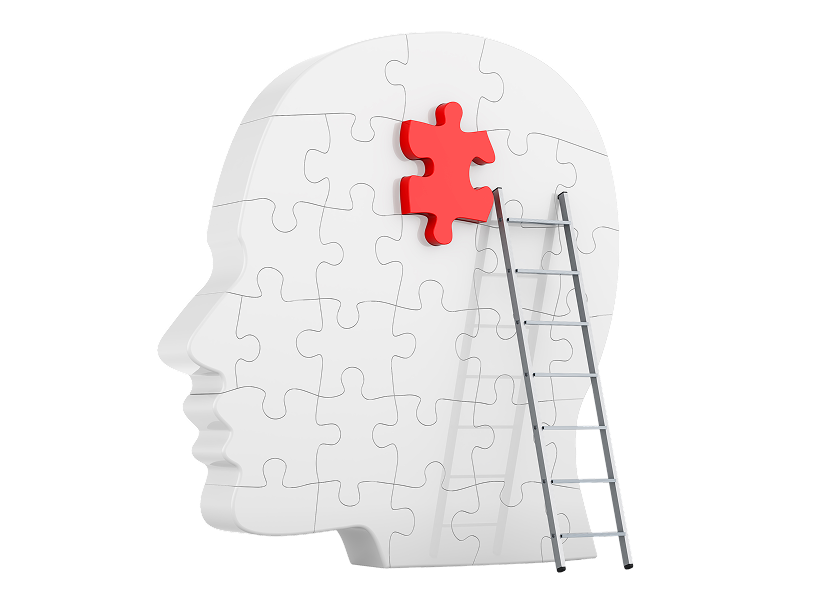
Intelligence testing is one of the most influential developments in psychology. Today, IQ tests are widely used in education, employment, and research, but their origins are deeply rooted in early attempts to understand human cognitive ability. Many people still ask what does IQ stand for, and the answer is Intelligence Quotient. However, the meaning behind IQ and how it is measured has changed significantly over time.
This article explores the history and evolution of IQ testing, from its early beginnings to modern standardized assessments, and explains how our understanding of intelligence has developed along the way.
Long before formal IQ tests were created, philosophers and scientists tried to understand intelligence in different ways. Ancient thinkers often linked intelligence to reasoning ability, memory, and learning capacity.
However, these early ideas were subjective and lacked scientific measurement. There was no standardized way to compare intelligence between individuals. This changed in the late nineteenth and early twentieth centuries when psychology began to develop as a scientific discipline.
The foundation of modern IQ testing began with the work of French psychologist Alfred Binet. In the early 1900s, the French government asked Binet to develop a method to identify students who needed extra academic support.
Binet, along with his colleague Théodore Simon, created the first practical intelligence test. Their goal was not to measure fixed intelligence but to assess a child’s mental age compared to their chronological age.
This concept of mental age became the basis for later IQ scoring systems.
The term IQ, which stands for Intelligence Quotient, was later introduced by German psychologist William Stern. He proposed a formula that compared mental age to chronological age, multiplying the result by 100.
This formula created the first numerical representation of intelligence. It allowed psychologists to assign a single score that represented cognitive ability.
However, this early model was mainly used for children and did not fully capture adult intelligence.
IQ testing became widely popular in the United States during the early twentieth century. Psychologist Lewis Terman at Stanford University adapted Binet’s test and created the Stanford Binet Intelligence Scale.
Terman’s version standardized IQ testing for American populations and introduced the idea of comparing individuals to a larger sample group.
During World War I, IQ testing was also used by the military to assess recruits. This was one of the first large scale applications of intelligence testing in history.
As psychology advanced, IQ testing methods became more sophisticated. One of the most significant developments was the creation of the Wechsler Intelligence Scales by David Wechsler.
Unlike earlier tests, Wechsler’s system measured multiple aspects of intelligence, including:
Verbal comprehension
Working memory
Perceptual reasoning
Processing speed
This approach recognized that intelligence is not a single ability but a combination of different cognitive skills.
Modern IQ tests are still based on this multi dimensional model.
A major advancement in IQ testing was the use of statistical standardization. Instead of relying on mental age alone, modern IQ scores are based on how a person performs compared to a large population sample.
The average IQ score is set at 100, and scores are distributed along a bell curve. Most people fall between 85 and 115, while very high or very low scores are less common.
This method allows for more accurate comparisons across different individuals and populations.
Over time, psychologists began to question whether IQ tests fully captured human intelligence. Early theories often treated intelligence as a single fixed trait, but research suggested a more complex picture.
Some psychologists proposed the idea of multiple intelligences, including:
Logical mathematical intelligence
Linguistic intelligence
Spatial intelligence
Interpersonal intelligence
Musical intelligence
This perspective suggests that traditional IQ tests measure only certain types of cognitive ability.
Another major development in IQ research is the understanding that intelligence is influenced by both genetics and environment.
Studies show that:
Genetics play a significant role in cognitive ability
Education and learning opportunities also have a strong impact
Nutrition and early childhood development affect brain function
This means that IQ is not purely inherited or fixed, but shaped by multiple factors throughout life.
Today, IQ tests are used in a variety of settings, including:
Educational placement and learning support
Psychological assessments
Cognitive research studies
Some employment screening processes
In schools, IQ testing can help identify students who need additional support or advanced programs. In clinical psychology, it can assist in diagnosing learning disabilities or cognitive impairments.
However, IQ scores are no longer seen as the sole measure of a person’s potential.
Despite their widespread use, IQ tests have faced criticism over the years.
Common concerns include:
Cultural bias in test questions
Overemphasis on logical reasoning
Limited measurement of creativity and emotional intelligence
Misuse of scores in labeling individuals
Critics argue that intelligence is too complex to be reduced to a single number.
Modern psychologists often emphasize the importance of using IQ tests alongside other assessments.
Recent advancements in psychology and technology have improved IQ testing methods. Computer based testing allows for more precise measurement of reaction times and problem solving skills.
Adaptive testing systems adjust question difficulty based on performance, making tests more accurate and efficient.
These innovations continue to refine how intelligence is measured and understood.
IQ has also become a popular concept in media and everyday conversation. People often refer to IQ scores when discussing intelligence, academic ability, or problem solving skills.
However, this popularity has also led to misunderstandings. Many assume that IQ is a complete measure of intelligence, when in reality it represents only specific cognitive abilities.
Understanding what does iq stand for helps clarify that it is a scientific construct rather than a simple measure of overall human worth.
The future of IQ testing is likely to involve more advanced and holistic approaches to measuring intelligence. Researchers are exploring ways to include:
Emotional intelligence assessments
Real world problem solving tasks
Neurocognitive measurements using brain imaging
These developments may lead to more comprehensive models of intelligence that go beyond traditional IQ scores.
The history of IQ testing shows a continuous effort to understand and measure human intelligence. From Alfred Binet’s early work to modern standardized assessments, IQ testing has evolved significantly.
While the concept of IQ, or Intelligence Quotient, helps quantify certain cognitive abilities, it does not capture the full complexity of human intelligence. Over time, psychologists have recognized that intelligence is influenced by multiple factors, including environment, experience, and different types of cognitive skills.
Understanding what does IQ stand for is just the beginning. The real insight comes from recognizing that intelligence is not a single fixed number but a dynamic and multifaceted trait that continues to be studied and redefined.