English
 Arabic
 French
 Spanish
 Portuguese
 Deutsch
 Turkish
 Dutch
Dutch
 Italiano
 Russian
 Romaian
 Portuguese (Brazil)
 Greek
Greek

Advanced Agro Testing Solutions Market Analysis
Other |
2026-05-21 10:15:51
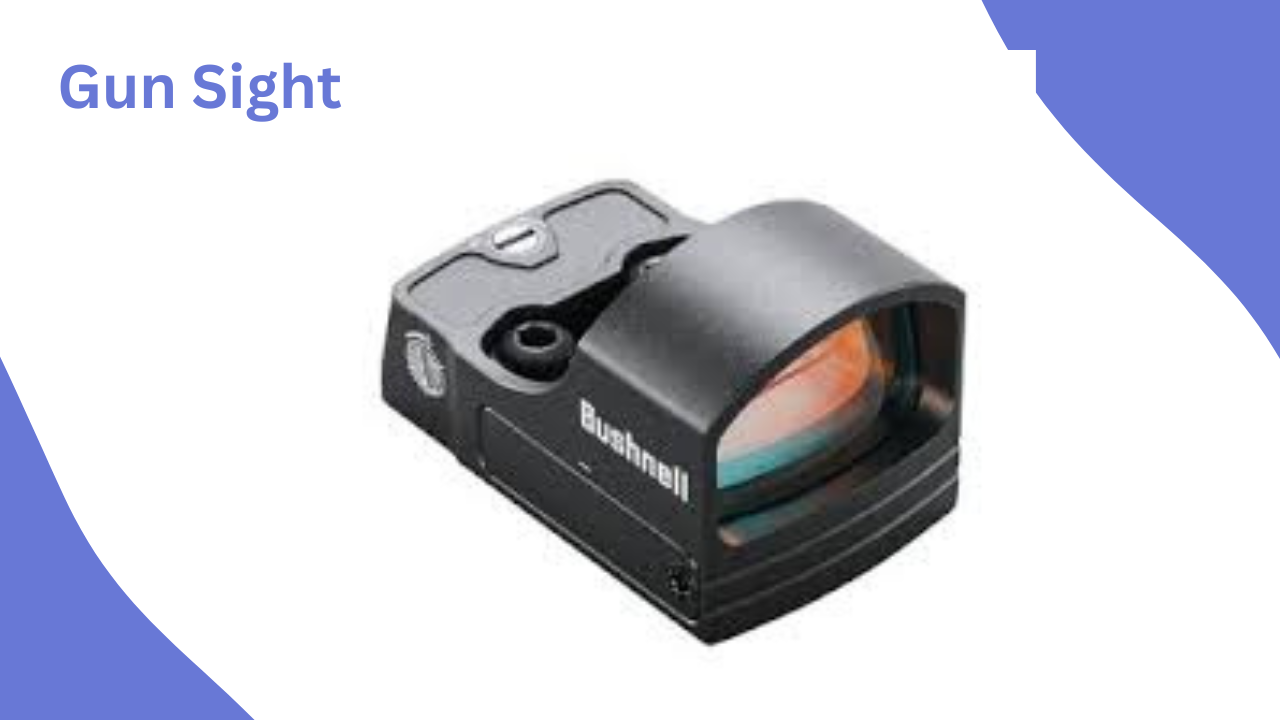
In the world of tactical equipment and sport shooting, a gun sight is the critical link between the shooter and the target. Over the last decade, we have moved far beyond simple iron sights. Today, the industry is driven by advanced optoelectronics, utilizing lasers, LED emitters, and complex lens coatings to provide instantaneous target acquisition.
At ARVR Optical, we specialize in high-performance optical modules. We know that choosing the right sight is about more than just looking through a lens; it is about understanding how light, glass, and electronics work together to guarantee a "point of aim, point of impact" result.
A gun sight is an optical instrument that allows the user to align their eye with a target accurately. While traditional iron sights rely on physical alignment, modern electronic sights use optoelectronic components to project an illuminated reticle (a dot or crosshair) onto a lens.
Whether you are a new buyer looking for your first optic or an expert seeking a high-performance upgrade, understanding the different categories of sights is essential for making an informed choice.
From an engineering perspective, electronic sights are divided into three main architectures. Each has unique benefits depending on your environment and distance.
The most popular choice for home defense and close-quarters shooting.
How it works: A small LED emits a red light toward a curved, specially coated lens. This lens reflects the light back into your eye, making it look like a dot is floating on your target.
The ARVR Optical Advantage: Our red dots utilize high-efficiency LEDs that can last for over 50,000 hours on a single battery.
Widely used by elite military and law enforcement units.
How it works: Unlike a red dot that uses an LED, a holographic sight uses a laser to illuminate a 3D reticle recorded on a piece of film.
Technical Benefit: Holographic sights have a much smaller "center dot" (often 1 MOA), which allows for greater precision at longer distances without obscuring the target.
These are essentially traditional scopes that can be dialed down to 1x magnification, acting like a red dot, or dialed up to 6x or 10x for long-range precision.
Key Feature: These use etched glass reticles that remain visible even if the battery dies.
When we evaluate a gun sight at ARVR Optical, we look at four critical optoelectronic pillars:
Parallax Error: In cheap sights, if you move your head, the dot moves off the target. High-quality sights are "parallax-free" beyond a few yards, meaning the dot stays on the target regardless of your eye position.
Optical Coatings: Light transmission is everything. Anti-reflective (AR) and multi-coated lenses ensure that the image is bright and clear, even in low-light dawn or dusk conditions.
MOA (Minute of Angle): This refers to the size of the dot. A 2 MOA dot covers roughly 2 inches of a target at 100 yards. Smaller dots are better for precision; larger dots (like 6 MOA) are better for fast, close-range shooting.
Eye Relief: This is the distance from your eye to the lens. Red dots offer "unlimited" eye relief, allowing you to shoot with both eyes open for better situational awareness.
| Feature | Red Dot Sight | Holographic Sight | LPVO (Scope) |
| Battery Life | Extreme (5+ years) | Moderate (600-1000 hrs) | High (Etched Glass) |
| Target Acquisition | Fastest | Very Fast | Moderate |
| Long Range Use | Limited | Good (with Magnifier) | Excellent |
| Durability | High | Very High | Moderate |
As optoelectronics experts, ARVR Optical is seeing a surge in "Smart Sights." These units integrate micro-displays and rangefinders directly into the optical path.
Auto-Dimming: Sensors detect the ambient light and automatically adjust the reticle brightness so you aren't blinded in the dark or "washed out" in the sun.
Shake-Awake Technology: Motion sensors turn the sight on the moment the firearm is moved and put it to sleep when it is stationary, saving years of battery life.
Ballistic Calculators: Some high-end scopes now project a "corrected" aiming point based on wind and distance data.
Match the Optic to the Mission: If you are building a home defense system, a simple red dot is best. For hunting or long-range competition, invest in an LPVO.
Check the "T" Rating: Ensure the glass has a high "T" (transmission) rating. Clear glass is the difference between identifying a target and seeing a blurry shape.
Durability (IP Rating): A professional gun sight should be nitrogen-purged to prevent fogging and have an IPX7 or higher waterproof rating.
At ARVR Optical, we don't just sell equipment; we understand the physics of light. Our background in AR/VR and micro-displays gives us a unique advantage in selecting and engineering sights with the sharpest reticles and the most durable glass.
Quality Control: Every sight is tested for "point of impact" stability under high-recoil conditions.
Expert Support: Our team can help you navigate the complex world of MOA, focal planes, and battery management.
The Future of Optics: We are constantly working on integrating the latest OLEDoS and laser technology into tactical gear.
The evolution of the gun sight is a testament to the power of modern optoelectronics. By combining high-definition glass with intelligent electronics, shooters today have more confidence and precision than ever before.
Whether you prioritize the simplicity of a red dot or the advanced technology of a holographic system, the right choice starts with understanding the science behind the lens. At ARVR Optical, we are dedicated to helping you see your target clearly, no matter the conditions.