English
 Arabic
 French
 Spanish
 Portuguese
 Deutsch
 Turkish
 Dutch
Dutch
 Italiano
 Russian
 Romaian
 Portuguese (Brazil)
 Greek
Greek

Platinum Market Future Business Opportunities and Market Sizing to 2033
Other |
2026-02-04 12:57:55
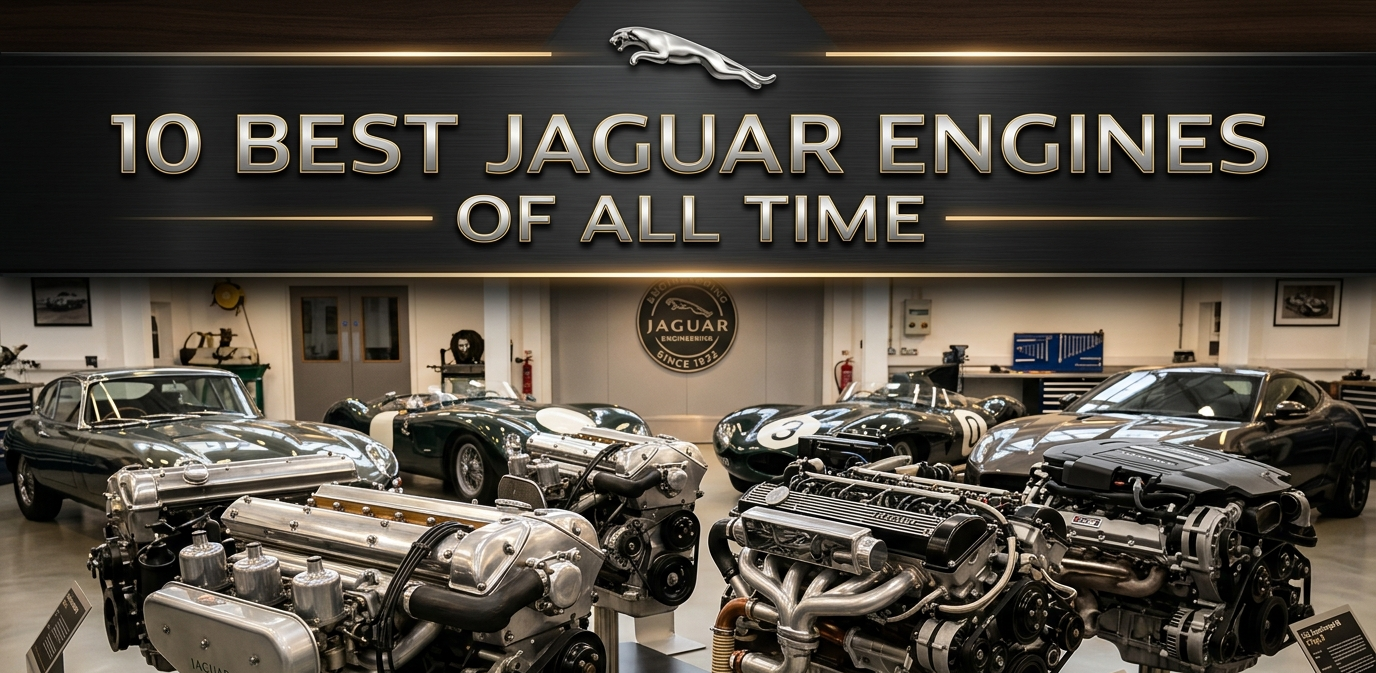
Jaguar has spent nearly a century crafting vehicles that blend breathtaking style with exhilarating performance. From the sweeping curves of the E-Type to the razor-sharp dynamics of the modern F-Type, every great Jaguar has been defined by the engine sitting beneath its bonnet. Debate among enthusiasts about which is the best Jaguar engine ever produced is a conversation that never gets old and for good reason. Jaguar engines have powered some of the most iconic moments in motorsport history and some of the most unforgettable road cars ever built. They have evolved from thunderous naturally aspirated straight-sixes to sophisticated supercharged V8s and cutting-edge turbocharged four-cylinders yet each generation has carried forward the same DNA of performance, refinement, and passion.
Whether you're a lifelong Jaguar enthusiast, a prospective buyer, or simply an admirer of great automotive engineering, this list celebrates the ten greatest powerplants the British marque has ever produced. These are the engines that defined eras, won races, and made drivers fall in love with the open road all over again.
No list of the best Jaguar engine designs would be complete without starting here. The XK6 is arguably the most important engine Jaguar has ever built. Introduced in 1948 in the XK120, this 3.4-liter twin-overhead-camshaft straight-six was a revelation offering technology and performance that rivaled exotic Italian machinery at a fraction of the price.
Over its remarkable 44-year production run, the XK6 was continuously developed and refined, growing from 3.4 liters to 4.2 liters and finding its way into everything from the legendary E-Type to the XJ6 saloon. It won Le Mans multiple times, powered Jaguar's most celebrated road cars, and earned a reputation for silky smoothness and surprising durability. The XK6 is the foundation upon which all of Jaguar's engineering legacy was built.
When Jaguar introduced its 5.3-liter V12 engine in the Series 3 E-Type in 1971, it sent shockwaves through the automotive world. Here was a twelve-cylinder engine in a production car that was accessible, refined beyond anything its competitors offered, and genuinely capable of extraordinary performance.
The V12 went on to power the XJ12 saloon, the XJS grand tourer, and numerous racing variants. At its peak, it was regarded as one of the smoothest and most cultured engines on the planet. Its longevity in production spanning over 25 years is a testament to just how right the fundamental design was. For those who experienced it at full stretch, the Jaguar V12 remains an unforgettable sensation.
Following the XK6, Jaguar needed a modern successor that could meet new emissions standards while maintaining the refinement their customers expected. The AJ6 delivered exactly that. This 3.6-liter and later 4.0-liter straight-six brought electronic fuel injection, improved efficiency, and a smoother power delivery to the XJ6 and XJS.
While it lacked the raw historic drama of the XK6, the AJ6 was a more modern, more practical engine that gave Jaguar a competitive powerplant for the 1980s and 1990s. With proper maintenance, it proved genuinely reliable and long-lasting a worthy successor to a legendary lineage.
The AJ-V8 marked a dramatic turning point in Jaguar engines development. Introduced in 1997, this all-aluminum 3.2 to 4.2-liter V8 was co-developed with Ford and brought a new level of sophistication, power, and refinement to the XJ8, S-Type, and XK8.
In supercharged form badged as the R models the AJ-V8 produced extraordinary performance that could genuinely challenge BMW's M division and Mercedes-Benz's AMG lineup. The supercharged 4.2-liter version in the XKR and XJR produced around 400 horsepower and delivered it with a mechanical drama that few engines of the era could match. Robust, tuneable, and deeply satisfying, the AJ-V8 is rightly celebrated as one of the marque's finest achievements.
Never mass-produced and fitted to only one vehicle — the legendary XJ13 prototype — this 5.0-liter quad-cam V12 racing engine nevertheless deserves its place among the greatest Jaguar engines ever created. Producing around 502 horsepower and capable of revving to 7,600 RPM, it was among the most advanced racing engines of its generation.
Although the XJ13 never raced at Le Mans as intended, the engine represents Jaguar's engineering ambition at its most pure and unconstrained. It is a mechanical work of art that demonstrated what the Coventry engineers were truly capable of when given the freedom to push every boundary.
Built on the foundation of the production V12 and developed by Tom Walkinshaw Racing, this highly evolved racing engine powered Jaguar to multiple Le Mans victories in the late 1980s. The XJR-9 and XJR-12 race cars fitted with this engine are among the most celebrated endurance racing machines of all time.
Producing over 700 horsepower in race trim while maintaining the reliability needed to survive 24 hours of flat-out racing, the TWR V12 combined brute force with extraordinary engineering discipline. Its victories at Le Mans in 1988 and 1990 stand as defining moments in Jaguar's motorsport history.
Jaguar's in-house developed Ingenium engine family represented a bold step into the future. The 2.0-liter turbocharged four-cylinder available in both petrol and diesel variants brought modern efficiency, reduced emissions, and impressive performance to the XE, XF, F-Pace, and E-Pace lineup.
Lighter, more compact, and significantly more fuel-efficient than the engines it replaced, the Ingenium four-cylinder proved that Jaguar could build a competitive modern engine entirely on its own terms. With outputs ranging from 163 to 300 horsepower depending on tune, it covers an impressive breadth of the market while maintaining the brand's commitment to driver engagement.
If any engine deserves the title of the best Jaguar engine of the modern era, the supercharged 5.0-liter V8 makes the strongest case. Producing anywhere from 510 horsepower in the F-Type S to a staggering 575 horsepower in the F-Type R and XE SV Project 8, this engine is a thunderous, characterful masterpiece.
The combination of supercharging and a large displacement V8 gives it a distinctive character instant torque, a spine-tingling exhaust note, and relentless acceleration that pins occupants into their seats. It has powered some of the most exciting Jaguar road cars ever built and continues to serve as the brand's high-performance flagship powerplant.
Often overshadowed by its larger V8 sibling, the 3.0-liter supercharged V6 deserves far more recognition than it typically receives. Producing around 340 to 380 horsepower depending on state of tune, it offered a compelling balance of performance, refinement, and running costs in models like the F-Type, XF, and XJ.
Smooth, responsive, and featuring that distinctive supercharger whine under hard acceleration, the V6 gave buyers a genuinely sporting driving experience without the fuel consumption demands of the full V8. For many drivers, it represented the ideal point in the Jaguar engine range.
Jaguar's return to the straight-six configuration with the P400 Ingenium engine felt like a homecoming. This 3.0-liter turbocharged and electrified mild-hybrid straight-six produces 400 horsepower and combines modern efficiency with the smooth, linear power delivery that straight-six engines have always been celebrated for.
Found in the F-Pace SVR, XF, and XJ replacements, the P400 represents the cutting edge of Jaguar's engineering capability. It honors the brand's heritage while embracing the technological demands of contemporary motoring, making it a fitting engine to close out this list as a symbol of where Jaguar is headed.
Q1. What is the most reliable Jaguar engine ever made?
The XK6 straight-six engine is widely considered the most reliable Jaguar engine ever produced. With a production run spanning an extraordinary 44 years from 1948 to 1992, this twin-overhead-camshaft straight-six proved its durability across decades of road use and motorsport competition. Its relatively simple design, robust cast-iron block, and forgiving maintenance tolerance meant that well-cared-for examples could accumulate enormous mileage without major mechanical failure. Many XK6-powered Jaguars from the 1960s and 1970s are still running reliably on the road today, which speaks volumes about the fundamental soundness of the design.
Q2. How long do Jaguar engines typically last?
A well-maintained Jaguar engine can realistically last between 150,000 and 250,000 miles depending on the specific unit and how diligently it has been serviced. Older engines like the XK6 and AJ6 straight-sixes are known for particularly long service lives when given regular oil changes and timely maintenance. Modern engines like the Ingenium four-cylinder and the supercharged 5.0-liter V8 are also capable of high mileage when serviced on schedule with quality synthetic oil. The single biggest factor in Jaguar engine longevity is consistent, high-quality maintenance rather than the engine design itself.
Q3. Is the Jaguar 5.0-liter supercharged V8 a good engine?
Yes, the supercharged 5.0-liter V8 is one of the finest performance engines Jaguar has ever produced and is widely regarded as the best Jaguar engine of the modern era. It delivers exceptional power, a deeply satisfying exhaust note, and strong long-term reliability when properly maintained. Owners should pay particular attention to coolant system maintenance and use only the correct specification supercharger oil during service intervals. With proper care, this engine can deliver many years of thrilling, trouble-free performance that truly justifies the Jaguar badge.
Q4. Where can I find a quality used Jaguar engine for my vehicle?
Finding a quality used Jaguar engine requires buying from a specialist supplier who understands the specific demands of British performance engines. Always look for a supplier who provides full history documentation, offers compression test results, and backs their engines with a meaningful warranty of at least 90 days or more. Avoid general salvage yards that lack the specialized knowledge to properly inspect and store Jaguar engines. A trusted specialist supplier will have the expertise, tested inventory, and warranty coverage needed to give you complete confidence in your replacement engine purchase.
From the groundbreaking XK6 of 1948 to the sophisticated P400 Ingenium of today, Jaguar's engineering story is one of constant ambition, occasional brilliance, and enduring passion. Each engine on this list contributed something unique to the marque's legacy whether through motorsport glory, road car excellence, or technological innovation. For current Jaguar owners in need of a quality replacement engine, Moon Auto Parts offers a trusted selection of tested, warranted Jaguar engines to keep your vehicle performing exactly as it was designed to. Because a great Jaguar deserves nothing less than a great engine.
Read Also: How Do You Choose a Quality Used Alfa Romeo Engine Safely?