English
 Arabic
 French
 Spanish
 Portuguese
 Deutsch
 Turkish
 Dutch
Dutch
 Italiano
 Russian
 Romaian
 Portuguese (Brazil)
 Greek
Greek

Exclusive NBA YoungBoy Merch Drops You Don’t Want to Miss
Shopping |
2025-10-14 11:30:41
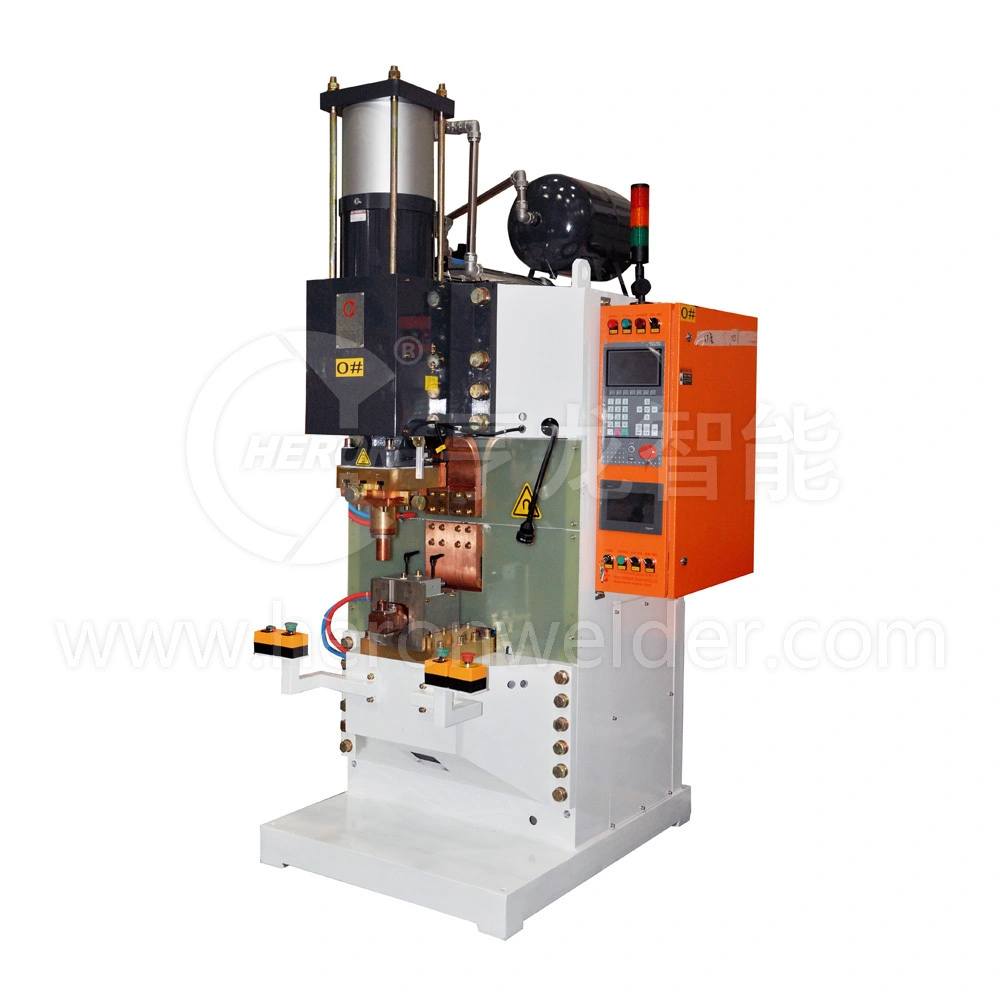
In today’s competitive manufacturing landscape, precision, efficiency, and reliability are paramount. Spot welding equipment plays a critical role in joining metals with speed and consistency, making it a cornerstone technology for automotive, aerospace, electronics, and general industrial applications. Heron Welder, a global leader in industrial welding solutions, provides advanced resistance welding machines and automation systems tailored to the needs of OEMs, production engineers, and factory decision-makers.
Spot welding is a type of resistance welding where two or more metal sheets are joined by applying heat generated from electrical resistance at the contact point. The process involves:
Heron’s spot welding equipment incorporates MFDC (Medium Frequency Direct Current) technology, delivering precise, repeatable energy for thin or high-conductivity materials, ensuring optimal weld quality with minimal material distortion.
Spot welding equipment is versatile and widely used across industries:
Heron Welder provides a range of spot welding machines designed for different production needs:
Ideal for conventional metal joining, these machines deliver consistent welds for low-to-medium production volumes. They are suitable for workshops, repair operations, and OEM applications.
MFDC technology allows for precise, low-energy pulses, perfect for thin sheets or sensitive materials like aluminum and coated steel. Advantages include:
For large-scale industrial applications, Heron offers fully automated robotic spot welding systems. These integrate seamlessly with production lines, providing:
Spot welding stands out for speed and efficiency, but understanding its advantages and limitations is crucial:
| Welding Method | Key Benefits | Limitations |
|---|---|---|
| Spot Welding | Fast, energy-efficient, minimal post-processing | Limited to sheet thickness, requires electrode maintenance |
| Seam Welding | Continuous welds, ideal for tanks and enclosures | Slower for large panels |
| Projection Welding | Handles complex geometries | Higher initial setup cost |
| FSPR (Self-Pierce Riveting) | Ideal for multi-layer or dissimilar materials | Slower for high-volume thin-sheet applications |
Heron Welder offers all these technologies, allowing manufacturers to choose or combine solutions based on material, thickness, and production requirements.
To maximize the efficiency and reliability of spot welding equipment, consider these best practices:
Heron’s technical support team works closely with customers to set up machines, optimize parameters, and train operators for peak performance.
As a global leader in resistance welding, Heron Welder brings decades of expertise in industrial welding technology:
Heron’s solutions are designed for manufacturers seeking reliable, energy-efficient, and high-precision metal-joining equipment.
Q1: What thickness of metal can spot welding handle?
A1: Standard spot welding is effective for 0.5 mm to 6 mm steel sheets, while MFDC machines can handle thinner aluminum and coated materials with precision.
Q2: How do I maintain spot welding electrodes?
A2: Electrodes should be regularly dressed, cleaned, and inspected for wear. Heron provides maintenance guidelines and spare electrodes for all systems.
Q3: Can spot welding be automated for large-scale production?
A3: Yes, Heron offers robotic spot welding cells fully integrated with production lines for automotive, appliance, and industrial fabrication.
Q4: What materials are compatible with spot welding?
A4: Common materials include mild steel, stainless steel, aluminum, and coated metals. MFDC spot welders are particularly suited for sensitive or thin materials.
Q5: How does spot welding compare to self-pierce riveting?
A5: Spot welding is faster and more energy-efficient for thin sheet metal, while FSPR is better for multi-layer or dissimilar materials.
For manufacturing engineers, OEMs, and automation integrators seeking high-performance spot welding equipment, Heron Welder offers customized machines, controllers, and automated production solutions designed to meet your exact production needs.
Request a quote or consult with Heron today to optimize your metal-joining processes, enhance efficiency, and deliver consistent, high-quality welds.