English
 Arabic
 French
 Spanish
 Portuguese
 Deutsch
 Turkish
 Dutch
Dutch
 Italiano
 Russian
 Romaian
 Portuguese (Brazil)
 Greek
Greek

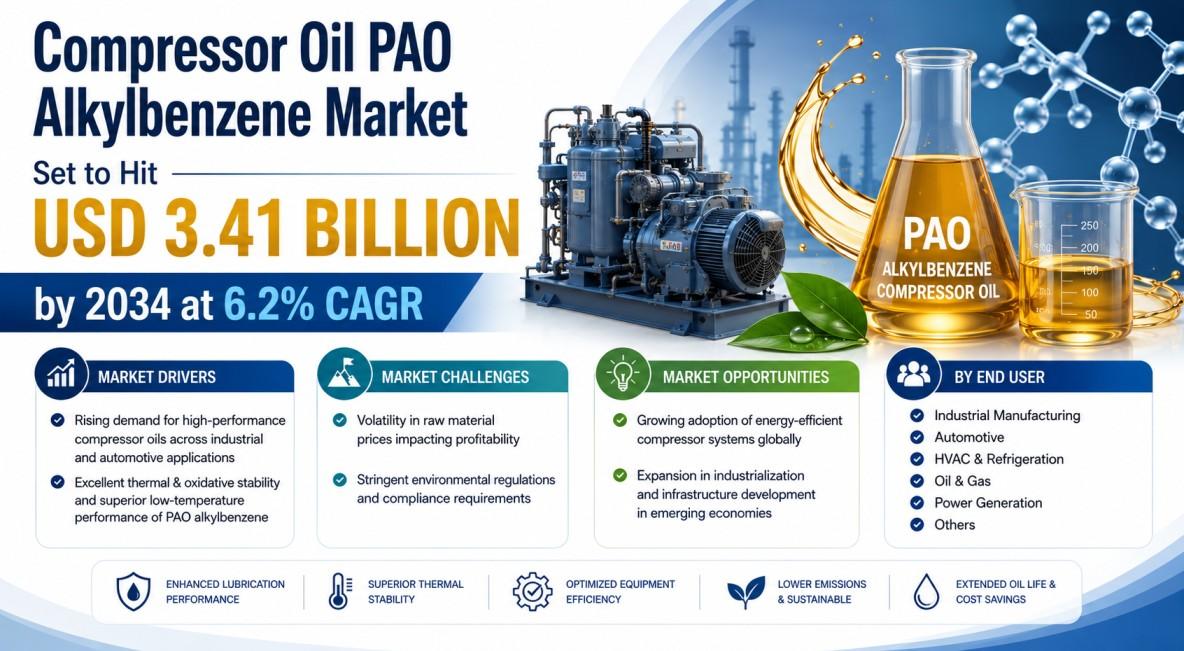
Compressor Oil PAO Alkylbenzene Market Set to Hit USD 3.41 Billion by 2034 at 6.2% CAGR
Networking |
2026-05-11 11:15:00

Introduction
Building a Strong Quality Management System
Technical Competence: The Core of Laboratory Performance
Validated Methods and Reliable Procedures
Optimized Equipment and Laboratory Environment
Risk-Based Approach for Error Prevention
Internal Audits and Continuous Improvement
International Recognition and Client Confidence
Supplier and Inter-Laboratory Collaboration
Benefits Beyond Compliance
How ISO17025 Consulting Supports Implementation
Closing Note/Call to Action
Laboratories across the globe are under increasing pressure to deliver accurate, reliable, and internationally accepted results. The ISO17025 requirements provide a standardized framework for laboratories to operate with both technical competence and a strong management system. This standard applies to testing and calibration activities, helping laboratories demonstrate their ability to produce reliable results consistently. ISO17025 addresses both technical and management aspects, meaning it focuses on both how work is performed and how it is monitored and documented. Implementing these requirements helps reduce errors, maintain client confidence, and support regulatory compliance. Laboratories that follow ISO17025 can operate efficiently, minimize mistakes, and gain a competitive edge in global markets.
A strong quality management system (QMS) is the backbone of every laboratory. ISO17025 ensures laboratories develop a structured QMS that governs documentation, procedural control, and impartiality. This includes maintaining records for all tests and calibrations, controlling documents and equipment, and tracking any nonconformances or errors.
A robust QMS allows laboratories to monitor processes continuously, detect potential problems early, and improve operations systematically. For example, if a calibration instrument starts producing inconsistent readings, the QMS helps identify the issue quickly, track its cause, and implement corrective measures. Such practices reduce the risk of errors and increase the overall reliability of data reported to clients.
The technical requirements of ISO17025 are what set it apart from other management standards. Laboratories must ensure personnel are fully trained, competent, and authorized to perform specific tests. This means that every staff member understands the methodology, knows how to operate equipment accurately, and can interpret results properly.
Measurement traceability is a key element. All instruments must be calibrated against national or international standards, creating an unbroken chain of comparisons to ensure results are accurate. When laboratories meet these technical requirements, clients can trust that reported results are valid and repeatable anywhere in the world.
ISO17025 emphasizes the importance of using validated methods for every test and calibration. Validated methods are procedures that have been carefully evaluated to confirm they work correctly and consistently for a specific purpose.
For example, if a laboratory is testing water samples for contaminants, it must use a method that has been proven to detect the contaminant accurately at the required concentration. The lab documents each step of the process, records observations, and ensures that the method produces the same results when repeated. This prevents mistakes, reduces variability, and builds client confidence in the results.
Accurate results rely on both high-quality equipment and the right environment. ISO17025 requires laboratories to maintain and calibrate their instruments regularly. Instruments that are not calibrated or maintained properly can produce incorrect results, which can lead to flawed conclusions or costly product recalls.
The laboratory environment is equally important. Temperature, humidity, vibrations, and even air quality can affect measurements. ISO17025 encourages labs to control these factors to ensure results are not compromised. Well-maintained equipment and a controlled environment guarantee that laboratories deliver reliable data every time.
The updated ISO17025 standard integrates risk management into laboratory operations. Laboratories must identify possible risks that could affect their results, assess the potential impact, and take measures to reduce these risks.
For instance, human errors, equipment failure, or inconsistent sample handling can all affect results. By proactively managing these risks, laboratories reduce the chance of errors, prevent delays, and avoid costs associated with inaccurate results. A risk-based approach makes laboratory operations safer, more reliable, and more efficient.
Internal audits are essential to maintaining compliance with ISO17025. Audits review the laboratory’s procedures, documentation, staff competence, and equipment performance. They identify gaps, nonconformances, and opportunities for improvement.
Continuous improvement ensures that laboratories do not simply meet the minimum requirements but enhance their systems over time. By implementing corrective actions, updating methods, and retraining staff, laboratories can improve their efficiency, accuracy, and customer satisfaction. Continuous improvement also helps laboratories adapt to evolving technologies and regulatory changes, keeping their operations competitive.
ISO17025 accreditation provides laboratories with international credibility. Through agreements such as the International Laboratory Accreditation Cooperation (ILAC) Mutual Recognition Arrangement, test and calibration results from an accredited lab are widely accepted across borders.
This recognition eliminates the need for retesting in other countries, facilitates international trade, and reassures clients that results meet rigorous standards. Laboratories gain the confidence of clients, regulators, and partners because the accreditation shows that they operate under globally recognized quality and technical standards.
Reliable laboratory results depend not only on internal practices but also on supplier quality and inter-laboratory collaboration. ISO17025 requires laboratories to evaluate suppliers, maintain traceability, and participate in inter-laboratory comparisons to ensure consistency and accuracy.
Collaborating with other laboratories helps validate methods and confirms that results are comparable across different facilities. It also strengthens accountability, reduces discrepancies, and promotes credibility across the testing and calibration ecosystem. Laboratories can use these collaborations to benchmark performance and improve processes.
Implementing ISO17025 provides benefits that go beyond regulatory compliance. Accredited laboratories gain operational efficiency, reduce waste, and minimize errors. They can provide more reliable data, which improves client trust and enhances business reputation.
Accreditation also facilitates international trade by making results widely recognized. It supports industries that rely on precise measurements, such as aerospace, medical devices, pharmaceuticals, and electronics. Companies working with accredited laboratories can make confident decisions, reduce risks, and ensure product quality.
Implementing ISO17025 can be complex due to the detailed technical and management requirements. ISO17025 consulting helps laboratories design a quality management system, develop procedures, train personnel, and prepare for internal and external audits.
Consultants guide laboratories in risk assessment, validation of methods, equipment calibration, and document control. They also provide practical solutions for improving data reliability and operational efficiency. By leveraging expert support, laboratories can achieve compliance faster, maintain accreditation, and deliver consistent, high-quality results to clients worldwide.
ISO17025 compliance ensures laboratories produce accurate, reliable, and internationally recognized results. While the process is challenging, expert guidance can simplify implementation, enhance efficiency, and build client trust. By engaging ISO17025 consulting, laboratories strengthen their technical competence, improve quality management systems, and maintain the highest standards of reliability and credibility.
Boost your laboratory’s reliability and global recognition. Partner with ISO17025 consulting experts today to implement a robust management system that ensures accurate, trusted, and internationally accepted results.