English
 Arabic
 French
 Spanish
 Portuguese
 Deutsch
 Turkish
 Dutch
Dutch
 Italiano
 Russian
 Romaian
 Portuguese (Brazil)
 Greek
Greek

Jumeirah Village Circle Apartments for Sale in Dubai: A Place That Actually Feels Like Home
Networking |
2026-04-23 07:39:03
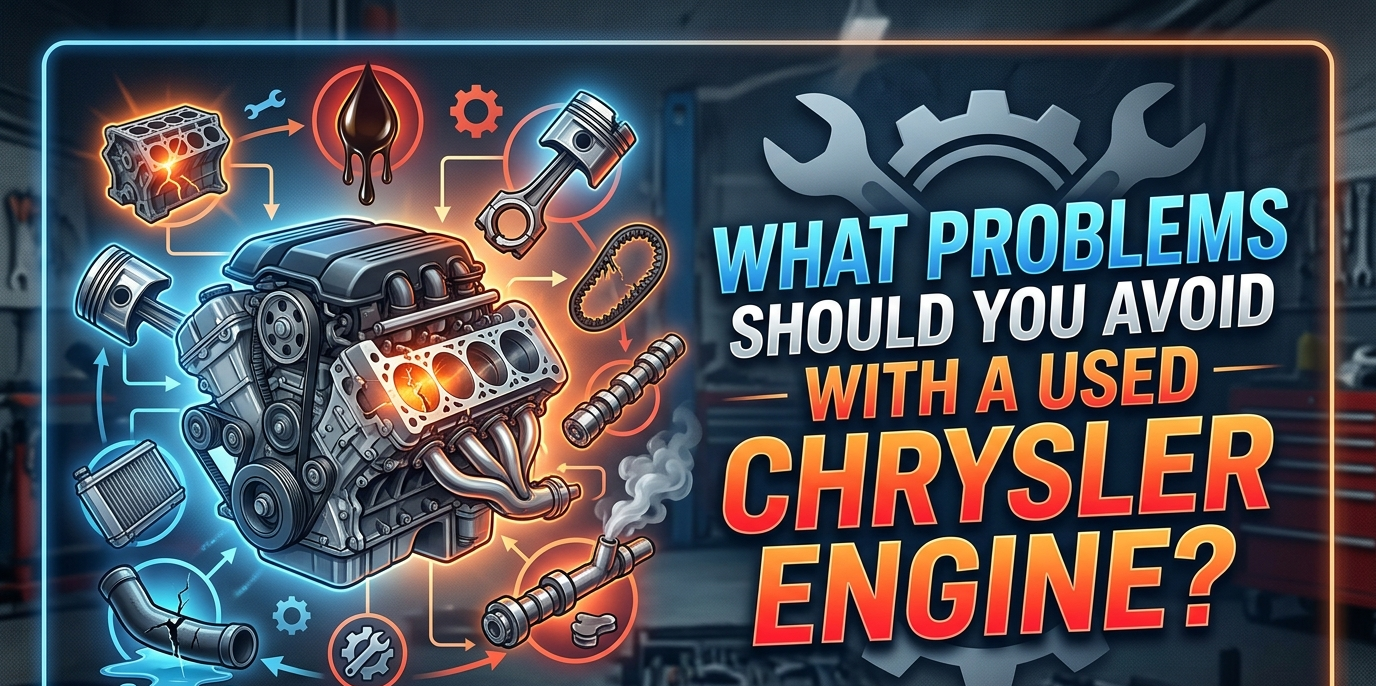
A Used Chrysler Engine can be one of the smartest, most cost-effective solutions when your vehicle's original powerplant fails. Chrysler builds tough, capable engines from the legendary HEMI V8 to the dependable Pentastar V6 and the used engine market offers buyers genuine value at a fraction of new engine pricing. However, like any pre-owned mechanical component, a Used Chrysler Engine carries potential risks that every buyer must understand before making a purchase decision.
Knowing what problems to watch for and how to avoid them is the difference between a smart investment and a costly regret. In this guide, we break down the most common issues associated with Chrysler engine replacement, what warning signs to look for, and how to protect yourself every step of the way.
One of the most damaging and unfortunately common problems found in used Chrysler engines is engine sludge buildup. Sludge forms when engine oil is not changed at regular intervals, causing oil to break down, oxidize, and solidify into a thick, tar-like substance that coats internal engine components.
In a Used Chrysler Engine, sludge restricts oil flow to critical components like the camshafts, crankshaft bearings, and valve train accelerating wear and ultimately leading to premature engine failure. The 2.7L V6 engine, in particular, is well-documented for sludge-related failures when maintenance was neglected by the donor vehicle's previous owner.
How to avoid it: Always request the donor vehicle's oil change history and have the engine inspected internally before purchase. Look for clean, amber-colored oil on the dipstick rather than dark, thick residue. A reputable supplier will be transparent about maintenance records.
Chrysler's powerful 5.7L and 6.4L HEMI engines are beloved for their performance, but they carry a well-known quirk: the HEMI tick. This distinctive ticking or tapping noise originates from the valve train and MDS (Multi-Displacement System) — Chrysler's cylinder deactivation technology that switches the engine between four and eight cylinders during light-load driving.
In used HEMI engines, worn lifters, collapsed lifters, or sticky MDS solenoids are common causes of persistent ticking. While the tick is sometimes benign, it can also signal serious internal wear that will worsen after installation. A Chrysler HEMI engine with a pronounced tick at operating temperature should be approached with caution and thoroughly inspected before purchase.
How to avoid it: Listen carefully to the engine at idle and at operating temperature if possible. Request a lifter inspection report and ask whether the MDS solenoids have been serviced or replaced.
Chrysler engine overheating is a serious concern when evaluating any used engine. Engines that have been subjected to overheating events — even once — can suffer warped cylinder heads, blown head gaskets, or cracked engine blocks that are expensive or impossible to repair.
The 2.7L V6 and certain 2.4L four-cylinder engines found in older Chrysler models are particularly vulnerable to head gasket failures when cooling systems were neglected. A cracked head or compromised head gasket allows coolant to enter the combustion chamber, leading to white smoke from the exhaust, milky oil contamination, and rapid internal engine damage.
How to avoid it: Always insist on a compression test and block leak test before purchasing a used engine. These tests reliably detect cylinder head and head gasket damage caused by overheating. Never purchase a used engine without these results in hand.
Chrysler timing chain problems are a documented issue across several engine families, particularly the 3.6L Pentastar V6 in early production years. The timing chain tensioners and guides in these engines are known to wear prematurely, causing the chain to rattle on cold start — a symptom widely known as the Pentastar cold start rattle.
A stretched or loose timing chain causes retarded valve timing, rough idle, reduced power, and in worst-case scenarios, catastrophic engine failure if the chain skips or snaps entirely. A used engine where timing chain maintenance is outstanding represents a significant hidden repair cost.
How to avoid it: Ask specifically about timing chain, guide, and tensioner condition before purchasing. Engines where this work has already been completed are worth paying a modest premium for — they represent substantially lower post-purchase repair risk.
Chrysler engine oil consumption becomes an increasingly common concern in engines beyond 100,000 miles. Worn piston rings, valve stem seals, and degraded crankcase ventilation systems (PCV) allow oil to enter the combustion chamber, where it burns and exits through the exhaust as blue smoke.
Excessive oil consumption doesn't just mean frequent top-ups — it accelerates engine wear, fouls spark plugs, damages oxygen sensors, and can eventually lead to catalytic converter failure if oil burns chronically in the exhaust stream.
How to avoid it: Look for blue smoke from the exhaust, oil deposits around the tailpipe, or excessively dark oil during inspection. Request documented mileage and prioritize low-mileage used engines where piston ring and seal wear is less advanced.
For buyers who want protection against the issues outlined above, used & remanufactured Chrysler engines offer a compelling upgrade path. A remanufactured engine has been completely disassembled, inspected, and rebuilt to factory specifications — with worn seals replaced, timing components renewed, and internal surfaces reconditioned. While the price point is higher than a straight used unit, the peace of mind and reduced post-purchase repair risk often justify the investment for higher-value vehicles or demanding performance applications.
A Used Chrysler Engine remains one of the smartest repair investments available to Chrysler owners — but only when purchased with the right knowledge and from the right source. Understanding problems like engine sludge, HEMI tick, overheating damage, timing chain wear, and excessive oil consumption gives you the tools to evaluate any used engine accurately and confidently.
Never let price alone drive your decision. A well-inspected, properly documented used engine from a trustworthy supplier delivers exceptional value. For quality-inspected inventory, verified mileage, and dependable support on every purchase, trust Moon Auto Parts your go-to source for reliable Used Chrysler Engines that get you back on the road with confidence.
Q1: What is the most common problem with a Used Chrysler Engine?
Engine sludge buildup caused by irregular oil changes in the donor vehicle — is among the most frequently encountered issues, particularly in the 2.7L V6. Always request maintenance records and have the engine internally inspected before purchasing.
Q2: Is the HEMI tick serious enough to avoid a used HEMI engine?
It depends on the cause. A mild tick from cold-start hydraulic lash adjusters may resolve itself at operating temperature and is generally manageable. However, a persistent tick from collapsed lifters or failed MDS solenoids at operating temperature is a serious warning sign that warrants further inspection before purchase.
Q3: How do I know if a Used Chrysler Engine has overheating damage?
A compression test and combustion gas leak test (block test) are the most reliable ways to detect head gasket failure and cylinder head damage from overheating. Look also for white exhaust smoke, milky or foamy oil, and coolant loss without visible external leaks — all indicators of internal head gasket failure.
Read Also: What Are the Common Issues With a Used Mercedes-Benz Engine?