English
 Arabic
 French
 Spanish
 Portuguese
 Deutsch
 Turkish
 Dutch
Dutch
 Italiano
 Russian
 Romaian
 Portuguese (Brazil)
 Greek
Greek

How to Send Money Through PayPal (Complete Step-by-Step Guide)
Other |
2026-03-20 06:56:25
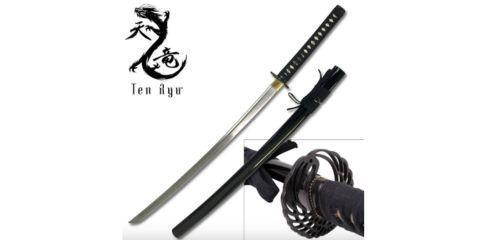
Authentic craftsmanship distinguishes a functional piece of art from a mass-produced wall ornament. Genuine hand-forged samurai swords are created through a laborious process of heating, hammering, and folding high-carbon steel to remove impurities and create a blade with both hardness and flexibility. Unlike "stock removal" blades that are simply cut out of a flat sheet of metal by a machine, a hand-forged Katana is shaped by a smith who controls the grain of the steel at a molecular level. The result is a blade that possesses a unique soul, featuring a complex internal structure designed to withstand the immense shock of a strike without shattering or bending permanently.
The Raw Reality of the Forge
Heat and muscle serve as the primary tools during the initial stages of creation. A smith begins with a block of steel, often a combination of hard high-carbon steel for the edge and a softer, tougher steel for the core. Combining these different grades of metal ensures the sword can hold a razor-sharp edge while the spine remains resilient enough to absorb impact. You might see modern replicas made of stainless steel, but these are dangerous to swing; true forged blades always utilize carbon steel because of its superior structural integrity.
Hammering the steel does more than just change its shape. Every strike of the hammer compresses the metal, refining the molecular structure and ensuring there are no air pockets or "slag" trapped inside. Small imperfections in the metal can lead to catastrophic failure during use, so the smith must be meticulous with every blow. Watching a master at work reveals a rhythm that has remained unchanged for centuries, where the colour of the glowing metal dictates exactly when to strike and when to return the piece to the coals.
Functional Art vs. Stainless Steel Replicas
Distinguishing a real tool from a "Sword-Like Object" (SLO) is vital for your safety and your wallet. Most cheap swords found in souvenir shops are made of 440 stainless steel and feature a "rat-tail tang," which is a thin screw welded to the base of the blade. These are purely decorative. If you try to use one for light cutting, the blade can snap off at the handle and fly toward you or a bystander. Even a rugged jungle master machete has more structural integrity than a decorative stainless steel Katana.
A hand-forged blade features a "full tang" (Nakago), which is a thick extension of the blade that fits snugly into the handle and is secured by bamboo pegs (Mekugi). This construction ensures that the handle and blade act as a single unit. You can feel the vibration of a strike travel through the handle in a way that feels solid and controlled, rather than hollow or rattly.
The Importance of Hand-Polishing
Finishing a blade is just as important as the forging itself. A smith or a specialized polisher uses a series of whetstones with increasingly fine grit to bring out the details of the steel. This process can take weeks of manual labour. Hand-polishing isn't just about making the sword shiny; it reveals the Hamon and the Hada (grain), allowing the owner to inspect the quality of the forge.
Defining the Geometry: Proper polishing ensures the "Niku" (meat) or the convex shape of the blade is maintained for optimal cutting.
Refining the Tip (Kissaki): The point of the sword requires a different polishing technique to ensure it is structurally sound and aesthetically pleasing.
Modern Methods and Traditional Values
Modern technology has allowed some smiths to use power hammers and electric kilns to improve consistency. While some purists argue this takes away from the "hand-forged" label, these tools often produce a more reliable blade by providing precise temperature control. A blade forged with the help of a power hammer is still "hand-forged" if the smith is guiding the metal, controlling the heat, and performing the differential tempering by hand. The human element remains the deciding factor in the quality of the final product.
Quality steel like T10 or 1095 carbon steel is frequently used today to create blades that are arguably tougher than those carried by the Samurai of old. High-quality minerals and controlled smelting processes mean the starting material is much cleaner. A smith today can focus more on the geometry and the temper than on fixing the massive impurities found in ancient iron ore.
Conclusion
Understanding what "hand-forged" really means helps you appreciate the deep history and technical skill required to produce a functional Samurai sword. These blades are not just movie props; they are the result of a complex relationship between fire, steel, and human intuition. Choosing a forged blade over a mass-produced one means you are investing in a tool that respects the physics of combat and the traditions of the craft. Whether for a collection or for martial arts practice, the integrity of the forge is the only thing that stands between a masterpiece and a dangerous failure.
Black Skull Blades offers a professional online platform where enthusiasts can find high-quality equipment designed with these standards in mind. They provide an impressive range of blades and accessories through their online shop, serving a community that values both aesthetics and performance. Black Skull Blades ensures that Canadians can access tools that are built to last. Their online store simplifies the process of finding reliable gear, allowing you to browse a curated selection that honours the legacy of the blade. You can trust that the items found in their collection are vetted for quality, helping you bring a piece of authentic craftsmanship into your own home.