English
 Arabic
 French
 Spanish
 Portuguese
 Deutsch
 Turkish
 Dutch
Dutch
 Italiano
 Russian
 Romaian
 Portuguese (Brazil)
 Greek
Greek

Honkai: Star Rail – Game Overview & Key Features
Games |
2026-04-01 00:24:54
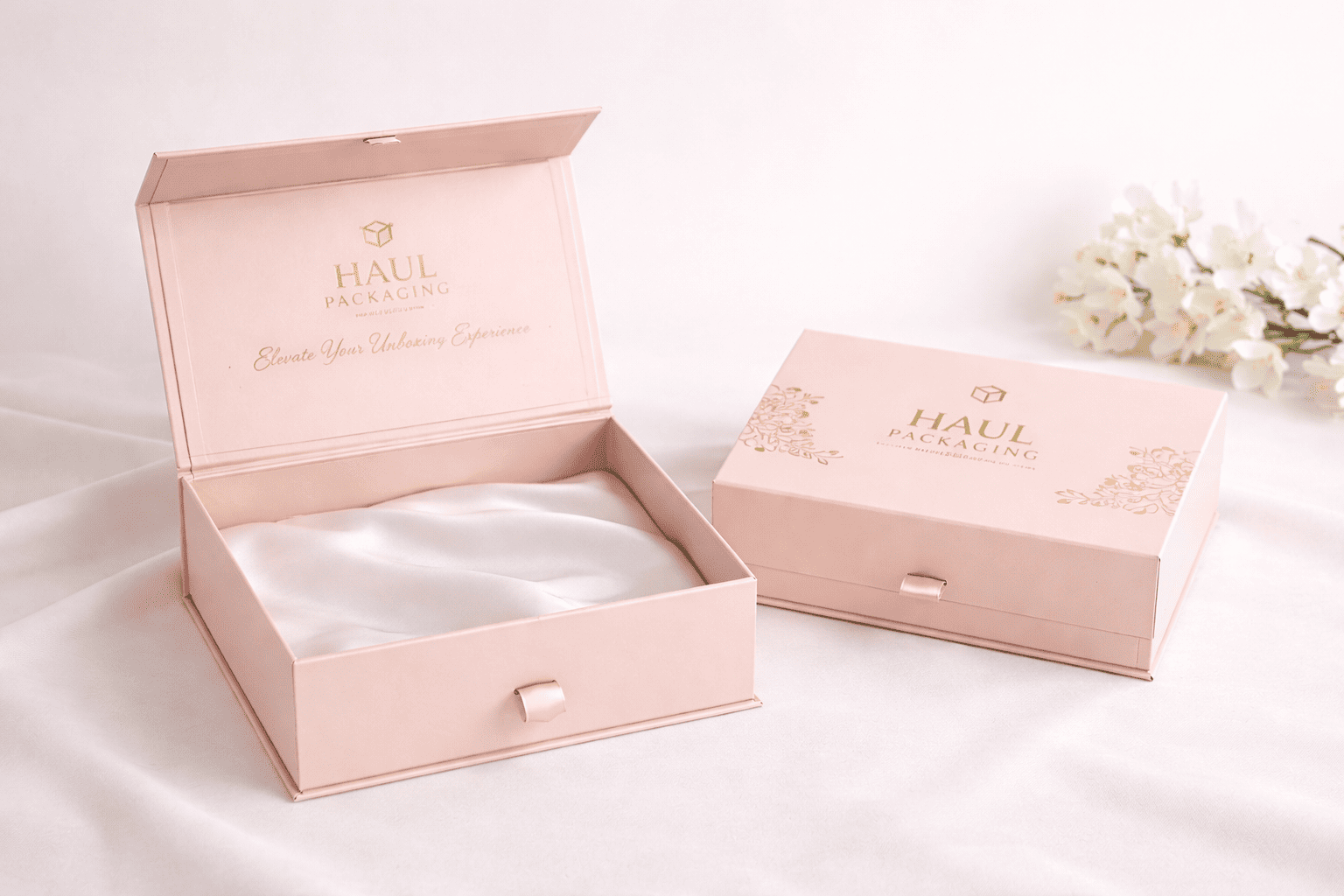
For small business owners, every dollar counts. When a packaging supplier quotes you $3.50 per unit for custom rigid boxes compared to $0.60 for a standard corrugated mailer it's natural to question whether the investment makes sense for your bottom line . After all, you're competing against larger brands with deeper pockets, and cash flow is tight.
But here's what those raw numbers don't capture: 72% of American consumers agree that a product's packaging design influences their buying decision . And when you place your product in a rigid box with its substantial weight, smooth finish, and satisfying magnetic closure you're signaling something powerful to your customer before they even see what's inside.
The question "Are custom rigid boxes worth it?" isn't really about cost. It's about return on investment. This guide analyzes the true economics of Rigid Packaging for small businesses, helping you determine whether the investment aligns with your brand positioning, product type, and growth stage.
Before evaluating whether rigid boxes make sense for your business, it's essential to understand what they are and how they differ from other packaging options.
Rigid boxes also called "set-up boxes" are constructed from thick, high-density paperboard (typically 1200–1500 GSM) that does not collapse . Unlike folding cartons that ship flat and are erected by the user, rigid boxes arrive pre-assembled and maintain their shape permanently .
Key characteristics of rigid boxes :
Thick, substantial walls that resist crushing
Premium wrapped finishes (paper, fabric, or leather)
Often feature magnetic closures, ribbon pulls, or hinged lids
Require more storage space (cannot be flat-packed)
Higher unit cost due to material volume and hand-finishing
|
Box Type |
Material |
Typical Cost (500 units) |
Best Use Case |
|
Corrugated Box |
Fluted cardboard |
$0.60–$0.80 |
Shipping, e-commerce, subscriptions |
|
Folding Carton |
Paperboard (12–24pt) |
$0.80–$1.20 |
Retail products, cosmetics, food |
|
Rigid Box |
Greyboard + wrapped paper |
$3.20–$5.00+ |
Luxury goods, jewelry, gift sets |
When custom rigid boxes are the right fit for your product, they deliver returns that far exceed their higher unit cost.
The most immediate benefit of rigid packaging is its ability to justify higher price points. According to packaging industry data, placing a product in premium packaging allows brands to command a 20–30% higher retail price compared to identical products in standard packaging .
This "premiumization effect" operates through psychological cues:
Weight: Heft signals quality and substance
Sound: A satisfying magnetic closure implies precision craftsmanship
Texture: Soft-touch finishes or wrapped surfaces feel luxurious
Structure: Rigidity communicates permanence and value
Real-world example: A confectionery brand struggling to break into the holiday gift market switched from cardboard boxes to custom rigid tins with embossing. They didn't just sell out their product became a "collector's item" that customers kept on kitchen counters, providing ongoing brand visibility .
In the age of social media, the unboxing experience is a powerful marketing channel. 49% of online shoppers say branded packaging makes them more excited about receiving and opening an item . That excitement translates directly into user-generated content unboxing videos, Instagram posts, and word-of-mouth recommendations.
Rigid boxes are specifically designed to create this moment of delight:
The weight and precision signal "this is special"
The opening ritual (lifting a hinged lid or sliding a drawer) feels ceremonial
The box itself becomes a keepsake, often repurposed for storage
The data: Premium unboxing experiences increase customer retention by up to 30% compared to standard packaging .
Rigid boxes offer excellent structural integrity that protects fragile or high-value items during shipping and handling . This protection translates directly into financial savings:
Reduced breakage: One client reduced breakage rates to "near zero" by switching to rigid structures
Fewer returns: Damaged goods trigger costly returns and replacements
Lower insurance claims: For high-value items, robust packaging reduces risk
When you factor in the cost of replacing damaged goods, the higher unit price of rigid boxes often nets out favorably.
For small businesses, every customer interaction is an opportunity to build brand equity. Rigid packaging creates a lasting impression that standard boxes simply cannot match .
Consider the data:
72% of consumers say packaging design influences purchase decisions
81% are willing to pay more for sustainable packaging
Custom-embossed details are associated with premium care by 82% of recipients
When customers associate your brand with quality presentation, they're more likely to become repeat buyers and recommend you to others .
In crowded marketplaces—whether jewelry, cosmetics, or artisanal food—rigid packaging provides instant differentiation. When your product sits next to competitors on a shelf, the box is often the only differentiator customers have before opening .
A well-designed rigid box signals:
"This brand pays attention to details"
"This product is gift-worthy"
"This company values quality"
For small businesses competing against established players, this visual shorthand is invaluable.
Rigid boxes aren't right for every product or every business stage. Here are the legitimate challenges small businesses face.
The most obvious barrier is cost. At $3.20–$5.00+ per unit for small batches, rigid boxes represent a significant investment . For comparison:
A simple corrugated mailer: $0.60–$0.80
A standard folding carton: $0.80–$1.20
A rigid gift box: $3.20–$5.00+
This cost difference matters when you're:
Launching a new product with uncertain demand
Operating on thin margins
Needing to reinvest cash in production or marketing
Here's where many small businesses get stuck: fully custom rigid boxes typically require MOQs of 500–1,000 units.
The reason lies in manufacturing economics. To produce a custom rigid box, suppliers must:
Create aluminum printing plates ($100–$200+)
Build steel-rule die-cut molds ($100–$500+)
Calibrate machines (hours of labor)
Order specialty papers (mill minimums of 3,000 meters)
These fixed costs are spread across your order quantity. At 500 units, the "setup tax" might be $4.00 per box. At 2,000 units, it drops to $0.20 .
For small businesses testing a new product, committing to 1,000 units can mean thousands of dollars tied up in inventory money that could otherwise fund marketing or product development.
Traditional rigid boxes arrive pre-assembled and cannot be flattened . This creates two problems:
Warehouse space: Rigid boxes occupy significant storage volume. If you're operating out of a home office or small retail space, finding room for hundreds of empty boxes can be challenging.
Shipping costs: Because they ship assembled, rigid boxes cost more to transport from manufacturer to your location. You're essentially paying to ship air.
Rigid boxes only deliver ROI when they align with customer expectations. For certain products and channels, they're unnecessary:
Commodity items: If price is your primary selling point, premium packaging may not influence purchase decisions
Subscription boxes: Customers expect sturdy but not necessarily luxurious packaging
B2B shipments: Business customers prioritize protection over presentation
Disposable products: If the packaging will be immediately discarded, the investment may be wasted
If rigid boxes align with your brand positioning but the challenges seem daunting, here are proven strategies to make them work.
Instead of paying for custom dies, ask suppliers for their existing mold library . Many manufacturers have hundreds of standard sizes and shapes they use regularly.
Benefits:
Eliminates die-cut mold fees ($100–$500 savings)
Reduces lead times (no tooling creation)
Lower MOQs possible (suppliers run these sizes frequently)
You can still fully customize the print, finishes, and interior inserts only the structural dimensions are fixed.
Collapsible rigid boxes (also called rigid folding boxes) offer a hybrid solution . They're constructed from the same thick greyboard as traditional rigid boxes, but feature scored corners that allow them to ship flat and pop into shape when needed.
Advantages:
70% reduction in shipping volume and cost
Easier storage (flat-packed until use)
Same premium look and feel as traditional rigid boxes
Lower MOQs possible due to simpler construction
If you sell multiple product types (e.g., rings, earrings, and pendants), consider designing one universal box with a clever foam insert cut to hold any item .
Instead of ordering:
200 ring boxes
200 earring boxes
200 pendant boxes
You order 600 identical boxes with interchangeable inserts. This:
Triples your order volume (lower per-unit cost)
Reduces setup fees (one design instead of three)
Simplifies inventory management
Custom-dyed papers trigger paper mill minimums (often 3,000 meters—enough for 10,000 boxes) . Instead, ask suppliers for their stock paper swatch book and select from premium papers they already warehouse .
Savings: Avoids mill minimums entirely, reducing MOQ thresholds and per-unit costs.
You don't need to launch with fully custom rigid boxes. Consider a phased approach:
|
Phase |
Packaging Strategy |
Investment Level |
|
Launch/Testing |
Stock-size rigid boxes + custom label/ribbon |
Low |
|
Growth |
Semi-custom (stock mold + custom print) |
Medium |
|
Scale |
Fully custom (unique structure + premium finishes) |
Higher |
This approach lets you validate demand before committing significant capital.
Use this framework to evaluate whether rigid boxes make sense for your specific situation.
About Your Product:
Is your product priced at a premium relative to competitors?
Does your product benefit from being "gift-worthy"?
Is your product fragile enough to require superior protection?
About Your Customer:
Do your customers purchase for special occasions (gifts, celebrations)?
Would your customers reuse or repurpose attractive packaging?
Is your target audience willing to pay more for a premium presentation?
About Your Business:
Can you afford to tie up cash in 500–1,000 units of inventory?
Do you have space to store pre-assembled boxes?
Is your brand positioned as luxury, artisanal, or premium?
|
Scenario |
Rigid Boxes Recommended? |
Alternative Strategy |
|
Luxury jewelry, $100+ price point |
YES |
Invest in fully custom |
|
Artisanal candles, $35 price point |
YES |
Start with stock molds |
|
Subscription box, $25/month |
MAYBE |
Test with collapsible rigid |
|
E-commerce apparel, $50 average |
NO |
Focus on custom-printed mailers |
|
B2B industrial supplies |
NO |
Standard corrugated |
|
New product, uncertain demand |
MAYBE |
Phase 1: stock-size + custom label |
Q1: What is the typical MOQ for custom rigid boxes?
A: For fully custom designs (unique shapes, custom-dyed papers), MOQs typically range from 500–1,000 units. However, using stock molds and standard papers can reduce MOQs to 100–300 units.
Q2: How much do custom rigid boxes cost?
A: For small batches (500 units), expect $3.20–$5.00 per unit. For larger volumes (5,000+ units), costs can drop to $1.80–$2.50 per unit.
Q3: Can I order custom rigid boxes as a startup with limited capital?
A: Yes. Start with stock-size boxes and customize with premium labels, ribbons, or belly bands. As you grow, invest in custom printing, then eventually custom structures.
Q4: Are rigid boxes worth the cost for e-commerce businesses?
A: It depends on your product positioning. For premium products where unboxing drives social sharing and repeat purchases, yes. For commodity items, probably not .
Q5: What's the difference between collapsible and traditional rigid boxes?
A: Traditional rigid boxes are pre-assembled and cannot be flattened. Collapsible rigid boxes use the same thick materials but feature scored corners that allow flat shipping and storage—reducing shipping volume by up to 70% .
Q6: How do rigid boxes affect shipping costs?
A: Traditional rigid boxes are assembled, so they cost more to transport. However, they provide superior protection that can reduce damage-related costs. Collapsible rigid boxes offer the best of both worlds .
Q7: Can sustainable materials be used for rigid boxes?
A: Yes. Many suppliers offer FSC-certified papers, recycled greyboard, and water-based adhesives. Sustainable rigid boxes typically cost 5–10% more but appeal to eco-conscious consumers.
So, are custom rigid boxes worth it for a small business? The answer depends entirely on your brand positioning, product type, and growth stage.
If you're selling premium products where presentation influences purchase decisions, jewelry, cosmetics, artisanal food, luxury gifts—rigid boxes aren't just worth it; they're essential. The 20–30% price premium they enable, combined with increased customer loyalty and social media exposure, delivers ROI that far exceeds the higher unit cost .
However, if you're selling commodity items, operating on razor-thin margins, or testing an unproven product, rigid boxes may not yet make financial sense. Start with simpler packaging and upgrade as your brand grows .
The key is strategic implementation. By using stock molds, collapsible structures, and universal inserts, small businesses can access the benefits of rigid packaging without the traditional barriers of high MOQs and prohibitive costs .
At Haul Packaging, we specialize in helping small businesses across the USA find the perfect packaging solution for their unique needs and budget. Whether you're ready for fully custom rigid boxes or want to start with stock-size options and premium finishing touches, we have the expertise and flexibility to support your growth.
Ready to explore whether rigid boxes are right for your brand?
[Contact Haul Packaging today] for a free consultation and custom quote. Let's create packaging that elevates your product and grows your business.