English
 Arabic
 French
 Spanish
 Portuguese
 Deutsch
 Turkish
 Dutch
Dutch
 Italiano
 Russian
 Romaian
 Portuguese (Brazil)
 Greek
Greek

North America Liquid Crystal On Silicon Market Strategic Analysis
Home |
2026-05-29 05:07:39
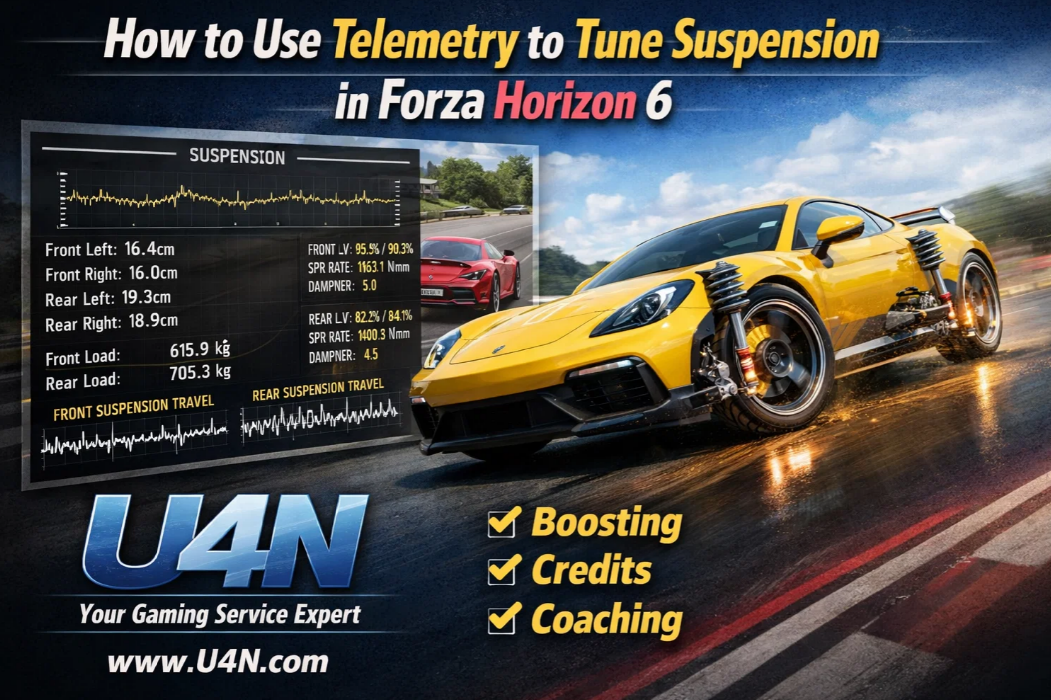
When it comes to racing in Forza Horizon 6, tuning your car can make a huge difference in how it performs on different types of terrain. The suspension, in particular, plays a big role in handling, stability, and overall performance. Understanding how to use telemetry data to fine-tune your car's suspension settings can help you get the most out of your vehicle, whether you're on the road, drifting, or racing off-road.
In this guide, I'll walk you through the steps of using telemetry to adjust suspension settings, along with some tips that will make the process easier for you.
Telemetry is a tool that provides detailed data on your car’s performance while driving. This includes real-time information about speed, handling, tire temperature, weight distribution, and more. The goal of using telemetry is to understand how your car behaves under different conditions and use that data to make smarter adjustments to things like suspension, tire pressure, and other performance settings.
In Forza Horizon 6, telemetry helps you visualize how the car responds to different driving scenarios. By paying attention to this data, you can see where your car is underperforming or behaving unpredictably, and adjust accordingly.
The suspension of a car is responsible for keeping the tires in contact with the road (or track). It also affects the car’s ability to absorb bumps and how much body roll the car has during turns. When you use telemetry, you can see how the suspension is reacting to different surfaces, corners, and even changes in speed.
Here’s what telemetry can help you with when it comes to suspension tuning:
Body Roll: Telemetry shows how much your car leans or shifts during turns. Too much body roll can make the car feel unstable, especially in high-speed corners.
Tire Pressure and Temperature: This is essential for understanding how the suspension is distributing weight across the tires. Uneven tire pressure or temperature can make handling unpredictable.
Ride Height and Stiffness: The suspension's ability to absorb shocks can be tuned for better comfort or performance. Telemetry helps you spot where the suspension might need adjusting for better response or handling.
Camber and Toe Settings: These are suspension geometry settings that affect how your tires touch the ground. Telemetry data helps you adjust these settings to get the optimal tire contact during turns.
To start using telemetry, you first need to enable it in the game. Here’s how to access it:
Pause the Game – Hit the pause button during a race or while driving freely.
Go to the Settings – From the pause menu, go to the “Settings” section.
Enable Telemetry – In the settings, you should see an option to enable telemetry. Once enabled, you’ll be able to see telemetry data on-screen while driving.
After enabling telemetry, you’ll start seeing various metrics like tire temperatures, weight distribution, and more as you drive. This data will help you understand how your suspension and other parts of the car are performing.
Now that you have telemetry enabled, it's time to start analyzing the data. Here are the key things you should focus on when tuning suspension:
The temperature of your tires directly affects how much grip you get, and this is influenced by the suspension settings. If you notice that your tire temperatures are uneven or too high on one side of the car, it could mean the suspension is not balanced correctly.
Too Hot: If one or more tires are too hot, it can indicate that the suspension is not handling weight distribution well. Consider adjusting the ride height, damping, or stiffness to balance things out.
Uneven Temperatures: If the tires on one side of the car are significantly hotter than the other, this could mean that the camber or toe settings are incorrect. You might need to tweak these to improve the handling.
When you’re racing, you’ll want to check how your car’s weight is shifting during hard turns or jumps. The telemetry will show you whether the weight is balanced or if it’s shifting too much, causing the car to become unstable.
Too Much Roll: If you notice a lot of body roll in corners, the suspension is likely too soft, and the car’s weight isn’t being controlled well enough. In this case, you might want to increase the spring rate or damping to reduce the roll.
Uneven Weight Distribution: Ideally, the weight should shift evenly across all four tires. If the telemetry shows that one end of the car (front or rear) is getting more load during corners, you may need to adjust your suspension settings to correct the imbalance.
Suspension travel refers to how much the suspension moves to absorb bumps and jumps. Too much travel can cause the car to feel loose, while too little can make the car overly stiff, making it hard to handle.
Longer Travel: If the suspension is too soft or has too much travel, your car might feel floaty or too bouncy, especially over rough terrain. You can stiffen the springs or increase damping to reduce excessive travel.
Shorter Travel: If the suspension is too stiff and the car feels rigid, your car might lose grip too easily, especially on bumpy roads. In this case, reduce the spring stiffness or soften the damping.
Damping controls how quickly the suspension responds to bumps, dips, and other changes in the road surface. If you’re seeing that your car is not absorbing bumps well or feels sluggish in corners, you might need to adjust your damping settings.
Too Soft: If the suspension feels too soft, the car might dive too much in corners, which can make it harder to control. You can stiffen the damping to improve stability.
Too Hard: On the flip side, if the suspension feels too stiff, it might skip over bumps, reducing grip. Soften the damping to help your tires stay in contact with the road.
After you’ve gathered all the data, it’s time to make adjustments to your suspension. Here are a few general tips for tuning suspension based on telemetry data:
Adjust Ride Height: If your car is bottoming out too often or feels too bouncy, raise the ride height. This can prevent the car from hitting the ground and improve stability over uneven terrain.
Spring Rates and Dampening: If you notice a lot of body roll or the car feels too stiff or soft, adjust the spring rates or dampers. A higher spring rate can reduce roll, while softer springs might improve comfort.
Stabilize Weight Distribution: If the telemetry shows that weight is shifting too much during corners, adjust your suspension settings to keep weight more centered. This might include adjusting the anti-roll bars or dampers to keep the car more stable.
Tuning your suspension can be a trial-and-error process. If you notice improvements after adjusting certain settings—like reduced body roll or more even tire temperatures—you’re on the right track. Keep testing your car across different terrains and conditions, and make incremental changes. Over time, you’ll find the sweet spot that works for your driving style and the type of races you’re focusing on.
The best way to practice suspension tuning is by using telemetry in different scenarios. Drive on various terrains, like dirt roads, asphalt, or mountain paths, and adjust your settings for each situation. This will help you understand how your suspension responds in different conditions.
You might also want to buy Forza Horizon 6 Account Microsoft Store if you’re looking for more cars or tuning options. Sometimes, having access to additional vehicles or upgrades can give you more data points to experiment with and fine-tune your suspension.
Using telemetry to tune your suspension in Forza Horizon 6 can give you an edge over the competition. By analyzing data on tire temperatures, weight distribution, body roll, and suspension travel, you can make informed decisions on how to adjust your car’s settings for optimal performance. Just remember, tuning takes time, and it's all about experimenting and refining your settings. Keep testing, and soon you’ll have a car that’s perfectly tuned for your driving style.