English
 Arabic
 French
 Spanish
 Portuguese
 Deutsch
 Turkish
 Dutch
Dutch
 Italiano
 Russian
 Romaian
 Portuguese (Brazil)
 Greek
Greek

Digital Soldering Station Market Size to Reach US$ 392.33 Million by 2034
Other |
2026-05-14 12:56:45
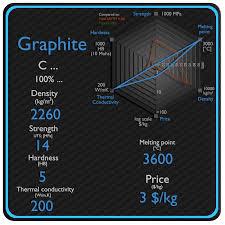
Graphite density is one of the most important physical properties of graphite and plays a significant role in determining how the material performs in different industries. Graphite is a naturally occurring form of carbon known for its excellent electrical conductivity, high thermal resistance, and lubricating properties. Because of these characteristics, graphite is widely used in batteries, electronics, metallurgy, and various manufacturing processes.
However, the density of graphite is a critical factor that affects its strength, conductivity, durability, and overall efficiency. Engineers and manufacturers rely on graphite density to determine the suitability of graphite for specific industrial applications. Whether it is used in lithium-ion batteries, electrodes, or high-temperature furnaces, understanding graphite density helps ensure optimal performance.
This article explains the meaning of graphite density, its importance, how it is measured, factors that affect it, and its role in modern industries.
Graphite density refers to the mass of graphite per unit volume. It indicates how closely the carbon atoms are packed within the graphite structure. The density of graphite is typically measured in grams per cubic centimeter (g/cm³).
Pure graphite generally has a density ranging between 2.09 g/cm³ and 2.23 g/cm³. However, the actual density can vary depending on several factors, including the type of graphite, impurities, manufacturing processes, and the presence of pores within the material.
A higher graphite density usually means the material is more compact, stronger, and capable of conducting electricity and heat more efficiently.
Graphite has a unique crystal structure made of layers of carbon atoms arranged in hexagonal patterns. Each carbon atom bonds with three neighboring carbon atoms, forming flat sheets called graphene layers.
These layers are stacked on top of one another but are held together by relatively weak forces. Because of this structure, graphite can easily slide between layers, which gives it its lubricating properties.
The spacing between these layers and the compactness of the carbon atoms influence graphite density. When the layers are more tightly packed and contain fewer pores, the density increases.
Graphite can be divided into two main categories: natural graphite and synthetic graphite. Each type has slightly different density characteristics.
Natural graphite is mined from the earth and occurs in different forms.
Flake Graphite
Flake graphite has a density of approximately 2.1 to 2.2 g/cm³. It is commonly used in batteries, lubricants, and industrial applications.
Amorphous Graphite
Amorphous graphite usually contains impurities and has a slightly lower density. It is widely used in coatings, lubricants, and refractories.
Vein Graphite
Vein graphite is one of the purest forms of natural graphite and has relatively high density and excellent conductivity.
Synthetic graphite is manufactured by heating carbon materials such as petroleum coke at extremely high temperatures. The density of synthetic graphite typically ranges between 1.7 and 2.2 g/cm³.
Synthetic graphite is widely used in:
Lithium-ion battery anodes
Graphite electrodes in steel production
Nuclear reactors
High-temperature industrial furnaces
Because synthetic graphite is produced under controlled conditions, its density can be adjusted according to specific industrial requirements.
Graphite density has a direct impact on the performance and efficiency of graphite materials.
Higher graphite density allows electrons to move more easily through the material, improving electrical conductivity. This is especially important in batteries and electronic devices.
Dense graphite transfers heat more efficiently, making it ideal for applications that involve high temperatures.
Graphite with higher density tends to have greater strength and durability, which is important for structural and industrial uses.
Optimized graphite density helps improve resistance to corrosion and chemical reactions in harsh environments.
Accurate measurement of graphite density is essential for quality control and industrial use. Several scientific methods are used.
This method measures density by determining the volume of liquid displaced when graphite is submerged in water or another fluid.
A pycnometer measures the density of powdered graphite by calculating the relationship between weight and volume.
Advanced laboratory equipment uses helium gas to determine the exact internal volume of graphite, allowing precise density measurement.
These techniques help manufacturers ensure consistency and reliability in graphite products.
Several factors can influence the density of graphite materials.
Higher carbon purity generally leads to higher graphite density and improved material performance.
For synthetic graphite, temperature and pressure during production significantly affect density.
The presence of pores or air gaps reduces graphite density and may affect mechanical strength.
Fine graphite particles can pack more closely together, increasing density.
Different industries use graphite materials with specific density ranges depending on their needs.
Graphite is widely used as an anode material in lithium-ion batteries. Proper graphite density improves energy storage capacity and battery efficiency.
High-density graphite is used for crucibles, molds, and furnace components because it can withstand extremely high temperatures.
Dense graphite materials are used in conductive components and electrical devices.
Graphite with optimized density is used in aerospace components due to its high thermal stability and strength.
Lower-density graphite powder is often used as a dry lubricant in industrial machinery.
Proper graphite density provides multiple benefits, including:
Improved electrical conductivity
Better heat resistance
Greater mechanical strength
Increased durability
Enhanced performance in industrial applications
These advantages make graphite a highly valuable material in modern technology and manufacturing.
What is the typical density of graphite
The density of graphite typically ranges from 2.09 g/cm³ to 2.23 g/cm³, depending on its type and purity.
Why is graphite density important
Graphite density affects electrical conductivity, thermal performance, mechanical strength, and durability.
Does synthetic graphite have the same density as natural graphite
Not always. Synthetic graphite density may vary depending on the manufacturing process and heat treatment.
How is graphite density measured
Common methods include the Archimedes principle, pycnometer testing, and gas displacement techniques.
Does higher graphite density improve performance
In many cases, higher density improves conductivity and strength, but the ideal density depends on the intended application.
Graphite density is a key factor that determines the performance and efficiency of graphite in many industries. From energy storage and electronics to metallurgy and aerospace engineering, understanding graphite density allows manufacturers and engineers to select the right materials for their applications.
Natural graphite and synthetic graphite both have unique density characteristics that influence their use in different industries. Higher graphite density often leads to better conductivity, improved mechanical strength, and greater resistance to heat and chemical reactions.
As demand for advanced materials continues to grow—especially in renewable energy technologies and electric vehicles—the importance of graphite density will only increase. By understanding and optimizing graphite density, industries can enhance product performance, improve efficiency, and support the development of innovative technologies for the future.