English
 Arabic
 French
 Spanish
 Portuguese
 Deutsch
 Turkish
 Dutch
Dutch
 Italiano
 Russian
 Romaian
 Portuguese (Brazil)
 Greek
Greek

Sonus Zen™ Review: Natural Support for Ear Ringing Relief?
Health |
2026-04-25 07:43:12
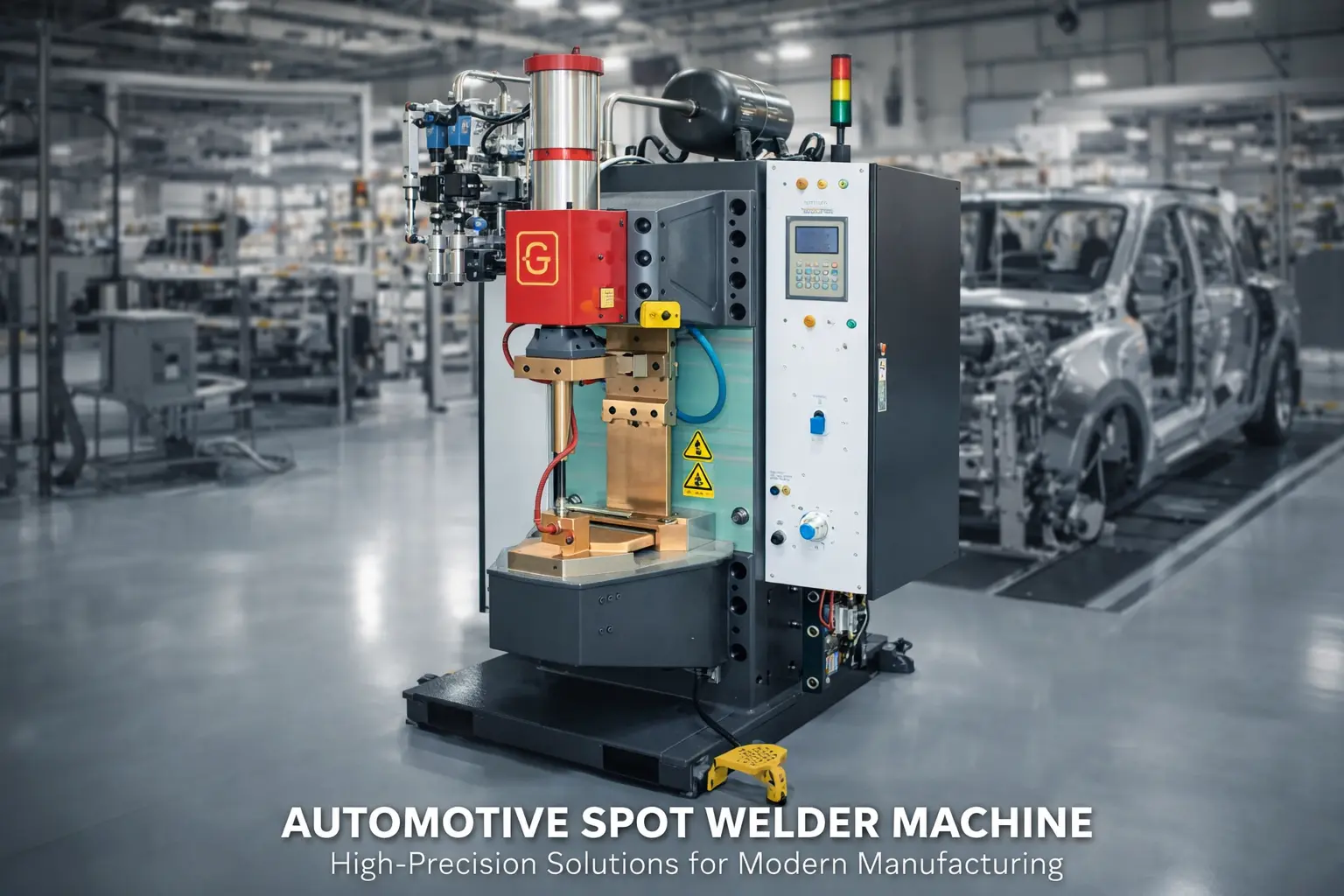
In today’s competitive automotive manufacturing landscape, precision, repeatability, and efficiency are non-negotiable. One critical technology enabling these standards is the automotive spot welder. Used extensively for joining sheet metals, spot welding ensures strong, reliable joints while supporting high-speed production lines. Heron Welder, a global leader in industrial welding and metal-joining solutions, offers advanced spot welding systems designed to meet the rigorous demands of automotive OEMs, tier suppliers, and automation integrators.
In this guide, we’ll explore the principles, applications, best practices, and considerations for automotive spot welding, while highlighting why Heron Welder remains a trusted partner for manufacturing excellence.
An automotive spot welder is a type of resistance welding machine that joins two or more overlapping metal sheets by applying pressure and passing a high electric current through the contact area. The heat generated melts the metal at the interface, forming a strong, localized weld known as a “spot.”
Unlike traditional welding methods, spot welding is fast, repeatable, and highly suited for high-volume automotive production lines, such as chassis assembly, body panels, and structural subassemblies.
The spot welding process relies on three main principles:
Pressure Application – Electrode arms apply mechanical pressure to hold the sheets together. Correct pressure ensures proper fusion and minimizes defects like splatter or misalignment.
Electric Current Flow – A high-intensity current passes through the electrodes, generating heat at the contact points due to the electrical resistance of the metal sheets.
Cooling and Solidification – Once the current is stopped, the molten metal quickly solidifies under pressure, forming a robust weld nugget capable of withstanding structural loads.
Heron’s MFDC (Medium-Frequency Direct Current) spot welders offer precise control over current, pressure, and timing, optimizing energy efficiency and weld quality, even on advanced high-strength steels and aluminum alloys commonly used in automotive bodies.
Automotive spot welders are a cornerstone of modern vehicle production, offering reliable solutions across a variety of applications:
Body-in-White (BIW) Assembly: Joining door panels, roof sections, and floor pans with high-speed, repeatable welds.
Chassis and Frame Fabrication: Providing strong structural joints that meet safety and crash-test standards.
Battery Enclosures for EVs: Ensuring consistent welds on aluminum and mixed-metal structures for electric vehicle battery packs.
Automated Welding Lines: Integrating seamlessly with robotic arms and conveyor systems for mass production efficiency.
Heron Welder’s spot welding systems are engineered for flexibility, allowing OEMs and integrators to adapt to various panel materials and thicknesses without compromising throughput or quality.
Understanding where spot welding fits into the broader welding landscape is key for production planning:
| Welding Method | Advantages | Considerations |
|---|---|---|
| Spot Welding | Fast, precise, repeatable; minimal distortion | Limited to overlapping sheet metals |
| MIG/MAG Welding | Versatile, suitable for thicker joints | Slower, may require filler; more post-processing |
| Laser Welding | High precision, narrow heat-affected zone | Higher capital cost, requires clean surfaces |
| Friction Stir Welding | Excellent for aluminum panels | Specialized equipment, slower cycle time |
For high-volume automotive applications, spot welding remains the preferred choice due to its speed, efficiency, and integration compatibility with robotic automation.
Electrode Maintenance: Regular electrode dressing prevents weld defects and ensures consistent heat transfer.
Process Monitoring: Use real-time monitoring systems to track current, voltage, and weld nugget quality. Heron’s controllers offer advanced diagnostics and adaptive welding parameters.
Material Compatibility: Adjust parameters for coated steels, high-strength alloys, or aluminum to avoid splatter, cracks, or weak joints.
Automation Integration: Coordinate spot welding robots with conveyors, vision systems, and part handling equipment for seamless production.
Operator Training: Skilled operators can fine-tune settings, maintain equipment, and troubleshoot issues proactively.
By following these best practices, manufacturers can maximize efficiency, reduce rework, and maintain safety compliance.
Heron Welder offers a comprehensive portfolio of spot welding solutions tailored to automotive production:
Advanced Controllers: Precise digital control over current, pressure, and timing.
MFDC and Capacitor Discharge Systems: Optimized for steel, aluminum, and hybrid materials.
Robotic Integration: Compatible with fully automated assembly lines.
Global Support: Technical consultation, preventive maintenance, and training programs.
OEMs and automation integrators rely on Heron’s expertise to design production lines that are efficient, scalable, and cost-effective.
1. Can spot welding be used on aluminum panels?
Yes, with the right MFDC or capacitor discharge spot welder, aluminum and mixed metals can be welded reliably. Heron systems are specifically optimized for these materials.
2. What is the ideal sheet thickness for automotive spot welding?
Spot welding is effective for sheets ranging from 0.5 mm to 3 mm, depending on material and equipment specifications.
3. How fast can automotive spot welding cycles be?
Modern MFDC spot welders can achieve cycle times of 0.5 to 1 second per weld, supporting high-volume production.
4. Is spot welding safe for battery pack assemblies in EVs?
Yes. Properly controlled spot welding ensures low heat input, avoiding damage to sensitive components while providing structurally strong joints.
5. How does Heron assist with automation integration?
Heron provides consultation, robotic integration solutions, and controller programming to streamline welding operations on fully automated production lines.
An automotive spot welder is a critical investment for manufacturers aiming for speed, precision, and high-quality metal joining. Heron Welder combines decades of industrial welding expertise with innovative MFDC, capacitor discharge, and robotic solutions to deliver reliable, energy-efficient, and scalable systems.
For manufacturing engineers, OEMs, and automation integrators seeking a trusted partner in welding technology, Heron provides not only advanced equipment but also expert guidance, preventive maintenance, and integration support.
Contact Heron Welder today to request a quote or discuss customized automotive spot welding and automation solutions designed to meet your production goals.