English
 Arabic
 French
 Spanish
 Portuguese
 Deutsch
 Turkish
 Dutch
Dutch
 Italiano
 Russian
 Romaian
 Portuguese (Brazil)
 Greek
Greek

Global Heterogeneous Catalyst Market Drivers and Opportunities Analysis 2034
Networking |
2026-05-11 19:09:57
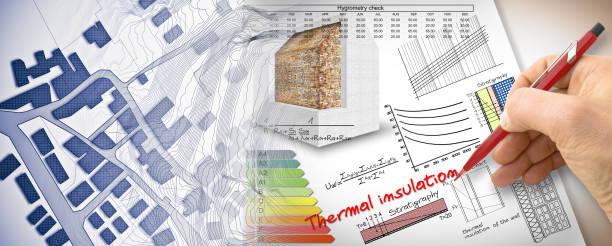
Thermal energy storage (TES) systems are crucial in addressing energy imbalances in both renewable energy production and demand. These systems store thermal energy for later use, enabling energy providers to maintain consistent output and increase the efficiency of renewable energy sources like solar and wind. MATLAB has become an essential tool for modeling, analyzing, and optimizing TES systems, offering a robust environment for both researchers and engineers.
This post delves into how MATLAB can be applied to the development and enhancement of thermal energy storage systems, outlining the modeling techniques, coding strategies, and key considerations for building accurate and efficient thermal storage models. Whether you are a researcher or industry professional, understanding the interplay between MATLAB coding and thermal energy storage will help you make informed decisions for better system designs and operational strategies.
Thermal energy storage refers to the process of storing excess thermal energy for later use. It involves the use of mediums like molten salts, ice, or phase-change materials (PCMs) to absorb and release heat when required. This ability to store energy during periods of low demand and release it during peak times enhances energy security and promotes grid stability.
There are two primary categories of thermal energy storage systems: sensible heat storage and latent heat storage.
Sensible Heat Storage: This method involves storing heat by raising the temperature of a material, such as water or rocks. The amount of heat stored depends on the mass of the material, its specific heat capacity, and the temperature difference.
Latent Heat Storage: In contrast, latent heat storage relies on the phase change of a material (e.g., solid to liquid) to store energy. The energy is stored without a temperature change, making this method more efficient in some contexts.
Understanding the dynamics of these systems is essential for modeling them effectively. MATLAB provides a versatile platform to simulate these processes, offering tools that can account for various variables such as heat transfer, phase change, and material properties.
MATLAB, a high-performance computing environment, is widely used in the design and analysis of TES systems. It allows researchers and engineers to create detailed models that simulate the behavior of different storage mediums, analyze heat transfer dynamics, and optimize system parameters. MATLAB’s ease of use and powerful computational capabilities make it the go-to tool for building these models.
Heat transfer within a thermal energy storage system is the backbone of its operation. MATLAB offers a variety of methods for simulating this process, including finite difference and finite element methods. By discretizing the heat transfer equations, MATLAB can model how heat flows through different materials over time, allowing users to predict temperature distributions and optimize the size of storage systems.
For instance, when modeling sensible heat storage, MATLAB can calculate the heat absorbed or released based on the temperature of the storage medium. These calculations are crucial in determining the effectiveness of a TES system, as they help engineers predict how much heat can be stored and how efficiently it can be extracted when needed.
For latent heat storage, MATLAB is used to model the phase change process, accounting for factors like the latent heat of fusion and the material's thermal conductivity. Simulating these processes requires more complex equations that consider the rate of phase change and the associated temperature behavior, making MATLAB's numerical solver tools particularly valuable.
MATLAB's optimization tools are critical for improving the performance of TES systems. In the context of thermal storage, optimization involves adjusting parameters like the size of the storage medium, the heat exchange rates, and the materials used to achieve the desired performance. These parameters can significantly affect the efficiency of the system, making optimization a key step in system design.
One approach to optimization is to minimize energy loss by selecting materials with high thermal conductivity or low thermal resistance. MATLAB’s optimization toolbox allows users to perform multi-objective optimization, where trade-offs between energy storage capacity, system cost, and operational efficiency can be examined. This is especially useful in real-world applications where resources are limited, and engineers need to balance multiple factors to achieve the most cost-effective solution.
Another important optimization goal is to maximize the energy recovery rate. MATLAB models can simulate different operational strategies, such as varying the storage medium’s temperature or adjusting the heat exchanger design, to determine the most efficient configuration.
Writing MATLAB code for thermal energy storage systems involves a combination of physical modeling and numerical techniques. Engineers and researchers must account for the various physical processes, including heat transfer, fluid flow, and phase changes, while ensuring the code is computationally efficient and accurate.
To illustrate the use of MATLAB in thermal storage systems, consider the task of modeling heat transfer in a sensible heat storage system. The basic idea is to calculate the heat stored in the medium based on the change in temperature over time.
Below is a simple MATLAB code that calculates the heat stored in a system based on the temperature difference:
This basic script demonstrates how MATLAB can be used to compute the heat stored in a system when the mass, specific heat, and temperature change are known. However, real-world TES systems involve more complex variables such as time-dependent temperature changes, varying heat sources, and environmental factors. For these systems, more advanced numerical methods and simulations are required.
In latent heat storage systems, phase change plays a critical role in energy storage. MATLAB can simulate phase changes by incorporating the latent heat of fusion into the energy balance equations. Here’s an example of how MATLAB might handle the energy storage process during phase change:
This code calculates the energy stored during the phase change of a material (like water turning into ice), which is fundamental to latent heat storage systems.
MATLAB also supports dynamic simulations that model how the thermal energy storage system behaves over time. These simulations can account for fluctuations in temperature, energy demand, and system performance. By discretizing the governing equations and running time-stepping algorithms, MATLAB can provide a time-series analysis of the system’s behavior, allowing engineers to assess its performance under various conditions.
For instance, engineers can simulate the heat loss over time or evaluate how quickly a storage system can respond to changes in external temperature or energy demand. These dynamic simulations help optimize system sizing and control strategies, improving overall efficiency.
Creating efficient and accurate MATLAB code for thermal energy storage systems requires a deep understanding of both thermodynamics and computational modeling. For those looking to optimize their TES system designs or require assistance with complex simulations, our matlab code assignment service offers expert guidance and customized solutions.
Thermal energy storage systems play a vital role in modern energy management, and MATLAB provides the tools necessary to model, optimize, and simulate these systems effectively. Whether working with sensible heat or latent heat storage, MATLAB's powerful computational environment enables engineers and researchers to gain critical insights into system performance, paving the way for more efficient and cost-effective energy storage solutions.
As the demand for renewable energy continues to grow, the role of thermal energy storage will become increasingly significant. By harnessing the capabilities of MATLAB, professionals can help ensure that TES systems are optimized for peak performance, contributing to the ongoing transition toward a sustainable energy future.