English
 Arabic
 French
 Spanish
 Portuguese
 Deutsch
 Turkish
 Dutch
Dutch
 Italiano
 Russian
 Romaian
 Portuguese (Brazil)
 Greek
Greek

Black Myth: Wukong - Xbox ESRB Rating, PS5 Physical Edition
Games |
2026-04-28 03:00:52
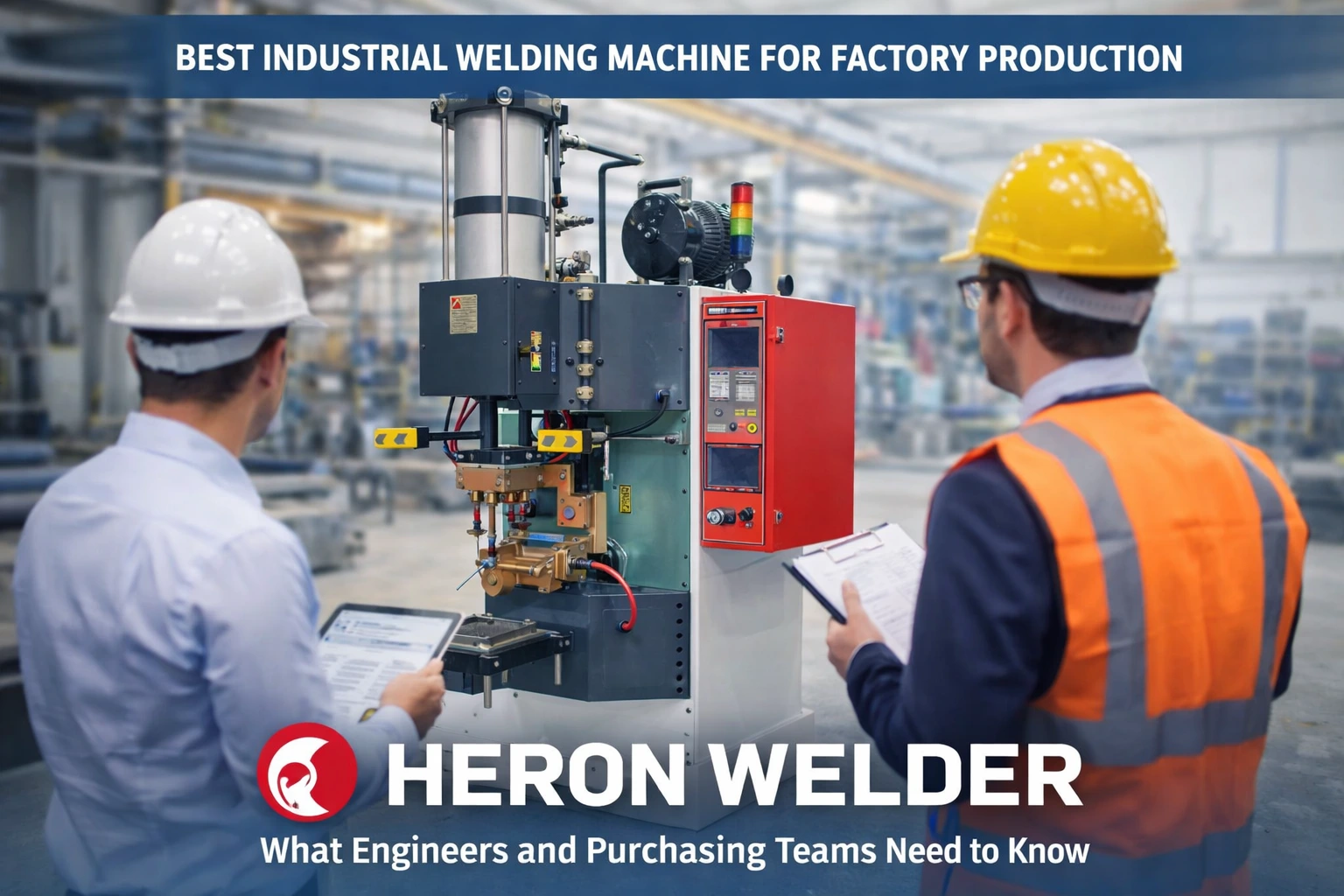
In modern manufacturing, efficiency, repeatability, and precision are non-negotiable. For industries relying on metal assembly—such as automotive, aerospace, electronics, and appliance manufacturing the projection welder has become a cornerstone technology. Heron Welder, a global leader in industrial welding solutions, designs and delivers high-performance projection welding systems tailored to complex production needs, helping OEMs, automation integrators, and factory engineers optimize metal-joining operations.
A projection welder is a type of resistance welding machine designed to join two or more metal sheets at predefined points. Unlike traditional spot welding, which relies solely on electrode contact, projection welding uses small raised features (projections) on the workpiece. These projections focus the electrical current and heat precisely where the weld is required, ensuring strong, consistent joints without affecting surrounding areas.
Key components include:
Electrodes: Conduct current into the projections.
Force application system: Controls pressure during welding.
Power supply: Often MFDC (Medium-Frequency Direct Current) for consistent energy delivery.
Automation interface: Optional robotic or production line integration for high-volume operations.
The projection welding process follows a simple but highly controlled principle:
Preparation: The workpieces are stacked, and projections on the top sheet align with contact points on the bottom sheet.
Current Flow: The electrodes apply pressure and pass a high current through the projections.
Localized Heating: Electrical resistance at the projections generates intense heat, melting the metal locally.
Weld Formation: Under continued electrode pressure, the molten metal solidifies, forming a precise joint.
Because heat is concentrated on projections, there is minimal distortion and excellent dimensional control—critical in industries with tight tolerances.
Projection welding is widely used across industries requiring precise and durable metal joints:
Automotive Manufacturing: Assembly of chassis, frames, brackets, and fuel tanks. Projection welders ensure consistent quality for safety-critical components.
Electrical and Electronics: Fabrication of busbars, connectors, and battery components where minimal thermal distortion is required.
Appliance Manufacturing: Joining sheet metal panels in refrigerators, ovens, and HVAC units with repeatable strength.
Heavy Industry & Construction: Fabrication of structural components, metal furniture, and machinery requiring multiple simultaneous weld points.
Heron’s projection welding systems are designed for both manual and automated lines, providing flexibility for varying production volumes and complexity levels.
While projection and spot welding are both resistance-based techniques, their differences define application choices:
| Feature | Projection Welding | Spot Welding |
|---|---|---|
| Heat Concentration | Localized at projections | Distributed across electrode contact area |
| Weld Count | Multiple welds at once | Single weld per electrode press |
| Sheet Thickness | Suitable for thicker or uneven sheets | Works best with thin, flat sheets |
| Distortion | Minimal | Can cause warping in delicate assemblies |
| Automation | Easily integrated into production lines | Manual or semi-automated |
For high-volume manufacturing, projection welders provide superior consistency, reduce electrode wear, and allow for faster cycle times—making them the preferred choice for OEMs and industrial automation projects.
To maximize weld quality and machine lifespan, consider these operational best practices:
Projection Design: Ensure projections are uniform in size, shape, and height for consistent energy absorption.
Electrode Maintenance: Regularly check electrode shape, alignment, and surface condition to prevent inconsistent welds.
Optimal Parameters: Adjust current, force, and weld time based on metal type and thickness. Heron’s MFDC projection welders allow precise control for variable production needs.
Material Preparation: Clean metal surfaces to remove oxides, oils, or coatings that could affect weld integrity.
Automation Integration: For high-volume applications, integrate projection welders with robotic arms or production lines to achieve faster cycle times and minimal human error.
Heron Welder has been delivering industrial-grade projection welding solutions globally, offering:
High Precision: MFDC-controlled machines ensure consistent energy delivery and repeatable weld quality.
Flexible Automation: From standalone units to fully automated welding lines, Heron provides solutions that fit production requirements.
Durable Design: Machines are built for long-term, high-volume operation with minimal maintenance.
Technical Expertise: Heron supports OEMs and factory engineers with process optimization, customized solutions, and training.
Whether your facility requires manual, semi-automatic, or fully automated projection welding systems, Heron’s engineering team can tailor solutions for efficiency, repeatability, and cost-effectiveness.
Q1: What metals can be joined using a projection welder?
A1: Projection welding works best with steel, stainless steel, aluminum, copper, and their alloys. The process is highly effective for conductive metals with defined projections.
Q2: How does projection welding reduce distortion?
A2: The weld heat is concentrated only at projections, minimizing thermal spread and preserving the overall sheet geometry.
Q3: Can projection welders be integrated into automated production lines?
A3: Yes. Heron offers both standalone and fully integrated robotic solutions to achieve high-volume, repeatable welding processes.
Q4: What industries commonly use projection welding?
A4: Automotive, electronics, appliance manufacturing, heavy machinery, and construction are primary users of projection welding technology.
Q5: How often should electrodes be replaced or maintained?
A5: Electrode maintenance depends on usage volume and material. Regular inspection, cleaning, and reshaping ensure consistent weld quality and machine longevity.
For manufacturers seeking high-quality, repeatable, and efficient metal joining, projection welding is a proven solution. Heron Welder combines decades of industrial expertise with advanced resistance welding technology to deliver machines optimized for today’s high-demand production environments.
Explore Heron’s custom projection welding systems and automation solutions to enhance productivity, reduce costs, and maintain the highest weld quality.
Contact Heron Welder today to request a quote or consult with our engineering team for a tailored projection welding solution that fits your manufacturing needs.