English
 Arabic
 French
 Spanish
 Portuguese
 Deutsch
 Turkish
 Dutch
Dutch
 Italiano
 Russian
 Romaian
 Portuguese (Brazil)
 Greek
Greek

At Heron Welder, we specialize in designing and manufacturing advanced welding and metal-joining equipment, including resistance welding machines, clinching systems, self-pierce riveting (FSPR) machines, welding guns, controllers, and fully automated production lines. This guide explores the key aspects of welding machines to help manufacturers make informed choices.
Outro
Welding Machine: A Complete Guide for Modern Manufacturing
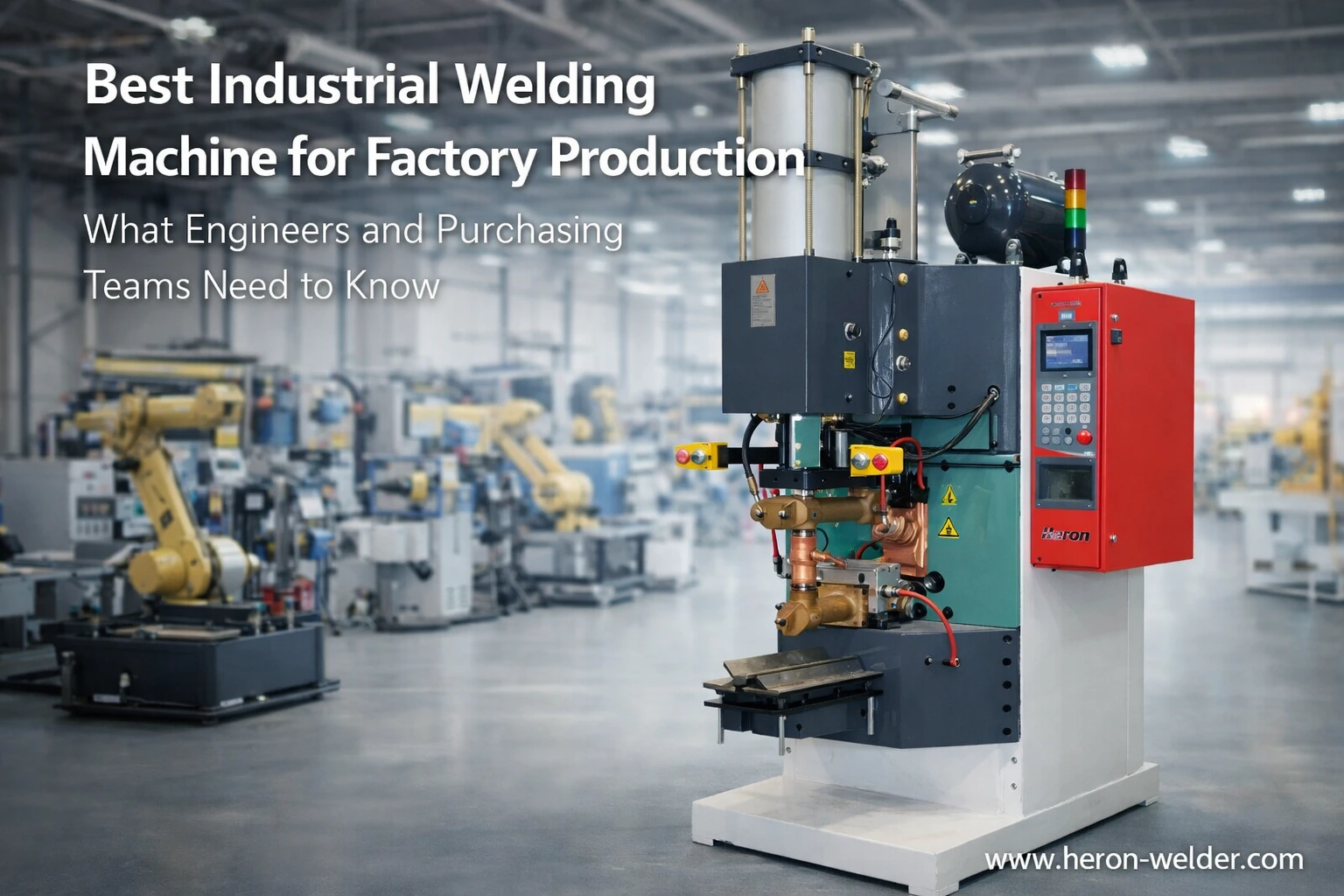
In today’s competitive manufacturing landscape, precision, efficiency, and reliability are crucial. Central to achieving these goals is the right welding machine. From automotive assembly lines to heavy machinery production, welding machines are indispensable tools for joining metals and fabricating durable structures. For engineers, OEMs, and factory decision-makers, understanding the principles, types, and applications of welding machines is critical for optimizing production and reducing costs.
What is a Welding Machine?
A welding machine is a device that joins metals through the application of heat, pressure, or a combination of both. Unlike traditional mechanical fastening, welding creates a continuous bond, ensuring structural integrity and electrical continuity in many industrial applications. Modern welding machines integrate advanced controls and automation capabilities, allowing high-volume production with minimal operator intervention.
Types of Welding Machines
1. Resistance Welding Machines
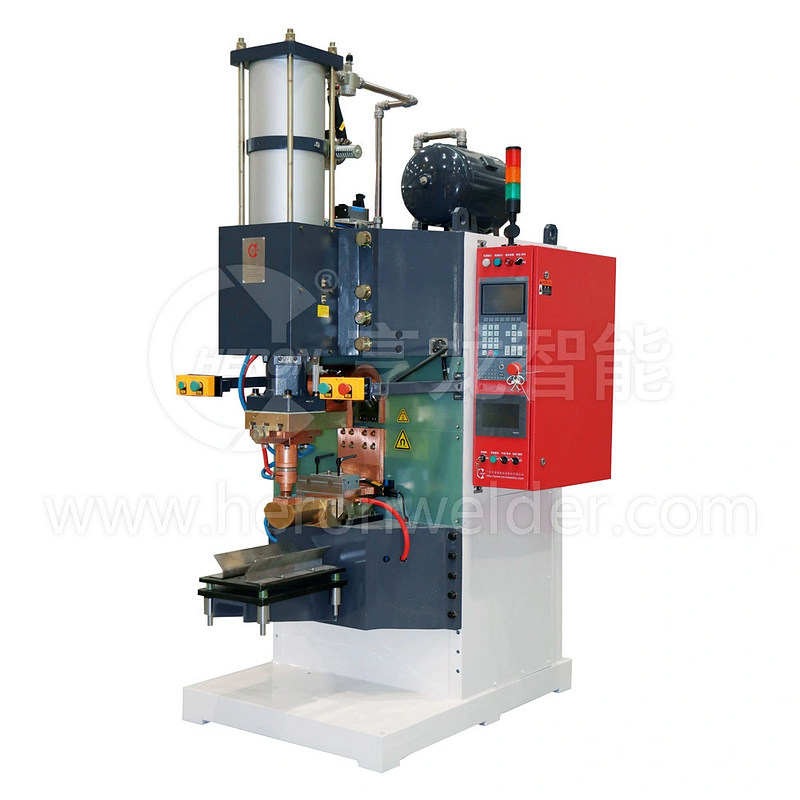
Resistance welding uses electrical current and pressure to generate heat and form joints. Heron’s resistance welding machines are engineered for precision and consistency. Common types include:
- Spot Welding Machines: Ideal for joining sheet metal, widely used in automotive and appliance manufacturing.
- Projection Welding Machines: Suitable for joining components with defined projections, providing high strength and repeatable results.
- Seam Welding Machines: Create continuous welds along sheet metal edges, often used in fuel tanks and metal containers.
- MFDC (Medium-Frequency DC) Machines: Offer faster weld times, energy efficiency, and better control for automotive and electronics applications.
- Capacitor Discharge (CD) Machines: Deliver high-current pulses in milliseconds, suitable for thin metals and delicate components.
2. Clinching Systems
Clinching machines mechanically join sheet metals without heat or consumables, making them environmentally friendly and cost-effective. They are widely used in HVAC, automotive, and appliance industries.
3. Self-Pierce Riveting (FSPR)
FSPR machines join multiple layers of metal by piercing and forming mechanical interlocks. They are especially popular in lightweight automotive applications where welding may compromise material properties.
4. Welding Guns and Controllers
Heron’s advanced welding guns and controllers offer precise control over current, pressure, and timing, ensuring consistent quality across high-volume production lines.
5. Automated Welding Lines
For large-scale manufacturers, fully automated welding production lines integrate multiple welding stations, conveyors, and robotic systems. These lines maximize throughput, reduce labor costs, and maintain consistent quality.
Applications of Welding Machines
Welding machines are critical in multiple industries:
- Automotive Manufacturing: Spot, projection, and FSPR machines enable strong, lightweight body assemblies.
- Electronics & Appliances: Precision welding machines join thin metals and components efficiently.
- Construction & Heavy Machinery: Seam welding and resistance welding machines ensure durable structural joints.
- Energy & Utilities: Welding machines fabricate pipelines, transformers, and other essential infrastructure.
By selecting the right type of welding machine, manufacturers can optimize productivity, reduce material waste, and maintain high-quality standards.
Choosing the Right Welding Machine
Selecting a welding machine involves evaluating multiple factors:
- Material Type and Thickness: Different machines handle different metals and thicknesses. For example, capacitor discharge machines excel with thin metals, while MFDC machines are better for mid-gauge materials.
- Production Volume: High-volume production favors automated resistance welding or robotic lines.
- Precision Requirements: Applications requiring minimal distortion benefit from advanced controllers and MFDC machines.
- Integration with Automation: Welding machines should be compatible with existing production lines and automation systems for seamless operation.
Heron Welder offers tailored solutions, combining high-quality machines with expert consultation to meet specific manufacturing needs.
Best Practices for Welding Machine Operation
- Proper Setup and Calibration: Ensure machines are correctly configured for material type, thickness, and desired joint strength.
- Regular Maintenance: Periodic checks on electrodes, pressure mechanisms, and electrical connections prevent downtime and extend machine life.
- Operator Training: Skilled operators reduce errors, improve consistency, and ensure safe operation.
- Process Monitoring: Integrating monitoring systems helps detect deviations early and maintain quality standards.
- Energy Efficiency: Using MFDC and modern controllers can significantly reduce energy consumption per weld.
Following these best practices ensures optimal performance, safety, and long-term cost savings.
Welding Machine vs. Other Metal Joining Methods
Compared to mechanical fastening, adhesives, or thermal joining, welding machines offer:
- Stronger Joints: Continuous metal fusion provides high structural integrity.
- Consistency: Automated welding ensures repeatable quality.
- Cost Efficiency: Reduced consumables and faster cycle times lower production costs.
- Flexibility: Suitable for a wide range of metals and thicknesses.
Heron’s diverse product portfolio ensures manufacturers can choose the optimal joining technology for their application.
Frequently Asked Questions (FAQs)
1. What industries benefit most from welding machines?
Automotive, electronics, appliances, construction, and energy sectors rely heavily on welding machines for durable and precise metal joining.
2. How do MFDC welding machines differ from standard AC machines?
MFDC machines use medium-frequency DC to provide faster weld cycles, reduced heat distortion, and improved energy efficiency.
3. Can welding machines be automated?
Yes, automated welding lines integrate robotics, conveyors, and controllers to maximize productivity and reduce labor costs.
4. What maintenance is required for a welding machine?
Regular electrode inspection, pressure calibration, and electrical system checks are essential for consistent performance.
5. How does Heron support customized welding solutions?
Heron offers tailored machine design, automation integration, and technical support to meet specific production requirements.
Partner with Heron for Advanced Welding Solutions
Choosing the right welding machine is crucial for efficiency, quality, and long-term manufacturing success. At Heron Welder, we combine advanced technology with global expertise, providing resistance welding machines, FSPR systems, automated production lines, and precision controllers designed for modern industrial challenges.
Request a quote today or consult our experts to explore customized welding and automation solutions that drive productivity and ensure consistent quality across your production line.