English
 Arabic
 French
 Spanish
 Portuguese
 Deutsch
 Turkish
 Dutch
Dutch
 Italiano
 Russian
 Romaian
 Portuguese (Brazil)
 Greek
Greek

Smart Packaging Market: Strategies for Achieving Sustainable Growth in a Competitive Landscape, Forecast by 2033
Other |
2026-02-26 08:01:08
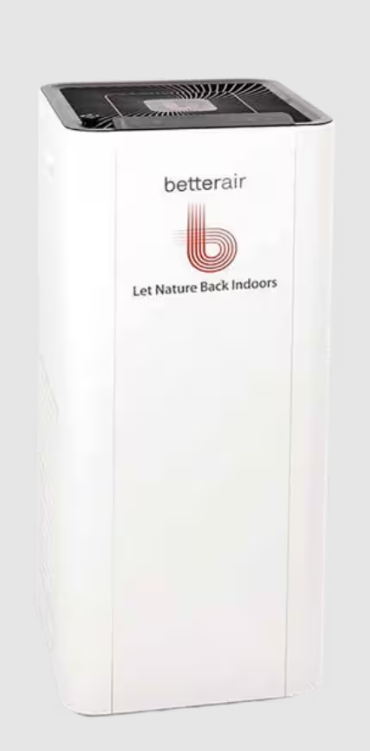
If you are shopping for an air purifier because you are worried about bacteria in your home, you have probably noticed that most machines on the market look and function almost identically. They pull air through a HEPA filter, trap particles, and blow cleaner air back into the room. This works beautifully for dust, pollen, and pet dander. But when it comes to bacteria, relying on filtration alone is like trying to empty the ocean with a teaspoon. It does something, certainly, but it completely misses the bigger picture. The reason is not that HEPA filters are bad. It is that bacteria do not behave the way most people assume they do. Understanding that behavior changes everything about how you should approach bacterial control in your living space.
Here is the fundamental fact that changes the entire conversation. The vast majority of bacteria in your home are not floating through the air. They are sitting on surfaces. Kitchen counters. Bathroom sinks. Doorknobs. Remote controls. Cell phones. Cutting boards. Sponges. The list goes on. Bacteria prefer surfaces because surfaces provide stability, moisture, and food. When you cook chicken, any salmonella bacteria present end up on your cutting board, not floating dramatically through the air like a cartoon cloud. When someone coughs, larger droplets settle onto nearby surfaces within seconds. Even the bacteria that do become airborne tend to be attached to dust particles, which are heavy enough to settle within minutes. An air purifier running in the corner of your room is pulling in mostly dust, not the concentrated bacterial colonies living on your countertops.
Let us assume for a moment that you buy the most expensive HEPA air purifier on the market. You run it twenty-four hours a day. What does it actually capture? Any airborne particle that happens to drift near its intake vents. But consider this. In a typical room, the air exchange rate from a portable purifier means that the unit processes the entire room’s air volume roughly two to four times per hour. That sounds impressive until you realize that bacteria are constantly settling onto surfaces and being resuspended by activity. By the time a bacterial cell makes its way to your purifier, you have probably already touched the surface it came from, breathed near it, or transferred it to your food. Filtration is reactive. It deals with bacteria after they have already become airborne. It does nothing to prevent them from being there in the first place.
Here is a detail that purifier manufacturers rarely advertise. HEPA filters trap bacteria, but they do not kill them. Those living bacterial cells sit inside your filter, often in a warm, slightly moist environment created by the airflow. Many of them stay alive. Some may even multiply. When you change your filter, you are handling a material that has been concentrating bacteria for months. When the filter becomes overloaded or wet, bacteria can be released back into the air or grow through the filter media. Some purifiers add UV lights to address this, but as we discussed earlier, the exposure time is usually too brief for effective sterilization. The point is not that filters are dangerous. They are not, for most households. But the idea that filtration equals bacterial control is incomplete at best.
If bacteria live primarily on surfaces, then controlling bacteria means controlling surfaces. This is not a radical idea. Hospitals have known this for decades, which is why they focus intensely on surface disinfection, not just air filtration. For your home, the most effective bacterial strategy is to reduce the bacterial population on surfaces so that fewer bacteria are ever available to become airborne in the first place. This is where probiotic cleaning with EnviroBiotics offers a fundamentally different approach. Instead of temporarily killing surface bacteria with chemicals, EnviroBiotics seeds your surfaces with beneficial bacteria that outcompete harmful strains. Fewer bad bacteria on surfaces means fewer bad bacteria in the air. You are solving the problem at its source rather than chasing the small fraction that has already become airborne.

None of this means air purifiers are useless for bacterial control. They serve a valuable secondary role, especially in specific situations. If someone in your home has a contagious respiratory illness, running a HEPA purifier in their room can capture some of the infectious particles they exhale. In medical settings or during severe allergy seasons, filtration reduces overall particle load. The right way to think about it is layers. Your primary bacterial defense is surface management: regular cleaning, probiotic products to maintain beneficial colonies, and moisture control to deny bacteria the water they need. Your secondary defense is ventilation, which dilutes whatever bacteria do become airborne. Your tertiary defense is filtration, which captures some of what remains. Filtration alone, without the other layers, is a weak strategy.
So what does a complete plan actually look like? Start with surfaces. Clean counters and high-touch areas daily with a mild soap or, better yet, a probiotic cleaner like EnviroBiotics that leaves behind beneficial bacteria. Wash cutting boards and sponges frequently. Keep humidity below fifty percent to discourage bacterial growth. Second, ventilate. Open windows when weather permits. Run exhaust fans in bathrooms and kitchens. Third, consider an air purifier for bacteria as a supplement, not a solution. Choose one with true HEPA filtration and a substantial carbon filter for general air cleaning. Place it in the bedroom or main living area. Run it continuously on low or medium speed. Change the filter on schedule. But never forget that the purifier is helping with the small fraction of bacteria that escape your surface control. It is not, and cannot be, your primary defense. Filtration alone misses the point entirely. The real work happens at the surface level, where bacteria actually live.