When we talk about modern energy storage, the hardware that often steals the spotlight is the rack mounted battery. These are not your typical backup power units; instead, they are purpose built, scalable, and high density solutions designed to fit neatly into standard equipment racks. What makes them truly “high performance” is their ability to deliver consistent power output, rapid charge and discharge cycles, and long operational lifespans even under demanding conditions. For businesses, data centers, and renewable energy installations, switching to a rack mounted architecture means moving away from bulky, one size fits all batteries toward a modular and intelligent energy reserve that grows with your needs.
Why Rack Mounted Design Matters for Energy Storage
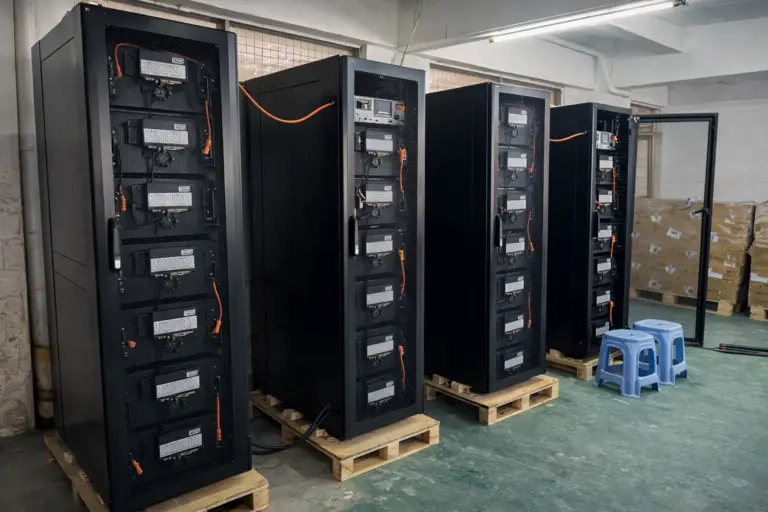
The physical layout of a battery system might seem like a minor detail, but in reality, it defines everything from installation cost to maintenance ease. Rack mounted batteries slide into standardized server racks, which means they occupy minimal floor space while maximizing energy density per cubic foot. This vertical integration allows system designers to pack more kilowatt hours into a smaller footprint, a huge advantage for urban facilities or retrofitted buildings where every square meter counts. Moreover, the rack format naturally promotes better airflow and heat dissipation, keeping cells cooler and extending their cycle life. When you open a cabinet full of these units, you are not looking at tangled wires or scattered components, but a clean, organized, and service friendly setup.
The Role of Lithium Iron Phosphate Chemistry
Not all battery chemistries perform equally in a rack mounted configuration, and high performance systems overwhelmingly favor Lithium Iron Phosphate (LFP) technology. Unlike traditional lithium ion variants, LFP cells are thermally stable, meaning they resist overheating and are far less prone to thermal runaway. For a densely packed rack system, this safety characteristic is non negotiable. In addition, LFP chemistry offers a flat discharge voltage curve, which keeps your inverters and load equipment happy with consistent power delivery until the battery is nearly empty. Owners also appreciate the extended cycle life, often rated at 6,000 to 10,000 cycles, which translates to well over a decade of daily use without premature replacement.
Intelligent Battery Management Systems at the Core
What separates a high performance rack battery from a basic one is the sophistication of its Battery Management System (BMS). This is the onboard computer that monitors every cell’s voltage, temperature, and state of charge in real time. A truly advanced BMS performs passive or active cell balancing, ensuring that no single cell gets overworked while its neighbors sit idle. It also communicates with external controllers using protocols like CAN bus or RS485, allowing your energy management software to make informed decisions about charging and discharging. Without this intelligence, a rack of batteries quickly becomes unreliable. But with it, the system self corrects, reports faults before they become failures, and maximizes the usable capacity over thousands of cycles.
Scalability and Parallel Connectivity
One of the most practical benefits of rack mounted batteries is how effortlessly they scale. Need more storage next year? Simply slide additional battery modules into empty rack spaces or add a whole new adjacent rack. High performance units are designed to operate in parallel, automatically sharing load and balancing current between units. This means you can start with a modest 5 kilowatt hour setup for a small solar array and expand to 100 kilowatt hours or more for a commercial microgrid without replacing any existing hardware. The system simply recognizes each new battery and integrates it into the fleet. For businesses planning for growth, this modular approach protects your initial investment and spreads capital expenses over time.
Real World Applications and Use Cases
You will find high performance rack mounted batteries in a surprising range of environments. In telecommunications, they provide backup power for cell towers where grid electricity is unreliable, often paired with solar panels for true off grid operation. Data centers use them for uninterruptible power supplies, but now also for peak shaving, discharging during expensive utility rate periods to cut electricity bills. Small manufacturers and warehouses are installing them alongside on site solar arrays to store energy generated during the day for evening shifts. Even residential users with large homes or home workshops are adopting slimmed down rack systems because they tuck neatly into utility closets or garages. In every case, the common thread is a need for dense, reliable, and expandable storage.
Installation and Maintenance Considerations
While rack mounted batteries simplify many things, proper installation still requires attention to a few key details. The rack enclosure itself must be structurally sound and anchored to the floor or wall to prevent tipping, especially in seismic zones. Ventilation is another factor; even though LFP batteries run cooler, they still benefit from passive airflow or low speed fans when packed tightly. From a maintenance standpoint, the beauty of the rack format is that individual modules can be hot swapped. If a single unit shows signs of degradation, you slide it out and replace it without shutting down the whole system. Monitoring software typically flags which battery needs attention, so technicians spend minutes rather than hours on service calls. For system owners, this low friction maintenance translates directly to higher uptime and lower total cost of ownership.
 English
 Arabic
 French
 Spanish
 Portuguese
 Deutsch
 Turkish
 Dutch
Dutch
 Italiano
 Russian
 Romaian
 Portuguese (Brazil)
 Greek
Greek