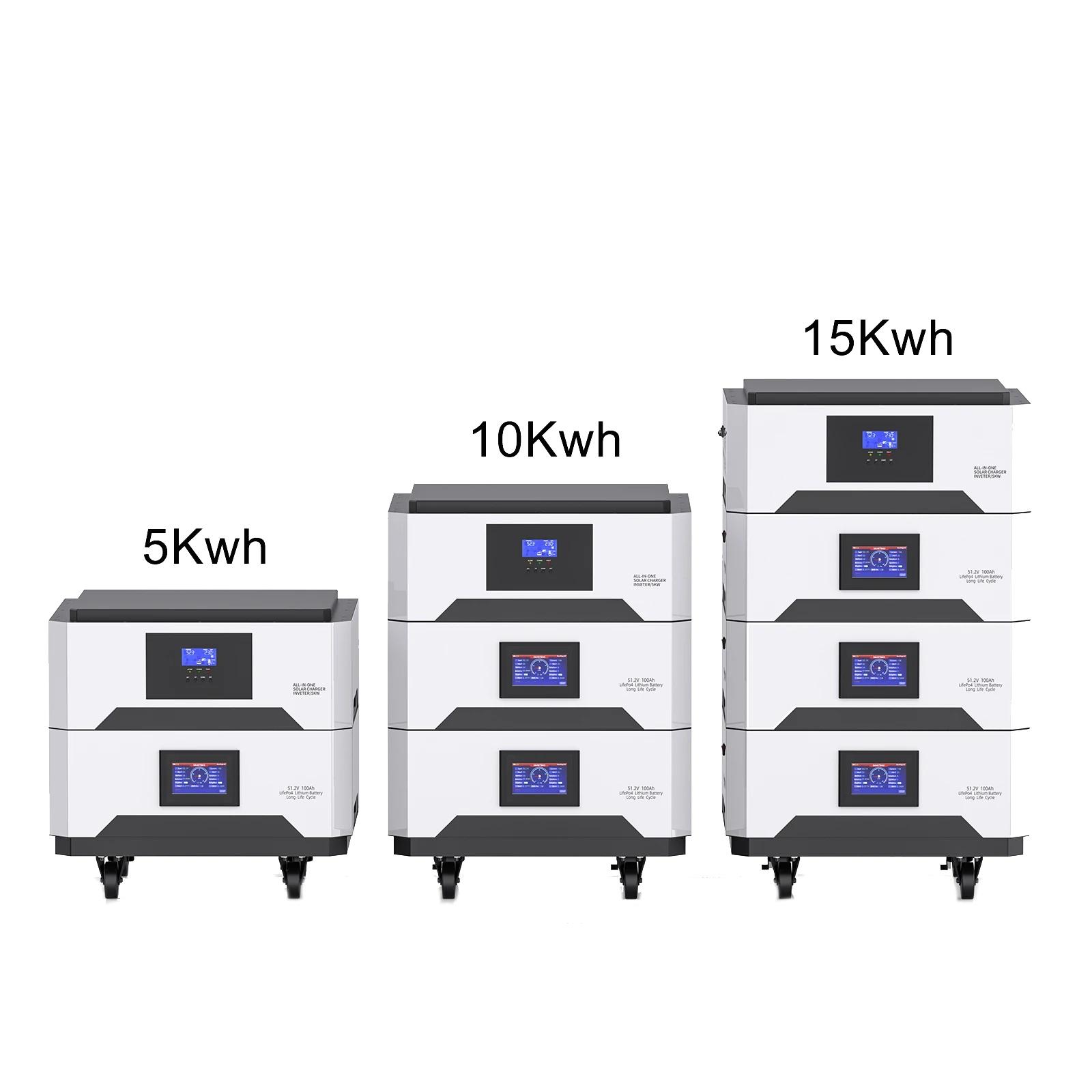
Every time energy changes form, some of it slips away as heat. That’s just physics. But the gap between what you put into a battery and what you get back out – that’s round-trip efficiency – can vary wildly from one system to another. High efficiency stackable battery systems are designed to minimize those losses, typically achieving 95% to 98% round-trip efficiency. For a homeowner with solar panels, that means for every ten kilowatt-hours your array generates, you get back more than nine and a half when you need it at night. Over a year, that extra 5% to 10% can translate into hundreds of kilowatt-hours of additional usable energy – energy you don’t have to buy from the grid. Efficiency matters even more for off-grid systems, where every lost watt means running a generator or cutting back on consumption. Stackable systems achieve high efficiency through a combination of low-resistance lithium iron phosphate cells, intelligent battery management, and optimized busbar designs that keep internal resistance to an absolute minimum. When you’re serious about renewable energy, chasing efficiency isn’t nitpicking – it’s the smartest financial and environmental decision you can make.
The Science Behind High Efficiency
Let me explain what actually makes one battery more efficient than another. The losses happen in three places: internal resistance, coulombic efficiency, and standby drain. Internal resistance is the big one. Every battery cell has some resistance to the flow of electrons, measured in milliohms. When you push current through resistance, you get heat – wasted energy. High efficiency batteries use cells with exceptionally low internal resistance, often below 0.5 milliohms per cell. They also use thick copper busbars between cells and modules, further reducing resistive losses. Coulombic efficiency refers to how perfectly the battery returns the charge it receives. Lithium iron phosphate cells naturally have very high coulombic efficiency – over 99% – because side reactions that waste charge are minimal. Standby drain is the small amount of power the battery management system consumes just to stay awake. In high efficiency systems, the BMS goes into an ultra-low-power sleep mode when idle, sipping just milliwatts. Some premium stackable batteries also use active cell balancing rather than passive balancing. Passive balancing wastes excess energy as heat to keep cells equal. Active balancing shuttles energy from higher-voltage cells to lower-voltage ones, preserving nearly every watt. When you add up these optimizations, a high efficiency system can deliver 3% to 8% more usable energy per cycle than a standard system – a significant difference over thousands of cycles.
How Stackable Design Enhances Efficiency
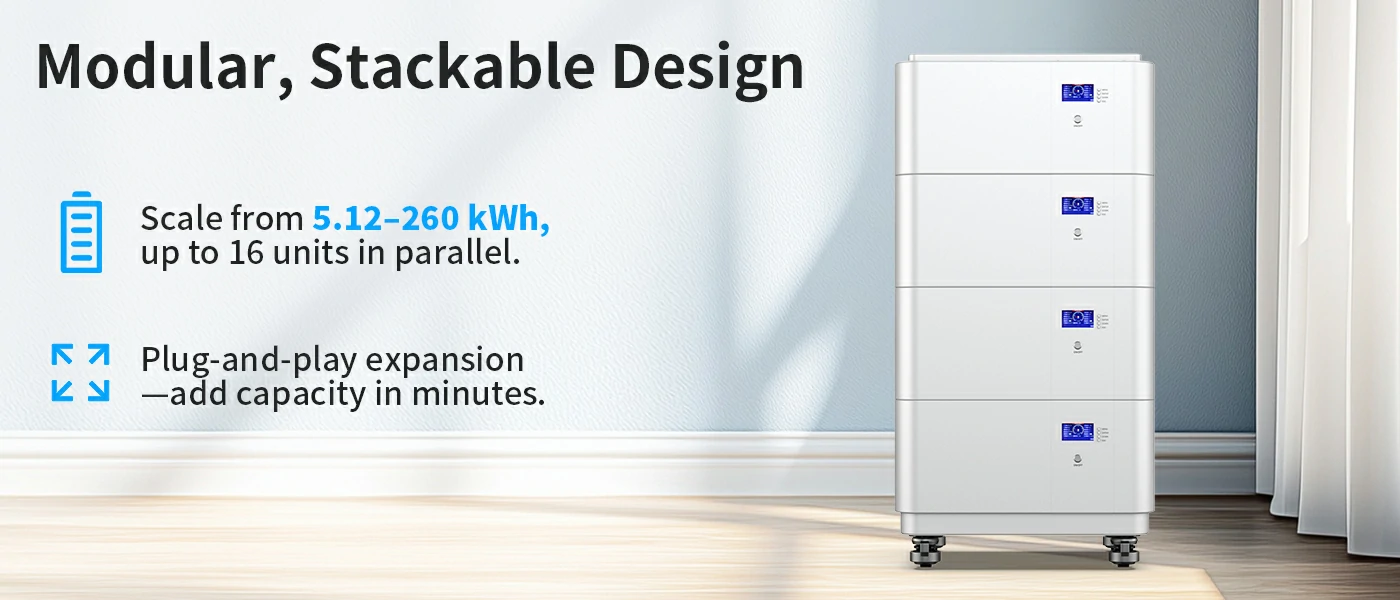
You might wonder if stacking multiple batteries together creates inefficiencies. The answer is no – if the system is designed well. In fact, stackable design can improve efficiency in several ways. First, because you can size your stack precisely to your needs, you avoid the inefficiency of running a huge battery at very low power. Most batteries are most efficient when operating between 20% and 80% of their maximum current rating. A properly sized stack keeps each module in that sweet spot. Second, parallel stacking reduces the current flowing through any single set of busbars. Lower current means lower resistive losses (losses scale with the square of current, so halving current quarters the loss). Third, modern stackable systems use a “master-slave” architecture where one module’s BMS coordinates the others. This central intelligence can balance loads in real time, directing more current to cooler modules or those with lower internal resistance, further optimizing system efficiency. Some advanced systems even allow you to take individual modules offline during periods of very low demand, so the remaining modules operate at higher, more efficient power levels. The net result is that a well-designed stackable system often outperforms a single monolithic battery of the same total capacity, especially in real-world conditions where loads vary throughout the day.
Efficiency in Charging and Discharging Cycles
High efficiency matters differently for charging than for discharging, and understanding this can help you get the most from your system. During charging, efficiency losses appear as heat. If you have a 5 kilowatt solar array pushing power into a battery at 0.5C (half its capacity per hour), a high efficiency system might lose 2% to 3% of that energy. A low efficiency system might lose 8% to 10%. Over a year of daily charging, that’s a massive difference in usable stored energy. During discharging, efficiency determines how much of that stored energy actually powers your home. Here, the battery management system plays a critical role. High efficiency BMS units use synchronous rectification and low-resistance MOSFETs (the electronic switches that control current flow). Cheap BMS units use diodes that waste 0.5 to 1 volt of drop – at 50 amps, that’s 25 to 50 watts of continuous loss. Over a four-hour evening discharge, that’s 100 to 200 watt-hours wasted as heat. Some high efficiency systems also offer adjustable charge and discharge rates. If you don’t need maximum power, slowing down the rate reduces resistive losses. For example, charging at 20 amps instead of 50 amps might cut losses by 60%, at the cost of taking longer to charge. For homeowners with flexible schedules, this trade-off can boost overall system efficiency noticeably.
Real World Savings from High Efficiency
Let me put some real numbers on what high efficiency means for your wallet. Imagine a typical grid-tied solar home with 10 kilowatt-hours of daily battery cycling – charging during the day, discharging at night. At 95% round-trip efficiency, that 10 kilowatt-hours of solar energy delivers 9.5 kilowatt-hours to your home. At 85% efficiency, you only get 8.5 kilowatt-hours. The missing kilowatt-hour must come from the grid. If your electricity costs 15 cents per kilowatt-hour, that’s 5 cents per day, or about 18peryear.Thatdoesn’tsoundlikemuch,butrememberthebatterycyclesdailyfor6,000to8,000cyclesoveritslife.Over20years,that1018peryear.Thatdoesn’tsoundlikemuch,butrememberthebatterycyclesdailyfor6,000to8,000cyclesoveritslife.Over20years,that10360 – and that’s just for a small 10 kilowatt-hour system. For larger systems or homes with higher energy costs (California rates can exceed 40 cents per kilowatt-hour), the difference can be thousands of dollars over the battery’s lifetime. Efficiency also matters for backup runtime. When the grid is down, every watt counts. A high efficiency battery might keep your refrigerator running for an extra two or three hours compared to a low efficiency battery of the same stated capacity. That could be the difference between saving your food or throwing it away. When you consider both daily savings and emergency preparedness, high efficiency stackable batteries simply offer better value over their long service lives.
Choosing and Maintaining High Efficiency Systems
Not every stackable battery labeled “high efficiency” actually delivers, so here’s how to separate marketing from reality. Look for independent test reports or user-verified round-trip efficiency numbers. Reputable manufacturers publish these. Check the battery management system’s standby power consumption – anything under 5 watts per module is good; under 2 watts is excellent. Examine the busbar material: copper is great, aluminum is less efficient. Ask about the balancing method – active balancing is a strong sign of a high efficiency design. Once you’ve chosen a system, proper maintenance preserves efficiency. Keep terminals clean and tight – corrosion and loose connections add resistance. Ensure adequate cooling – high temperatures increase internal resistance, reducing efficiency. Update firmware when the manufacturer releases updates – these often include efficiency improvements. Avoid consistently operating at extreme states of charge (below 10% or above 95%) if you want to maintain optimal efficiency, though occasional full cycles are fine. Finally, consider your inverter’s efficiency too – a 98% efficient battery paired with a 90% efficient inverter only gives you 88% system efficiency. For renewable energy storage, the whole chain matters. By paying attention to efficiency at every step, you ensure that the clean energy you worked so hard to generate doesn’t disappear as wasted heat before it ever powers your home.
 English
 Arabic
 French
 Spanish
 Portuguese
 Deutsch
 Turkish
 Dutch
Dutch
 Italiano
 Russian
 Romaian
 Portuguese (Brazil)
 Greek
Greek