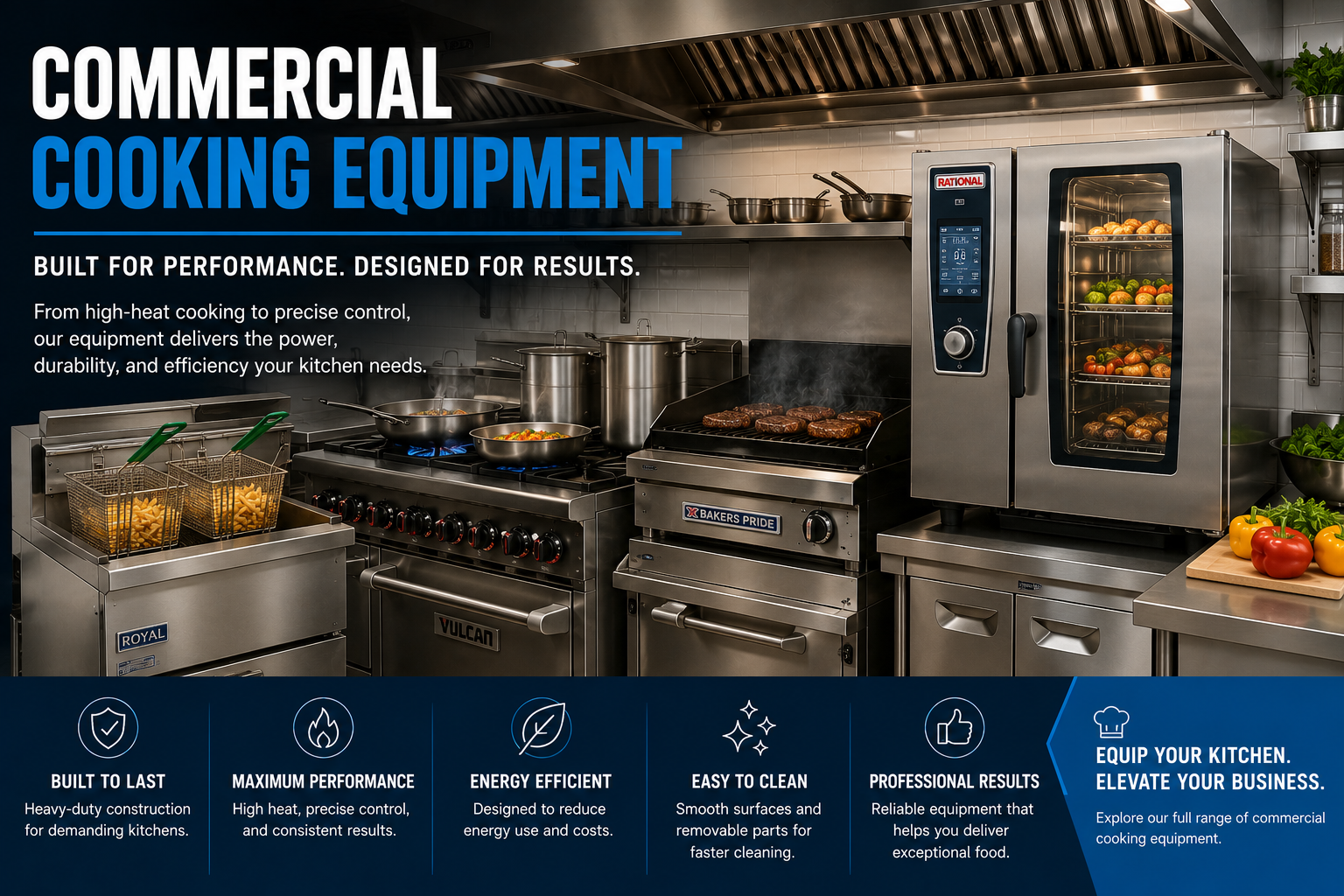
In a professional kitchen, the right equipment can make all the difference. Commercial cooking equipment refers to appliances, tools, and machinery designed to handle the high-volume, high-intensity demands of restaurants, hotels, catering services, and cafeterias. Investing in reliable and efficient equipment ensures that food is prepared safely, consistently, and efficiently.
What is Commercial Cooking Equipment?
Commercial cooking equipment includes stoves, ovens, fryers, grills, steamers, and other appliances used in professional foodservice operations. Unlike home kitchen appliances, these units are built for heavy use, durability, and efficiency, often with higher capacities and faster cooking times.
Common Types of Commercial Cooking Equipment
- Commercial Ranges and Stoves
- Used for boiling, sautéing, and frying large quantities of food.
- Can be gas or electric, with multiple burners for high-volume cooking.
- Ovens
- Conventional Ovens: Provide even heat for baking and roasting.
- Convection Ovens: Use fans to circulate hot air, cooking food faster and more evenly.
- Combination Ovens: Allow multiple cooking methods, including steaming and roasting.
- Grills and Griddles
- Perfect for searing, frying, and cooking proteins and vegetables quickly.
- Gas and electric options are available depending on kitchen needs.
- Deep Fryers
- Used for frying foods at consistent temperatures.
- Essential for high-volume kitchens serving items like fries, chicken, and seafood.
- Steamers and Combi-Steamers
- Retain moisture and nutrients in vegetables, seafood, and grains.
- Steamers are energy-efficient and ideal for bulk cooking.
- Food Processors and Mixers
- Essential for prep work like chopping, slicing, mixing dough, and pureeing.
- Microwaves and Salamander Broilers
- Microwaves are great for reheating, while salamander broilers finish dishes with quick, high heat.
Benefits of Using Commercial Cooking Equipment
- Efficiency: Handles large volumes of food faster than home appliances.
- Consistency: Delivers uniform cooking results for every dish.
- Durability: Built for heavy-duty, daily use in busy kitchens.
- Versatility: Many appliances support multiple cooking methods.
- Safety and Compliance: Designed to meet health and safety standards in commercial kitchens.
Tips for Selecting the Right Equipment
- Assess Your Menu: Choose equipment that aligns with your menu and cooking techniques.
- Consider Volume Needs: Match appliance capacity to expected food production.
- Check Energy Sources: Decide between gas, electric, or dual-fuel options.
- Prioritize Durability: Invest in appliances built for commercial use to reduce replacement costs.
- Maintenance and Support: Ensure the equipment is easy to clean and has accessible service support.
Applications in Commercial Kitchens
- Restaurants and Cafés: Cooking, baking, frying, and grilling for daily service.
- Hotels and Resorts: Large-scale meal preparation for banquets and room service.
- Catering Services: Portable or high-capacity equipment for off-site events.
- Institutional Kitchens: Schools, hospitals, and cafeterias rely on commercial-grade appliances for bulk meal prep.
Final Thoughts
Commercial cooking equipment is the backbone of professional kitchens. Choosing the right tools ensures efficiency, food safety, and consistent quality. From ovens and ranges to fryers, steamers, and mixers, investing in high-quality commercial appliances helps kitchens operate smoothly, serve dishes on time, and meet the expectations of their customers.
 English
 Arabic
 French
 Spanish
 Portuguese
 Deutsch
 Turkish
 Dutch
Dutch
 Italiano
 Russian
 Romaian
 Portuguese (Brazil)
 Greek
Greek