English
 Arabic
 French
 Spanish
 Portuguese
 Deutsch
 Turkish
 Dutch
Dutch
 Italiano
 Russian
 Romaian
 Portuguese (Brazil)
 Greek
Greek

How Safe Is Profhilo Treatment? Beginner Safety Guide
Health |
2026-04-08 10:12:55
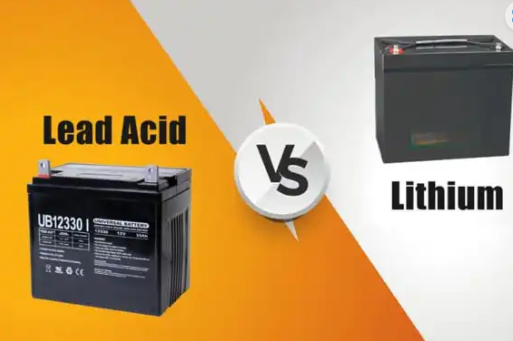
To effectively charge and maintain a lithium iron phosphate battery, one must adhere to a specific regimen that prioritizes thermal stability and precise voltage management. Unlike traditional lead-acid counterparts, these cells thrive when kept between a 20% and 80% state of charge, avoiding the physiological stress of extreme saturation or depletion. Optimal safety dictates using a charger specifically calibrated for LiFePO4 chemistry to prevent over-voltage scenarios that could compromise the internal crystalline structure. Charging should strictly occur within an ambient temperature range of 0°C to 45°C; attempting to force current into a frozen cell can lead to irreversible lithium plating, which poses a significant risk. Maintenance involves periodic monitoring of cell balance through a robust Battery Management System (BMS), ensuring each individual cell remains within its operational threshold. By avoiding rapid discharge rates and shielding the battery from excessive heat, users can significantly extend the cycle life of their investment. This proactive stewardship not only guarantees operational reliability but also leverages the inherent safety profile of the phosphate-based cathode, making it one of the most resilient energy storage technologies available for modern industrial applications.
Nurturing a lithium iron phosphate battery requires a nuanced understanding of its voltage plateaus. While a standard cell might boast a nominal voltage of 3.2V, the peak charging voltage typically hovers around 3.65V. Pushing the cells to their absolute maximum capacity every single time can induce chemical fatigue. Smart operators often choose to terminate the charge at 3.5V or 3.55V per cell. This infinitesimal reduction in capacity results in a disproportionate gain in cycle life, often doubling the longevity of the pack. Utilizing a dedicated Constant Current/Constant Voltage (CC/CV) profile ensures the current tapers off naturally as the battery reaches its saturation point, preventing the erratic voltage spikes that plague inferior charging hardware.
Modern power electronics have revolutionized how we interact with energy storage. A sophisticated charger doesn't just blast power into the cells; it orchestrates a delicate transition between stages. During the initial bulk phase, the charger provides a steady flow of current until the battery reaches a predefined voltage limit. Once this threshold is attained, the absorption phase takes over, maintaining a steady voltage while the current gradually diminishes. This meticulous process ensures the lithium ions migrate smoothly back to the anode without causing internal turbulence. Avoiding "float" charging—a common practice in lead-acid maintenance—is vital, as LiFePO4 chemistry does not tolerate a continuous trickle of current once fully replenished.
The internal kinetics of a lithium iron phosphate battery change drastically when the mercury drops. When charging occurs below freezing, the lithium ions move sluggishly and, instead of intercalating into the anode, they may coat the surface in a process known as lithium plating. This creates dendrites—microscopic, needle-like structures that can eventually pierce the separator and cause an internal short circuit. Many high-end industrial solutions now incorporate internal heating blankets or sophisticated BMS logic that inhibits charging until the core temperature reaches a safe equilibrium. Ensuring your storage environment remains temperate is perhaps the most critical factor in preventing premature failure and maintaining the structural integrity of the battery's interior.
Thermal management is equally crucial at the opposite end of the spectrum. While LiFePO4 is celebrated for its high thermal runaway threshold, consistent exposure to temperatures exceeding 60°C will accelerate the breakdown of the electrolyte and the solid electrolyte interphase (SEI) layer. This degradation manifests as a permanent loss of capacity and increased internal resistance. To maintain peak performance, provide ample ventilation around the battery casing and avoid stacking units in confined spaces where heat might stagnate. Utilizing high-quality connectors and appropriately sized cabling further reduces parasitic heat generated by electrical resistance, keeping the entire system cool even during demanding discharge cycles or rapid replenishment phases.
Long-term storage of a lithium iron phosphate battery necessitates a different approach than daily operational use. If you intend to decommission a pack for several months, keeping it at a 100% state of charge is detrimental, as the constant high voltage puts unnecessary strain on the chemical bonds. Conversely, leaving it fully discharged risks the battery falling into a "deep sleep" from which the BMS might not be able to recover it. The industry gold standard for storage is approximately 50% capacity. This middle-ground state maintains a healthy equilibrium, minimizing chemical degradation while ensuring there is enough energy to power the internal monitoring electronics for an extended duration without the cells dropping below a critical voltage floor.
Even the most meticulously manufactured cells will exhibit slight variations in capacity and internal resistance over time. A high-quality Battery Management System acts as a digital sentinel, constantly comparing the voltage of individual cells within a series string. During the final stages of the charging cycle, the BMS performs "top balancing," bleeding off excess energy from the strongest cells to allow the weaker ones to catch up. Allowing your battery to reach a full state of charge occasionally—perhaps once every few weeks—is beneficial because it provides the BMS with the window it needs to perform this vital synchronization. This prevents "cell drift," ensuring that the entire pack provides its full rated capacity and preventing any single cell from being over-stressed.
Vigilance is the cornerstone of safety when managing industrial energy systems. Users should periodically inspect their battery enclosures for any signs of "bloating" or swelling, which indicates that gas has built up inside the prismatic or pouch cells due to abuse or manufacturing defects. While a lithium iron phosphate battery is inherently more stable than other lithium chemistries, a distinct sweet or metallic smell near the battery can signify an electrolyte leak. If a casing feels unusually hot to the touch during a standard discharge cycle, it is imperative to disconnect the load immediately. These physical cues are the battery's way of communicating internal distress before a catastrophic failure occurs, allowing for proactive replacement or repair.
In the age of the Internet of Things, manual inspections are bolstered by real-time data analytics. Many professional-grade LiFePO4 systems offer Bluetooth or CANbus connectivity, allowing operators to monitor cell-level voltages and temperature sensors via a smartphone or centralized dashboard. By tracking trends in internal resistance and discharge curves, you can identify a failing cell long before it impacts the rest of the array. This granular insight transforms maintenance from a reactive chore into a predictive science. High-performance setups often utilize these telemetry links to communicate directly with chargers and inverters, creating a closed-loop system that automatically throttles current if any parameters begin to deviate from the safety envelope, ensuring total system harmony.
Adhering to these guidelines ensures that your energy storage solution remains a reliable asset for years to come. Founded in 2007, TOPAK Power Technology Co., Ltd. is a leading provider of industrial-grade lithium battery solutions. We specialize in customized energy storage and power solutions tailored to diverse application environments. TOPAK Power Technology Co., Ltd. is a professional lithium iron phosphate battery manufacturer and supplier in China. If you are interested in lithium iron phosphate battery, please feel free to discuss with us. Our commitment to quality and safety ensures that every cell we produce meets the rigorous demands of modern industry.
References:
1. Linden's Handbook of Batteries, Fifth Edition by Kirby W. Beard
2. Electrochemical Power Sources: Fundamentals, Systems, and Applications by Tomáš Kazda
3. Lithium-Ion Batteries: Science and Technologies by Yoshio, Brodd, and Kozawa
4. Battery Management Systems for Large Lithium-Ion Battery Packs by Davide Andrea
5. Energy Storage Systems: A Fundamentals and Case Study Approach by Birol Kilkis
6. Advanced Battery Management Technologies for Electric Vehicles by Rui Xiong