English
 Arabic
 French
 Spanish
 Portuguese
 Deutsch
 Turkish
 Dutch
Dutch
 Italiano
 Russian
 Romaian
 Portuguese (Brazil)
 Greek
Greek

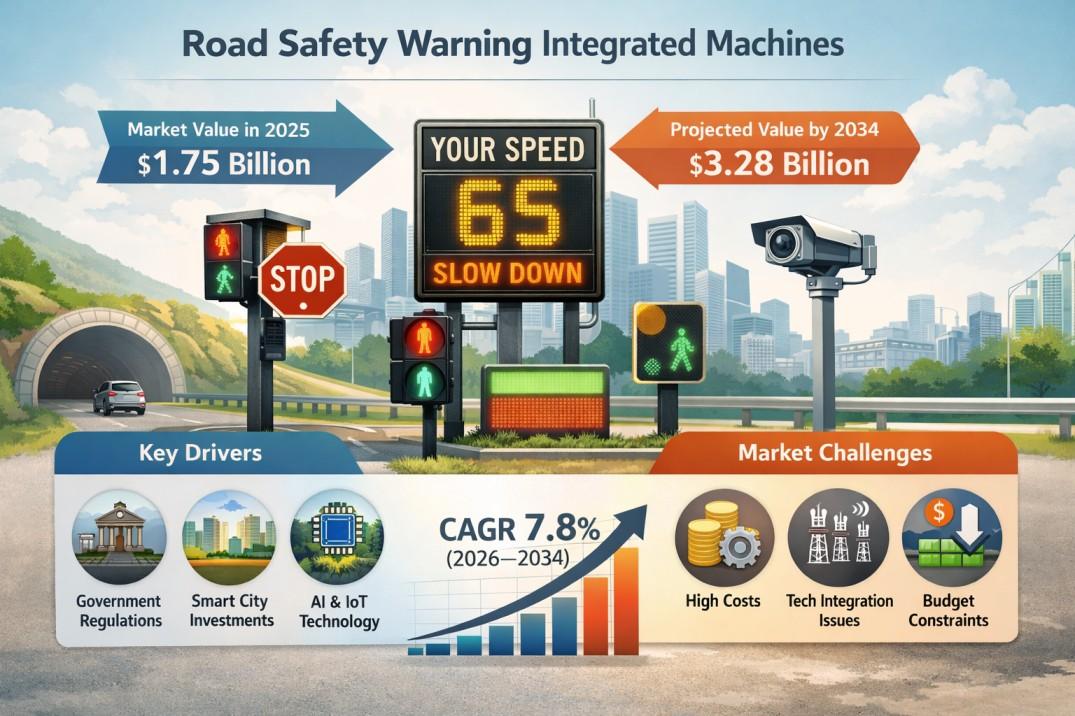
Road Safety Warning Integrated Machine Industry Set for Strong Growth at 7.8% CAGR Through 2034
Other |
2026-04-15 11:38:11
Most travel executives I talk to are watching their loyalty programs get bypassed. You spent decades building points systems that generated billions in revenue. Your customers enrolled at 72% rates. Then AI agents showed up.
Now 48% of your highest-value travelers use AI to plan trips, and those algorithms don't care about status tiers or accumulated miles. The pattern I'm seeing across airlines, hotels, and OTAs is the same: traditional loyalty metrics are breaking down while AI adoption accelerates.
Here's what's actually happening. True customer loyalty dropped to 29% in 2025 despite those high enrollment numbers. Meanwhile, 63% of elite members now choose booking channels specifically because they have AI capabilities. Your customers aren't abandoning you—they're letting algorithms make decisions for them.
This shift isn't about better technology. It's about control. When an AI agent can find personalized itineraries, better deals, and seamless booking in seconds, your points program becomes friction, not value.
The executives who recognize this early will adapt. The ones who don't will watch their most valuable customers become loyal to AI platforms instead of their brands.
I've seen this pattern across industries: AI tools excel at speed and optimization, but they can't replicate human judgment. AI agents provide instant service at lower costs, handling route optimization across multiple destinations. Traditional agents charge commissions and take days for complex itineraries.
The difference matters for your business model. AI handles simple to medium-complexity trips efficiently. But multi-person group travel or emergencies? Human agents remain necessary.
Voice interaction has become particularly strong. MakeMyTrip's platform handles over 2 million voice conversations because travelers naturally provide more context when speaking—purpose, preferences, constraints—than when typing.
AI bots analyze past trips and searches to suggest destinations aligned with individual tastes. Usage doubled from 11% to 24% between October 2024 and July 2025. That's not gradual adoption—that's a market shift.
These systems operate within structured environments with verified listings, payment records, and historical reviews. The better the data quality, the better the recommendations.
Here's what's actually available right now:
Trip Planner AI creates plans with Google Maps integration but requires separate booking. Sigma Browser offers hands-free processing that finds and compares bookings. Mindtrip focuses on visual itineraries with map displays. iMean AI handles multi-city planning with real-time price scanning.
ChatGPT with plugins supports natural language queries but lacks native booking flow. That gap between planning and booking is where traditional travel companies still have an advantage—if they move fast enough. Read More...
Also Read: AI in Healthcare: What Hospitals Are Really Learning About AI Agents in 2026