English
 Arabic
 French
 Spanish
 Portuguese
 Deutsch
 Turkish
 Dutch
Dutch
 Italiano
 Russian
 Romaian
 Portuguese (Brazil)
 Greek
Greek

People We Meet on Vacation Pop-Up: NYC Event Guide
Games |
2025-12-26 00:25:31
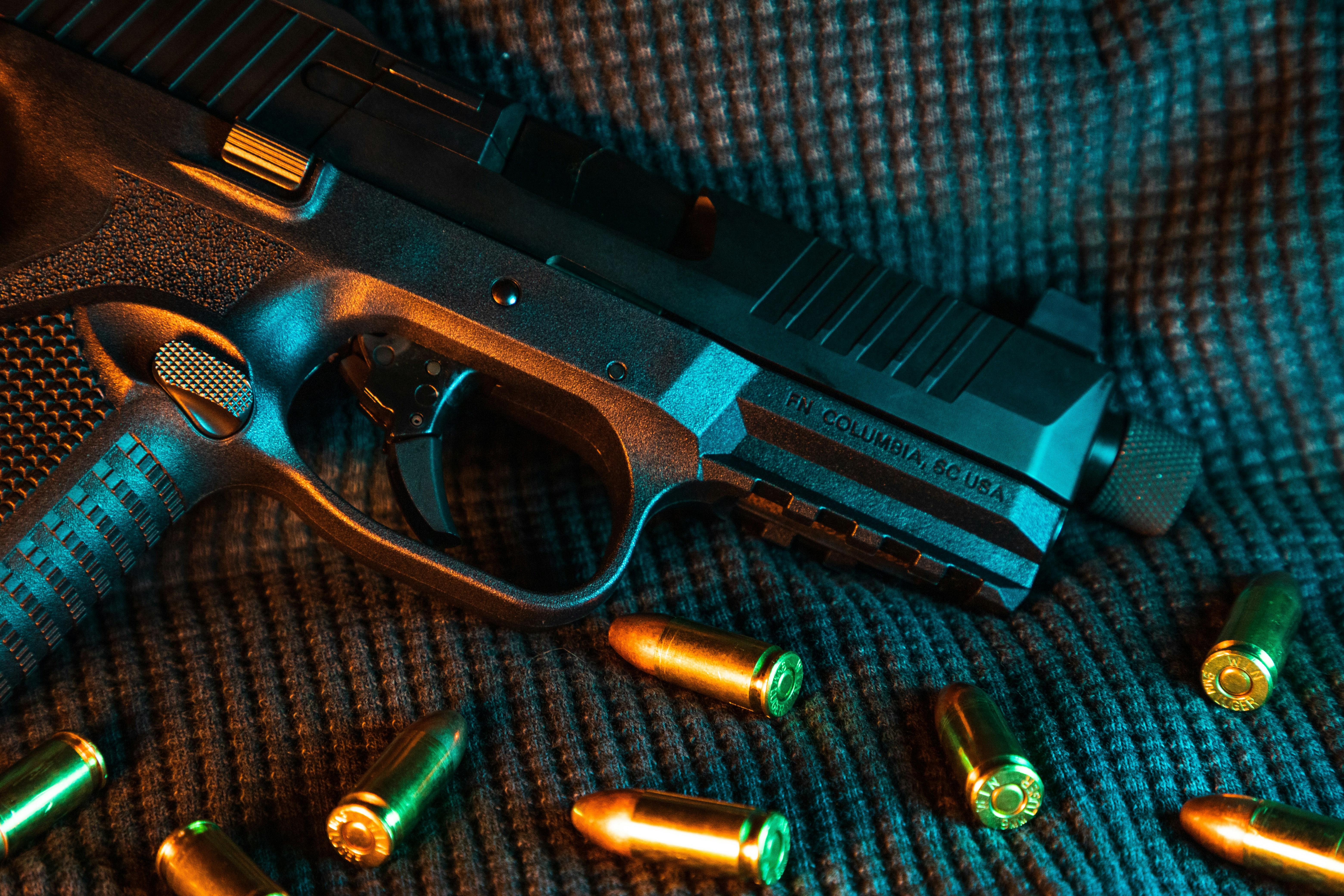
In the history of firearms development, few companies carry the weight and heritage of Colt. For decades, the name was synonymous with the 1911—a design so perfect in its simplicity that it effectively defined the standard for semi-automatic pistols for nearly a century. However, as the 1980s turned into the 1990s, the landscape of the duty-pistol market underwent a seismic shift. The world was moving toward traditional double-action (DA/SA) platforms, and Colt, feeling the pressure of a changing market, needed a modern answer. The result was the colt double eagle, a stainless steel, DA/SA powerhouse that attempted to marry the beloved ergonomics of the 1911 with the safety and functionality of a modern service weapon. Decades later, firearms enthusiasts still debate whether this ambitious project was a stroke of genius that failed to find its audience or a fundamental misstep in product development.
To understand the philosophy behind this pistol, one must look at the duty-handgun landscape of the early 1990s. Law enforcement agencies across the United States were rapidly moving away from single-action-only platforms toward double-action systems that were perceived as safer and more intuitive for "stressful" defensive scenarios. Companies like Sig Sauer, Beretta, and Smith & Wesson were dominating the market with robust, reliable DA/SA pistols.
Colt, the king of the 1911, found itself in an awkward position. They had the brand loyalty, but they lacked a competitive DA/SA offering that could capture the police and duty market. The Double Eagle was the company’s bold response. It retained the slim profile, the magazine release location, and the general grip angle that 1911 shooters loved, but it utilized a modern double-action trigger mechanism and an innovative (though somewhat polarizing) grip-mounted decocker. It was a bridge—an attempt to bring the classic Colt "feel" into a modern framework.
The engineering of the colt double eagle was arguably its most fascinating aspect. Colt moved away from the 1911’s single-action hammer and sear setup, implementing a pivoting trigger and a complex internal mechanism to accommodate the double-action pull. The pistol was constructed entirely of stainless steel, giving it a solid, "heirloom-quality" feel that was absent in many of the competing plastic-framed or lighter-alloy guns of the time.
One of the most unique features was the decocking system. Rather than having a manual safety or a slide-mounted decocker like the Beretta 92, the Double Eagle employed a button located on the frame, behind the trigger guard, which could be activated by the shooter's thumb while maintaining a firing grip. This was a sophisticated piece of engineering that aimed to solve the "safe carry" issue. However, this design choice also introduced a layer of mechanical complexity that arguably made the action feel less "crisp" than the refined triggers Colt was famous for. In attempting to do everything—maintaining 1911 ergonomics while offering a duty-ready DA/SA trigger—the design perhaps sacrificed the clarity of purpose that made its predecessors so legendary.
If the Double Eagle had so much promise, why didn't it become the new standard? The primary issue was likely the "uncanny valley" of firearms design. For the dyed-in-the-wool 1911 enthusiast, the Double Eagle felt like a betrayal; the trigger, no matter how hard Colt’s engineers worked on it, could not match the short, clean break of a well-tuned 1911. Conversely, for the tactical shooter who wanted a dedicated duty weapon, the pistol was competing against well-entrenched, battle-tested designs that were arguably more reliable and easier to maintain in the field.
Additionally, the Double Eagle arrived at a time when the firearms industry was beginning to pivot toward high-capacity, polymer-framed duty pistols. The stainless steel construction, while beautiful and durable, made the pistol relatively heavy compared to the emerging generation of handguns. It occupied a strange middle ground: it was too heavy and complex for the modern tactical user, and too "different" for the traditionalist.
Despite its lukewarm reception in the duty market, the pistol found a dedicated following among those who appreciated its engineering and build quality. The Double Eagle was produced in a variety of calibers, including the ubiquitous 9mm and .45 ACP, but the most coveted variant today is the 10mm Auto. Chambering the powerful 10mm in a DA/SA platform was a bold move that put Colt ahead of the curve in many ways, as the 10mm "craze" was just hitting its peak.
Today, these pistols are becoming increasingly rare and are sought after by collectors who recognize them for what they truly were: an ambitious experiment from one of the most storied manufacturers in history. They represent a snapshot in time—a desperate but creative effort by a legendary company to evolve. For the collector, the Double Eagle is not a "missed" product; it is a fascinating, high-quality, and distinctively Colt piece of hardware that offers a shooting experience unlike anything else on the market.
Can a Double Eagle serve as a reliable range gun or even a defensive tool today? Absolutely. While it lacks the modularity of modern optics-ready pistols, it remains a testament to the quality of Colt’s manufacturing in the 1990s. The stainless steel frames are robust, the ergonomics are excellent for those with medium-to-large hands, and the weight of the gun makes it an incredibly soft shooter, even in .45 ACP or 10mm.
For those who enjoy the "feel" of a heavy, metal-framed pistol, the Double Eagle provides a sense of connection to the firearm that is hard to find in today's polymer market. It forces the shooter to master a long double-action trigger pull, which is an excellent way to refine one's marksmanship fundamentals. If you choose to bring one to the range, you will likely find yourself the center of attention, as few modern shooters have ever actually fired one.
Was the Double Eagle a misstep? Perhaps from a pure sales-volume and market-domination perspective, it was. It failed to displace the established DA/SA giants and didn't hold the long-term interest of the general shooting public. However, labeling it a "misstep" feels harsh. It was a brave attempt at diversification, an engineering exercise that pushed the boundaries of what Colt was willing to try.
Every great company has chapters in its history that don't go according to plan, and for Colt, the Double Eagle is a chapter that deserves more respect than it typically gets. It was a high-quality firearm built by master craftsmen during a transitional period for the industry.
If you are interested in owning a Double Eagle, or if you simply enjoy studying the history of unique firearms, you are joining a small but passionate group of enthusiasts. Because production was limited and the gun is now a collector's item, finding one in good condition requires a bit of patience and, more importantly, access to a wide network of sellers.
Resources like GunsAmerica are the perfect place to begin your search. The platform offers a depth of listings and a user-friendly interface that allows you to filter for specific Colt variants and calibers, ensuring you can track down a quality specimen to add to your collection. Whether you are looking for the common .45 ACP version or the elusive 10mm Auto, GunsAmerica provides the security and transparency necessary to make a confident purchase. The Double Eagle serves as a reminder that firearms history is not a straight line—it is a series of experiments, some of which become legends, and some of which become fascinating footnotes. Either way, the story of this unique pistol is a crucial part of the Colt legacy, one that highlights the company's spirit of innovation during one of the most interesting decades in firearms design.