English
 Arabic
 French
 Spanish
 Portuguese
 Deutsch
 Turkish
 Dutch
Dutch
 Italiano
 Russian
 Romaian
 Portuguese (Brazil)
 Greek
Greek

Necrotizing Fasciitis Market Size, Trends, and Growth Strategies Analysis
Other |
2026-05-06 12:19:20
Physics is a subject that rewards clarity of thought, logical structure, and consistent practice. Yet every year, even well-prepared students lose valuable marks due to avoidable mistakes. Having taught and assessed physics for years, I have seen patterns in exam scripts that repeat across levels—from high school to advanced programs like IB. Many students practice content thoroughly but overlook exam technique. Reviewing high-quality ib physics past papers from platforms like https://www.aliphysicscafe.com/ can expose these recurring pitfalls early and help students avoid them. In this article, we will examine the most common mistakes students make in physics exams and how to eliminate them.
One of the most damaging mistakes in physics exams is misreading the question. Physics questions are carefully worded. A single term such as “derive,” “state,” “explain,” or “calculate” changes what the examiner expects.
Students often:
Ignore command terms.
Skip over units.
Miss key information hidden in diagrams.
Confuse “describe” with “explain.”
For example, when a question asks students to “state” a law, a concise definition is required. When asked to “explain,” the answer must include reasoning. Many students lose marks because they write too much irrelevant information or fail to include required reasoning.
Solution: Always underline command words and key quantities before starting your solution.
Units are fundamental in physics. Writing the correct numerical value without the correct unit is incomplete.
Common unit-related errors include:
Forgetting units entirely.
Writing incorrect units (e.g., m instead of m/s).
Not converting units before calculation.
Mixing SI and non-SI units.
For example, calculating force using mass in grams instead of kilograms leads to incorrect answers even if the formula is correct.
Solution: Convert all quantities into SI units before substitution. Treat units as part of the answer, not an afterthought.
Memorizing formulas without understanding their meaning is one of the biggest reasons students struggle.
Physics exams increasingly test conceptual understanding rather than rote memorization. For example:
Knowing F = ma is easy.
Understanding why acceleration changes when force changes requires conceptual clarity.
Students often plug numbers into formulas without asking whether the situation physically makes sense.
Solution: Focus on conceptual clarity. Ask yourself:
Why does this formula work?
What assumptions are involved?
What physical principle is being tested?
Physics and algebra are inseparable. Many students lose marks not because they do not understand physics, but because they struggle with rearranging equations.
Typical algebra mistakes include:
Incorrect rearrangement of formulas.
Dropping negative signs.
Errors when squaring or taking square roots.
Incorrect substitution.
For example, failing to correctly rearrange kinematic equations leads to incorrect final answers even if the method is sound.
Solution: Practice algebra separately. Comfort with algebra reduces stress during problem-solving.
Many students attempt to save time by skipping steps and writing only final answers. This is risky.
Physics marking schemes often award:
Marks for correct formula selection.
Marks for correct substitution.
Marks for proper working.
Marks for correct final answer.
When steps are skipped, examiners cannot award method marks if the final answer is wrong.
Solution: Write all key steps clearly:
Write the formula.
Substitute values.
Show intermediate steps.
Present the final answer with units.
Physics exams frequently use graphs to test understanding.
Common mistakes include:
Reading slope incorrectly.
Confusing gradient with area.
Ignoring axis labels.
Forgetting units on axes.
For example:
On a velocity-time graph, slope represents acceleration.
Area under the graph represents displacement.
Students often mix these interpretations.
Solution: Revise graph interpretation regularly. Practice extracting physical meaning from slopes and areas.
Many students spend too long on difficult questions and rush through easier ones.
Common time-related mistakes:
Attempting the hardest question first.
Not allocating time per mark.
Leaving questions incomplete.
Physics exams reward strategic answering. Easy marks should be secured first.
Solution: Allocate time proportionally. For example, 1.5 minutes per mark is a practical rule in many exams.
Physics involves vectors such as velocity, acceleration, force, and displacement.
Students frequently:
Ignore direction.
Drop negative signs.
Confuse scalar and vector quantities.
In projectile motion or circular motion, sign errors significantly affect final answers.
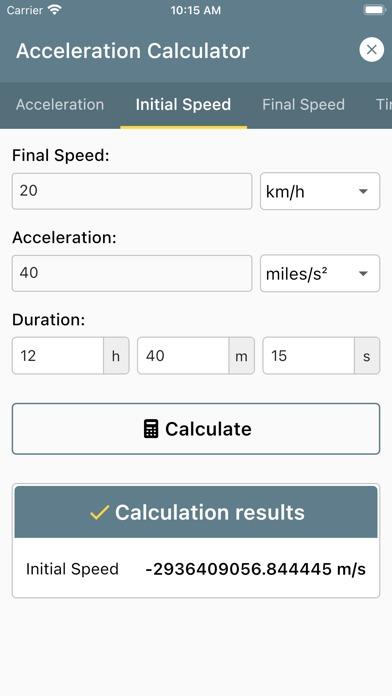
Using tools like a magnitude of acceleration calculator available at https://www.aliphysicscafe.com/ can help students verify whether their conceptual understanding of vector quantities is correct before exams.
Solution: Define your sign convention at the start of the problem. Stick to it consistently.
Examiners appreciate clarity. Messy scripts lead to confusion and lost marks.
Common presentation issues:
Working scattered across the page.
No clear labeling.
Crossing out without clarity.
Final answers not boxed or highlighted.
Even correct work can be difficult to award marks for if it is unclear.
Solution: Structure solutions logically and present neatly.
Physics requires attention to significant figures.
Mistakes include:
Rounding too early.
Giving excessive precision.
Ignoring data precision.
If given values are to 2 significant figures, answers should reflect that accuracy.
Solution: Round only at the final step.
Some physics problems require assumptions such as:
Air resistance negligible.
Motion under constant acceleration.
Ideal gas behavior.
Frictionless surface.
Students sometimes apply formulas without checking if conditions are appropriate.
Solution: Before applying any formula, ask whether its assumptions match the problem.
When students see unfamiliar questions, panic sets in. This blocks logical thinking.
Physics exams often present familiar concepts in unfamiliar contexts.
Instead of panicking:
Break the problem into parts.
Identify known variables.
Write down relevant equations.
Start somewhere.
Most complex physics problems reduce to basic principles.
In topics like forces on inclines or projectile motion, students often forget to resolve vectors into components.
This leads to:
Incorrect force analysis.
Missing sine or cosine factors.
Wrong acceleration calculation.
Free-body diagrams are essential but often skipped.
Solution: Always draw a labeled free-body diagram before solving force problems.
Students who only read textbooks or notes without solving problems struggle in exams.
Physics is skill-based. It requires:
Application.
Pattern recognition.
Speed and accuracy.
Simply understanding theory is not enough.
Solution: Practice under exam conditions regularly.
Many physics exams include experimental design and data analysis questions.
Students often:
Forget to mention controlled variables.
Give incomplete evaluation answers.
Ignore uncertainty and error discussion.
Exam boards increasingly value experimental understanding.
Solution: Revise experimental methods, sources of error, and data analysis techniques thoroughly.
For theory questions, vague language loses marks.
For example:
Instead of writing “energy is used,” explain how energy transforms from one form to another.
Physics requires precision. Words like “somehow,” “basically,” or “stuff” should never appear in exam answers.
Solution: Use precise scientific language.
Marks indicate the depth of answer required.
A 1-mark question needs a brief response.
A 4-mark question requires:
Logical explanation.
Multiple steps.
Clear reasoning.
Students often underwrite or overwrite answers.
Solution: Always look at the mark value before answering.
Some students assume certain topics are easy and skip revision.
Common areas of overconfidence:
Basic kinematics.
Newton’s laws.
Ohm’s law.
Simple harmonic motion.
Yet exam questions often twist basic concepts in subtle ways.
Solution: Revise foundational topics thoroughly.
Many mistakes could be caught by quick checking.
Ask yourself:
Does the magnitude make sense?
Are units correct?
Is the sign logical?
Is the answer realistic?
For example, an acceleration larger than physically possible in context signals error.
Always reserve 5–10 minutes for review.
Finally, the biggest mistake is approaching physics exams without strategy.
Top-performing students:
Practice timed exams.
Analyze their weak areas.
Review past mistakes.
Understand examiner expectations.
Physics success is not just intelligence. It is structured preparation and disciplined execution.
Physics exams test more than formulas. They test clarity, logic, precision, and composure under pressure. Most mistakes students make are not due to lack of intelligence but due to poor exam technique, weak fundamentals, or careless errors.
By improving conceptual understanding, strengthening algebra skills, practicing consistently, and developing strong exam strategy, students can dramatically increase their scores.
Avoid these common mistakes, and physics will transform from a difficult subject into a logical and rewarding one.